Clinical Decision-Making for Drug-Resistant Tuberculosis
This blended course provides interdisciplinary, interactive training in the diagnosis, treatment and clinical decision-making in drug-resistant TB. It consists of 10 weeks of online training, followed by two weeks of on-campus training.
Deadline: 1 December 2026, 23:59 CET for the course of 2026-2027
-
Short Courses
-
Distance learning + Face-to-face
-
Antwerp, Belgium
-
5 ECTS Credits
-
English
-
-
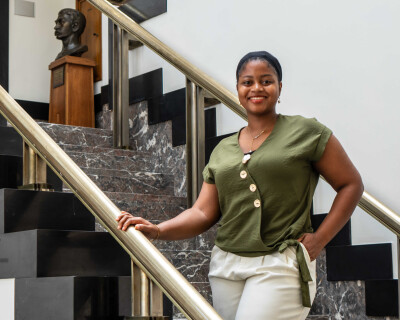
Zeynab Olamide Rabiu
Nigeria
I began my career as a medical doctor, but soon I realised I wanted to broaden my scope. Today, I work in Southwestern Nigeria as a programme manager involved in Tuberculosis and Leprosy control. I wanted to contribute more to public health and specialise in disease control, that’s why I followed the Clinical Decision-Making for Drug-Resistant Tuberculosis.
This course has truly broadened my perspective.I have gained new insights into treating patients with symptoms that I encounter in my daily work. There were things I simply did not know before.
Beyond the content itself, I also greatly valued the international learning environment. At ITM, you learn from experts who have years of experience treating these complex patient groups. At the same time, you meet colleagues from different countries who face similar challenges.
This international network is one of the greatest benefits of my time at ITM. Even after the course, you can reach out to lecturers and fellow students for advice and support. I feel that this network will be very valuable for me in the future, it can make a real difference when dealing with difficult cases.

Jahan Mallick
Germany
The course Clinical Decision-Making for Drug-Resistant Tuberculosis (DR-TB) offers vast knowledge on the epidemiology, diagnostics and treatment of this still very relevant disease. It consists of an online phase with modules for self learning and group work, as well as a face-to-face phase in Antwerp. During this course, you get advice on how to interpret specific tests, including mechanisms and detailed interpretation of important diagnostic tools such as GeneXpert (Ultra) or line probe assays, as well as knowledge on how to proceed in resource-limited settings where drug susceptibility testing for second-line drugs is limited and how to determine the therapeutic threshold for the initiation of (DR-)TB treatment. Case discussions will help you to improve your problem-solving skills. You will have the opportunity to discuss with colleagues from different settings their diverse experiences with DR-TB. At the end of this course, you will feel confident to construct a robust individualised DR-TB regimen. For specific questions, there are experts available from different fields and parts of the world, who are all very enthusiastic to share their knowledge. This course is not only helpful for people that are new to this field, but also for clinicians with many years of experience, as they can gain important insights on how to improve their DR-TB management and care on a programmatic and individual level.

Elisabeth Tabitha Abbew
Ghana
Much of my professional life has been in tuberculosis and managing drug-resistant tuberculosis patients in the central region of Ghana. ITM’s Drug-resistant Tuberculosis (DR-TB) course offers an immense knowledge base in all aspects of tuberculosis case management. I mainly found the elements of clinical decision-making on difficult-to-treat patients fascinating. There is essential teaching on the addition of clinical history, investigations and the context to decide to treat and, after that, a well-designed way of constructing an individualised regimen based on scientific evidence. Back home, I have implemented some of these learnings in building regimens for patients who are failing other regimens and supporting clinicians in this stead. So regardless of your years of experience in the field of drug-resistant tuberculosis or being a novice, this course is excellent for you if you want to find yourself in TB case management and research.
Course Coördinator(s)
- Anita Mesic
Course Administrator(s)
- Nadia Ehlinger
Course Leader(s)
- Bouke de Jong
- Tom Decroo
Contact
- drtb@itg.be