Student and staff mobility
Last updated: 24 July 2026
Recognition of credits and credit transfer
All course components and specialised short courses carry a minimum of 3 credits and are assigned a whole number of credits. One credit represents between 25 and 30 hours of student investment time (SIT). A maximum of 1,5 credits can be earned per week of full-time study at ITM. Specific information on credits and SIT for each course can be found in our online course catalogue.
All formally assessed learning experiences at ITM (e.g., course components and specialised short courses) result in credits and can be recognised towards a master's degree or a Flemish postgraduate certificate (minimum 20 credits).
A diploma contract specifies which credits, earned either at ITM or through mobility programmes (whether at national or international accredited higher education institutions), are recognised for degree purposes. Grades are transferred using grading tables. Where grading scales differ (e.g., pass/fail, A-B-C-D, or scores out of 20, students receive the average mark corresponding to the relevant grading interval at ITM.
Credit certificates for specialised short courses are issued within four weeks and include a grading table.
Degrees are issued in accordance with Flemish legislation and are accompanied by a diploma supplement (European model), which includes information on admission criteria, course components, credits earned, mobility, grades (including transferred grades) and the ITM grading table in accordance with the ECTS 2015 guidelines.
Additional information can be found in the examination regulations.
Scholarships
With the support of the Belgian Directorate-General for Development Cooperation and Humanitarian Aid (DGD) and other donors, ITM offers scholarships for PhD programmes, master's programmes, specialised short courses and individual traineeships. Traineeships can be organised as part of a predoctoral trajectory or within the framework of continuous professional development (CPD).
These scholarships are available to candidates from low- and middle-income countries across all programme types, from PhD training to CPD. Depending on the programme and eligibility criteria, applicants may be awarded a partial or full DGD scholarship.
These scholarships can support both incoming and outgoing mobility.
Contact
Do you have further questions about the information on this page?
Erasmus+ mobility
Erasmus+ is the EU programme that supports higher education and training in Europe. It provides opportunities to study, train and gain experience within Europe and beyond. ITM has obtained funding to support a limited number of outgoing staff and outgoing student mobility initiatives in the academic years 2026-2027 and 2027-2028.
Contact
Do you have questions or would you like more information?
✉ erasmusplusmobility@itg.be
Erasmus+ opportunities for outgoing student mobility: studies and traineeships
What are the Erasmus+ outgoing student mobility initiatives?
Erasmus+ is the EU programme that supports Higher Education and training in Europe. It provides opportunities to study, train and gain experience within Europe and beyond.
Do you want to follow a (blended) course at one of the tropEd partner institutions? Or would you like to do a traineeship at one of ITM’s international partner institutions to strengthen your lab skills or to collect field data for your thesis?
ITM has obtained funding to support 6 outgoing student mobility initiatives in the academic years 2026-2027 and 2027-2028 (with deadline 31 July 2028), mainly focusing on intra-EU mobility:
4 grants for studies and traineeships in member states of the European Union (1) and in third countries associated to the programme (2)
2 grants for studies and traineeships in third countries not associated to the programme (region 1 to 14) (3) - priority goes to self-funded MSc students of ITM.
An Erasmus+ mobility grant is not intended to cover the full cost of the stay abroad. The mobility grant compensates for extra mobility expenses incurred such as travel costs, insurance, visa costs, the higher costs of living in the host country and other additional expenses. The applicable amounts are available in Annex 2.
Interested? Contact your departmental educational coordinator or supervisor to discuss the possibilities.
(1) Belgium, Bulgaria, Czech Republic, Denmark, Germany, Estonia, Ireland, Greece, Spain, France, Croatia, Italy, Cyprus, Latvia, Lithuania, Luxembourg, Hungary, Malta, Netherlands, Austria, Poland, Portugal, Romania, Slovenia, Slovakia, Finland, Sweden
(2) North Macedonia, Serbia, Iceland, Liechtenstein, Norway, Turkey
(3) Full country list available in Annex 2.1.
Who can apply?
ITM MSc students from high-income countries (HIC) and low- and middle-income countries (LMIC)
ITM Doctoral students from HIC & LMIC (ITM-registered PhD students only - without the status of ITM staff member)
Type, venue and duration of the student mobility
Outgoing mobility for studies (SMS) and traineeships (SMT) to:
member states of the European Union,
third countries associated to the programme (North Macedonia, Serbia, Iceland, Liechtenstein, Norway, Turkey)
third countries not associated to the programme (Annex 2.1) - priority goes to self-funded MSc students of ITM.
Not eligible countries: Belgium, country of your citizenship and/or country of origin (international students and students with double nationality)
Duration of the student mobility for studies and/or traineeships:
Study and Traineeship: from 2 to 12 months of physical mobility, excluding travel time, with deadline of 31 July 2028
Short-term Blended Mobility for MSc students: from 5 to 30 days (min. 3 ECTS) with compulsory virtual component
Short-term Doctoral Mobility: from 5 to 30 days
Note: participation in conferences is not eligible for funding as a short-term doctoral mobility.
Deadline for all mobility activities: 31 July 2028
Receiving institutions
1. Student mobility for studies
The receiving higher education institutions (HEIs) based in Erasmus+ programme countries (= EU member states and third countries associated to the programme) must be higher education institutions (HEIs) awarded with an ECHE. All receiving partner country organisations (= third countries not associated with the programme - region 1 to 14) must be HEIs recognised by competent authorities and have signed interinstitutional agreements with ITM before the mobility takes place.
2. Student mobility for traineeships
The receiving organisation can be (5):
any public or private organisation active in the labour market or in the fields of education, training, youth, research and innovation. For example, such organisation can be:
a public or private, a small, medium or large enterprise (including social enterprises);
a public body at local, regional or national level;
embassies or consular offices of the sending EU member state or third country associated to the programme;
a social partner or other representative of working life, including chambers of commerce, craft/professional associations and trade unions;
a research institute;
a foundation;
a school/institute/educational centre (at any level, from pre-school to upper secondary education, and including vocational education and adult education);
a non-profit organisation, association, NGO;
a body providing career guidance, professional counselling and information services;
a HEI from an EU member state or third country associated to the Programme awarded with an ECHE, or a HEI from a third country not associated to the programme recognised by competent authorities that has signed interinstitutional agreements with their partners from an EU member state or third country associated to the programme, before the mobility takes place.
(5) The following types of organisations are not eligible as receiving organisations for student mobility for traineeships: EU institutions and other EU bodies including specialised agencies (exhaustive list); organisations managing EU programmes such as Erasmus+ National Agencies (in order to avoid a possible conflict of interests and/or double funding).
Evaluation criteria and process
All eligible and complete applications will be reviewed by the E+ mobility Selection Committee, which is composed by ITM members from the Education Office, Research and Innovation Office and departmental educational coordination units. The following evaluation criteria will be considered:
The candidate’s academic record;
The candidate’s specific motivation in terms of:
the added academic and/or professional value of the study/traineeship period abroad;
the financial necessity of the travel grant (priority will be given to students without a scholarship and/or bench fee);
The level of aimed at Learning Objectives;
The quality (e.g. accreditation) of the course/training and receiving higher education institution.
Application and selection process
Submission E+ grant application: send your completed application form, motivation letter and study plan by e-mail to erasmusplusmobility@itg.be.
The application needs to be submitted at least two months prior to the planned date of departure.
The grants are awarded to applications positively evaluated following the abovementioned criteria. This will be done on a first come, first serve basis, until the mobility budget runs out.
Do you have questions or would you like more information? Contact erasmusplusmobility@itg.be.
Erasmus+ opportunities for outgoing staff mobility: training
What are the Erasmus+ outgoing staff mobility initiatives?
Erasmus+ is the EU programme that supports Higher Education and training in Europe. It provides opportunities to study, train and gain experience within Europe and beyond.
Do you want to follow a (blended) course at one of the tropEd partner institutions? Or would you like to follow a training at an EU higher education or research institution?
ITM has obtained funding to support 3 outgoing staff mobility initiatives for training in the academic years 2026-2027 and 2027-2028 (with deadline 31 July 2028), focusing on intra-EU mobility.
An Erasmus+ mobility grant is not intended to cover the full cost of the stay abroad. The mobility grant compensates for extra mobility expenses incurred such as insurance, visa costs, the higher costs of living in the host country and other additional expenses. The applicable amounts of the 2026 call are available in Annex 1.
Interested? Contact the ITM Education Office (Charlotte Morantin – cmorantin@itg.be) to discuss the existing possibilities.
Who can apply?
ITM staff members involved in education and research (including supporting staff). Priority goes to PhD and/or postdoctoral staff members.
Type and duration of the staff mobility
Outgoing staff mobility for a training period in a receiving organisation located in a:
member state of the European Union,
third country associated to the programme (North Macedonia, Serbia, Iceland, Liechtenstein, Norway, Turkey)
Not eligible countries: Belgium, country of your citizenship and/or country of origin (international students and students with double nationality)
Physical mobility: from 2 to 60 days, excluding travel time
Note: participation in conferences is not eligible for funding as staff mobility for training.
Receiving organisation
The receiving organisation must be:
a higher education institution from an EU member state or third country associated to the programme awarded with an ECHE, or;
any public or private organisation from EU member states and third countries associated to the programme, active in the labour market or in the fields of education, training, youth, research and innovation.
Evaluation criteria and procedure
All eligible and complete applications will be reviewed by the E+ mobility Selection Committee, which is composed by ITM members from the Education Office and departmental educational coordination units. The following evaluation criteria will be considered:
The overall objectives of the training mobility
The candidate’s training plan
The candidate’s specific motivation in terms of the added academic, scientific and/or professional value and interest of the traineeship period abroad
The added value of the training period abroad at individual level (staff member) and the strategic value for ITM
The quality (e.g. accreditation) of the training and receiving organisation
Application process
Submission E+ grant application: Send your completed application form, motivation letter and study plan by e-mail to erasmusplusmobility@itg.be.
The application needs to be submitted at least two months prior to the planned date of departure.
The grants are awarded to applications positively evaluated following the abovementioned criteria. This will be done on a first come, first serve basis, until the mobility budget runs out.
Do you have questions or would you like more information? Contact erasmusplusmobility@itg.be.
News
All news-
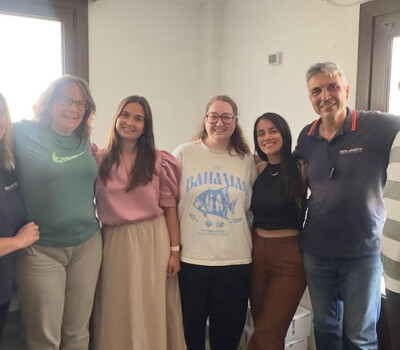
 From 6 to 17 July 2026, Stien Vereecken and Emma Vandenberghe, two ITM scientists from the Unit of Entomology, participated in a specialised training programme at Ecodevelopment in Greece, with the support of an Erasmus+ staff mobility grant.
 -
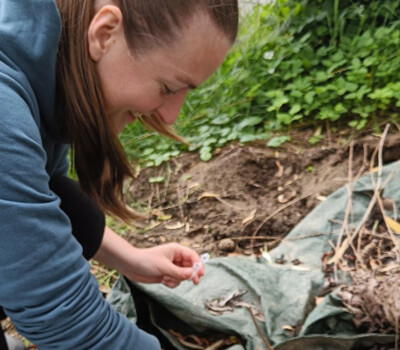
From 1 to 5 July 2024, PhD candidate Adwine Vanslembrouck had the opportunity to follow a field training with Goethe University in Frankfurt, supported by an Erasmus+ mobility grant
-
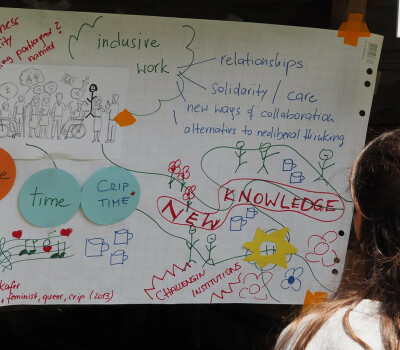
From 16 to 23 June 2024, PhD candidates Monika Martens, Aline Semaan and Jil Molenaar attended the Action Research Summer School in Austria, with the support of an Erasmus+ mobility grant.
-
Articles
Erasmus+ mobility: MTM student Viktoria Sturm attended an insightful traineeship in Addis Abeba
 From 1 to 15 June 2024, MTM student Viktoria Sturm participated in a traineeship in Ethiopia, with the support of an Erasmus+ mobility grant.
 -
From 3 to 14 June 2024, ITM junior researcher and part-time MPH student Luciana Lepore followed a tropEd-accredited training on Qualitative Research Methods and Data Management at the Institute of International Health Charité in Berlin, supported by an Erasmus+ mobility grant.
-
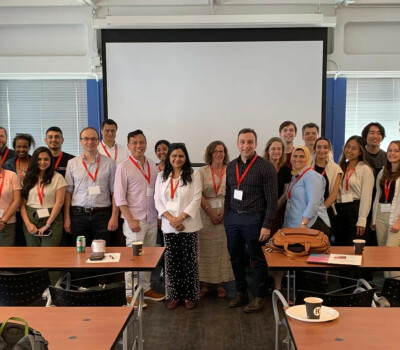
From 3 to 7 June 2024, PhD student Jens Cornelis (at ITM and UGent) attended a training on Global Health Diagnostics at the McGill Summer Institute in Montréal, Canada, with the support of an Erasmus+ mobility grant.
-
Articles
Erasmus+ mobility: PhD student Carl Boodman attended an inspiring lab training in Marseille
From 4 to 15 March 2024, ITM PhD student Carl Boodman participated in a training programme at the National Reference Center for Rickettsioses (NRCR) in Marseille, France, affiliated with Aix-Marseille University. His participation was supported by an Erasmus+ mobility grant.