PhD defence Faridath Masso
ITG Onderwijscampus Rochus, Aula P.G. Janssens, Sint-Rochusstraat 43, 2000 Antwerpen
Montrer l'itinéraire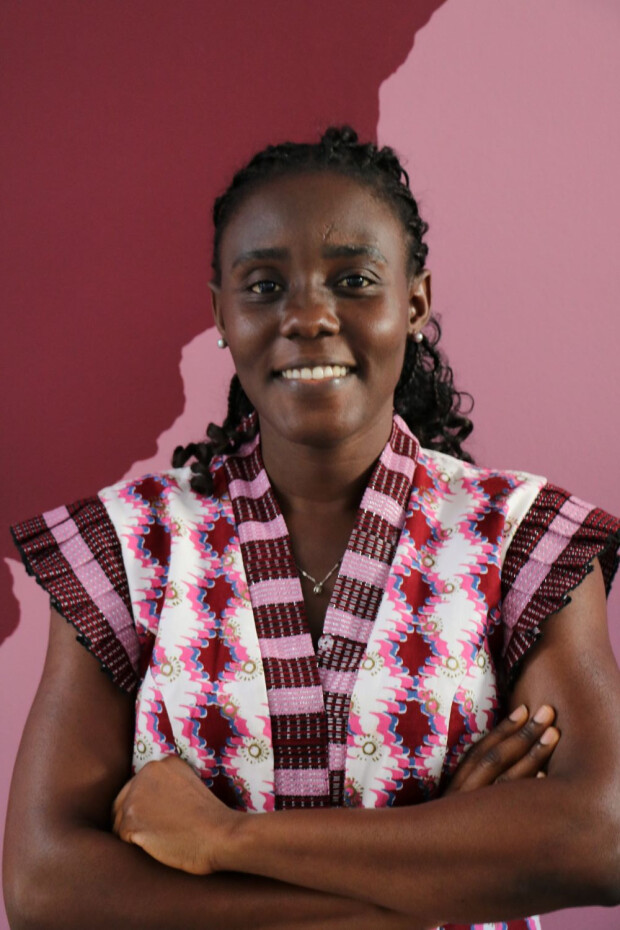
Supervisors
Prof. dr. Bouke de Jong (ITM)
Prof. dr. Leen Rigouts (University of Antwerp)
Prof. dr. Dissou Affolabi (Laboratoire de Référence des Mycobactéries Benin)
PhD awarding university
University of Antwerp, Faculty of Pharmaceutical, Biomedical and Veterinary Sciences
Abstract
In 2024, only 58% of patients with rifampicin-resistant tuberculosis underwent fluoroquinolone (FQ) resistance testing, with even lower coverage for newer drugs. While rifampicin resistance can be detected rapidly at peripheral laboratories, testing for other drugs often requires culture-based methods at reference laboratories, delaying treatment optimization. This thesis investigated whether culture-free approaches could bridge this diagnostic gap across different levels of the laboratory network, using specimens from the multicountry DIAMA study.
Low-complexity molecular assays offer an opportunity to extend resistance detection beyond rifampicin at peripheral level. In Chapter 3, Xpert MTB/XDR showed high specificity (≥98%) but lower sensitivity for isoniazid (INH, 95%), FQ (67%) and ethionamide (ETH, 57%), mainly due to out-of-target mutations and presence of minority variants. Beyond detection, the clinical value of results also depends on the correctness of reporting. Chapter 4 revealed that Xpert MTB/XDR incompletely reports an inhA-promoter variant associated with low-level INH resistance and ETH cross-resistance. Another low-complexity platform, Truenat, evaluated in Chapter 5, showed comparable sensitivity for INH (94%) and FQ (67%), but lower INH specificity (89% versus 98% for Xpert MTB/XDR). For bedaquiline (BDQ), specificity reached 99%, while sensitivity could not be assessed.
These low-complexity assays cover relatively few drugs, highlighting the need for broader sequencing approaches. In Chapter 6, Deeplex Myc-TB, a high-complexity targeted next-generation sequencing assay, yielded interpretable results in 83% of specimens, with reduced target coverage in smear-negative samples. Sensitivity met WHO thresholds for most drugs, whereas specificity was affected by the detection of low-frequency variants at allele frequencies as low as 3%. These variants were detected more frequently by Deeplex than by whole-genome sequencing, particularly in specimens with low bacillary loads, raising concerns of false variant calling.
Beyond expanding drug coverage, reliable resistance classification remains essential. Chapter 7 showed that borderline rpoB mutations were reliably detected as “rifampicin-resistance detected” by Xpert Ultra (96.6%) but frequently misclassified by phenotypic drug-susceptibility testing. Furthermore, the presence of rpoB mutations was associated with reduced bacterial viability, as reflected by lower primary culture positivity, further supporting culture-free testing.
Finally, Chapter 8 investigated genetic variants of uncertain significance or classified as not associated with resistance to new and repurposed anti-TB drugs (bedaquiline, clofazimine, delamanid and pretomanid) and detected by whole genome sequencing. Most showed no measurable phenotypic resistance.
Together, these findings demonstrate that culture-free resistance testing is feasible, but no single approach fits all settings, highlighting the need for complementary diagnostic strategies.
Practicalities
ITM, Campus Rochus, Aula P.G. Janssens, Sint-Rochusstraat 43, 2000 Antwerpen
Defence: 10 am – 12 pm CET. Please be on time, doors open at 9:45 am and close at 10 am.
You can follow the defence online.
Please make sure that you are muted and have your camera off the whole time
Please confirm your attendance to the PhD defence and reception through this registration form.
Antwerp is a Low Emission Zone and parking availabilities are limited. See for travelling information and parking regulations: https://www.itg.be/en/travelling-to-itm & https://www.slimnaarantwerpen.be/en/home.
Faites passer le mot ! Partagez cet événement sur