We've set off
We've set off
(10 August 2026)
It was a busy weekend. On Saturday I was on my own with the children, and on Sunday I was on duty at the hospital. In between, such as on the way home after my shift, I tried to call Emmanuel in the DRC about the study. Because this weekend the first patients were enrolled: there are now five of them. That’s very good news: after all the preparation, we’ve now really got started. But as expected, we’re immediately coming up against the first difficulties.
Everyone still needs to get properly familiar with the tools we use to collect the data. As a result, some procedures are still running slowly. In many other studies, that wouldn’t be such a big problem. But here, we’re dealing with Ebola.
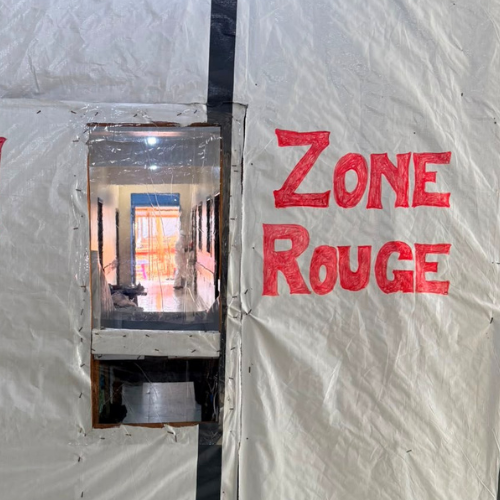
Part of the work takes place in the “red zone,” which is the area where Ebola patients are treated and where there is a risk of exposure to the virus. Everyone who enters that area wears full personal protective equipment, or PPE. If procedures take too long, people have to stay in that zone for longer. And that is something we want to avoid at all costs.
Working in such full protective gear is demanding and tiring. The longer someone is in it, the greater the fatigue and the risk of errors. With Ebola, these can have serious consequences, as someone could become exposed to the virus.
It is very important to have procedures that are as efficient as possible. Not only to collect good data, but also to protect the people carrying out the research as effectively as possible.
One member of the study team has since said: ‘I’m not comfortable with this after all.’ I think it’s great that they’ve had the agency to say that and to make that decision for themselves. You need to feel safe enough to say that something isn’t working.
So yes, we’re facing our first challenges. The good thing is that we can keep putting our heads together. What’s proving difficult? What alternatives are there? How can we organise things differently? Study members are contributing their own ideas for possible solutions. I find that very positive. Thanks to that exchange, we can make adjustments day by day.
As I’ve said before, a study like this is almost like a living organism. You start with a plan, but it’s only when you really get down to work that you see what works and what still needs changing. So we’ll keep making adjustments.
For my part, I mainly need to make sure everything is ready for my departure for the DRC, probably on Thursday. At home, we’re also quietly starting to prepare for it. I’m telling the children bit by bit and we’re arranging childcare. In the summer, that’s a bit more complicated. At the same time, I realise very well that, compared to what’s happening in the DRC, this is an enormous luxury.
It’s a new week, we’re getting back to work. The study has begun, the first problems are becoming apparent, and we know we’ll have to make many more adjustments. But we’re off and running.
Diary of Isabel
Read the next section about Isabel’s experiences:
We've set off