Switching gears
Switching gears
(6 August 2026)
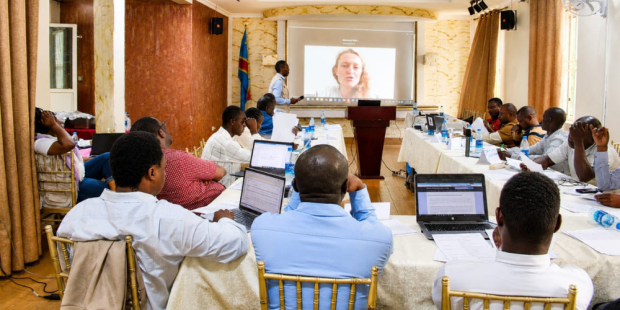
Yesterday was the first day of training for the staff who will soon be carrying out the study in Bunia. Emmanuel (from INRB) and I both thought for a moment: oh dear, one or two extra days of preparation would have been welcome. But during an outbreak, speed counts too. The study needs to start soon so that we can collect data as quickly as possible.
The start of the day was rather chaotic. Some presentations were still being finalised right up until the start. There were technical issues and the internet connection kept dropping out. As a result, I was unable to deliver part of my presentation remotely, so colleagues on site took over those sections.
But in the end, it was a successful day. The participants asked questions and discussed the content. That is precisely what this sort of training is for: the people who will soon be working on the study need to understand what we want to investigate and how they can collect the data reliably from patients. It felt good that, despite the distance, I was still able to be there.
Wearing two hats
Today, my day suddenly took a completely different turn. I had consultations at the ITM outpatient clinic. But outbreak investigations cannot be scheduled in a diary. There are constantly unexpected queries, documents that need to be checked urgently and decisions that cannot wait. At the same time, I’m also a doctor; I’ve been treating some patients for years. When they come to me with a health problem, that’s the most important thing for them at that moment. And so they deserve my full attention.
That means you have to be able to switch gears quickly. During every consultation, I am a doctor through and through. But between patients, I’d still take a quick look: is there any news from the DRC? I was also on call, so in between consultations I’d get phone calls where I sometimes had to make a decision straight away.
Communication
At one point, I received a document from Bunia to provide feedback. My colleagues want to be ready to start tomorrow, so I have a quick look at it between two other tasks: what would I change, do we actually need this section, could we phrase that differently? Then I’ll send my comments straight back.
In this kind of collaboration, it’s not just the distance that matters. You also have to think carefully about how you communicate with one another. We usually speak French. My French is good, but it’s not my mother tongue. What’s more, we work with people from different cultures, and I tend to be quite direct in my communication. We’ve been working with many of our Congolese colleagues for quite some time now. We’ve got to know each other well by now, and that helps enormously. They know that a short reply from me is sometimes just a short reply, nothing more. And I’m learning myself that working well together is more than just following the same scientific rules. You also have to learn how the other person communicates.
Ultimately, we’re all working towards the same goal: ensuring the study runs smoothly and yields knowledge that can help the people affected by this Ebola outbreak.
Strong network
I’ll probably be travelling to Congo next week to support the first phase of the study on the ground. That means setting off again, even though I’ve only just returned from holiday. And that holiday began barely a week after I’d come back from the DRC.
So it is a bit of a life on the edge. At the same time, I realise that I can only do this work thanks to the people around me. At ITM, my colleagues are incredibly flexible. In Congo, I have Emmanuel and a team I can count on. And at home, I have a partner who supports me and family who step in when needed. Without all those people, I wouldn’t be able to do this work.
The study begins
My colleagues in Bunia have completed their second day of training today. At the end, they ran through the entire study in a practice scenario. This allows us to see whether everyone knows what needs to be done when the first patients arrive, how the information should be collected and recorded, and whether there are still any uncertainties.
Tomorrow, we’ll go through everything again using a checklist. Do we have everything? Are we ready? Is everything working? Is it clear to everyone what needs to be done? If the answer to those questions is yes, the first patients can take part in the study under supervision.
Then, what has for weeks consisted of protocols, presentations, phone calls and documents will suddenly become a reality. For the first time, we’ll start collecting data from the people at the heart of this outbreak and research.
I find it exciting. And also a bit of a shame that I have to experience those first moments from a distance. But at least now I can tell my colleagues: I’ll be coming your way soon, and then we’ll do this together.
First, a good night’s sleep tonight. Tomorrow it really begins.
Dagboek van Isabel
Read the next section about Isabel’s experiences:
Switching gears