Tiger mosquito season begins
With the start of the mosquito season, Sciensano and the Institute of Tropical Medicine (ITM) are calling on members of the public to report sightings of the tiger mosquito (Aedes albopictus) via the citizen science platform www.MuggenSurveillance.be. These reports help to map the spread of the tiger mosquito. In 2025, reports from members of the public confirmed the presence of tiger mosquitoes in ten Belgian municipalities, including five where the species had not previously been recorded. Since monitoring began in 2022, the tiger mosquito has already been observed in 40 municipalities.
The tiger mosquito is gaining ground
In 2025, members of the public reported tiger mosquitoes in ten Belgian municipalities. In five of these, the species had not previously been reported: Heusden, Kortenberg and Zaventem in Flanders, and Etterbeek and Watermaal-Bosvoorde in Brussels. In addition, members of the public reported tiger mosquitoes in five municipalities where the species had already been observed in previous years: Wijnegem, Merelbeke-Melle, Kessel-Lo and Hoegaarden in Flanders, and Ath in Wallonia.
In addition to reports from members of the public, field inspections in 2025 confirmed that the tiger mosquito overwinters in Sint-Joost-ten-Node, Wijnegem and Hoegaarden. Along with earlier sightings in Ath, Kessel-Lo, Puurs-Sint-Amands, Wilrijk and Lebbeke, this brings the number of Belgian municipalities where the tiger mosquito is beginning to establish itself locally to eight.
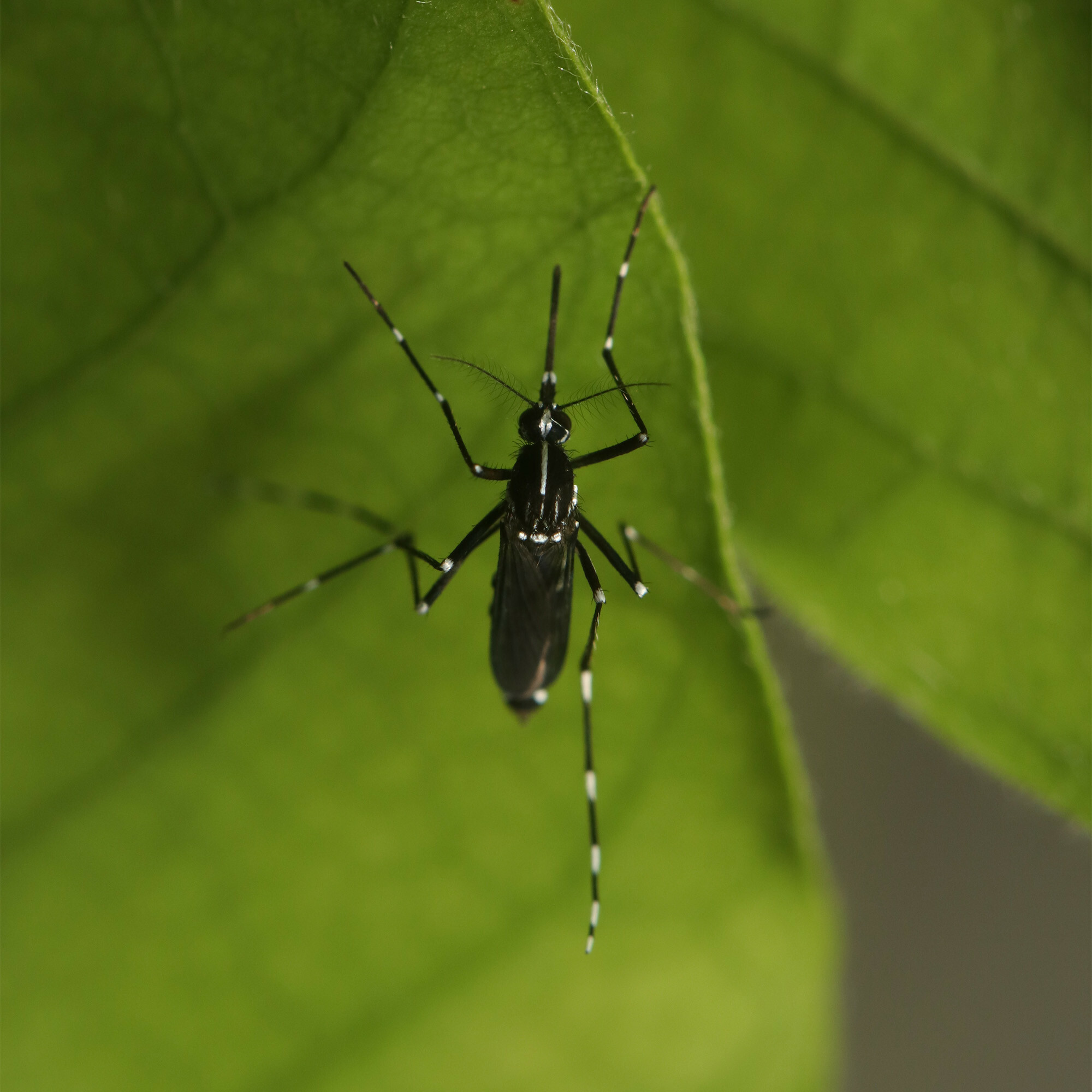
“Every year, the tiger mosquito is reported in new locations. It is likely that this mosquito is present in more places in Belgium than has been confirmed so far,” says Javiera Rebolledo Romero, a researcher at Sciensano. “Knowing where these mosquitoes are found helps the authorities to take measures to prevent the spread of the tiger mosquito and thus avoid the risk of local transmission of diseases such as dengue, chikungunya and Zika in the future. That is why we encourage everyone to remain vigilant and report any sightings. Are you being bothered during the day by a very small black mosquito with white stripes when you are in your garden or on your terrace? Take a photo of it and report it!”
Since 2022, when members of the public began actively participating in the surveillance programme, the tiger mosquito has been spotted in 40 Belgian municipalities. In addition to annual sightings in municipalities where the species was already known, members of the public have also reported tiger mosquitoes in new municipalities where the species had not previously been recorded.
“Four years of monitoring show that the tiger mosquito is not only being introduced into Belgium, but is also beginning to establish itself here,” says Wim Van Bortel, an entomologist at ITM. “Thanks to reports from members of the public and active field monitoring at key locations where sightings have been made, we can detect both new introductions and local spread. This gives us a much clearer picture of how the species is establishing itself in Belgium.”
Why report a tiger mosquito?
The tiger mosquito is active during the day and can cause a great deal of nuisance due to its aggressive biting behaviour. Furthermore, it can transmit viruses such as dengue, chikungunya and Zika after biting someone who has returned from a trip with the virus. Although the risk of local transmission in Belgium is currently low, it is essential to monitor the tiger mosquito in order to to detect its presence in good time and take control measures.
“Public involvement is crucial for monitoring the tiger mosquito, as this species is often found in private gardens in (sub)urban areas and villages. Without these reports, we would probably not detect its presence in many places,” says Sciensano. “By reporting a tiger mosquito via www.MuggenSurveillance.be, we can identify new locations, follow up on previously reported sites, and take preventive measures to reduce the population and limit the spread and establishment of the species in Belgium.”
What preventive measures can you take?
Members of the public play a key role in preventing the spread of the tiger mosquito. As this species lays its eggs in all sorts of man-made objects containing stagnant water that are commonly found in gardens and on patios, such as buckets and flower pots, it is essential to minimise these breeding sites. Urban environments are conducive to the survival and reproduction of the tiger mosquito, as they offer the ideal combination of numerous artificial breeding sites and higher temperatures. It is therefore important that everyone thoroughly cleans their garden and patio before the start of the season and keeps them tidy throughout the summer. Remove or cover objects in which water can collect, empty any standing water and change the water in animal drinking bowls at least once a week. Also scrub the sides of artificial objects to remove eggs and cover rainwater barrels securely.
Travellers are advised to check www.wanda.be before departure to see which vaccinations are generally required for their destination and whether any personal protective measures against mosquitoes are recommended. On their return, they should check their car and luggage for any tiger mosquitoes that may have travelled with them. It is also important to be vigilant for symptoms after returning from a country where mosquito-borne diseases are endemic.
In Flanders, the Department of Health is relaunching its mosquito campaign today. Under the slogan “Dry out the tiger mosquito”, the campaign encourages the public to actively remove potential breeding sites and report sightings via www.MuggenSurveillance.be. More information about the campaign and preventive measures can be found at www.steekmuggen.be.
How do you report a tiger mosquito?
Anyone who thinks they have seen a small black mosquito with white stripes can take a photo and upload it via www.MuggenSurveillance.be or via the app, available for Android and iOS.
More information about sightings in 2025 and previous years can be found at https://mosquitosurveillance.be/reports.
The MEMO+ project is a collaboration between Sciensano and the Institute of Tropical Medicine (ITM). The project is funded by the federal and federated entities for Environment and Health through the National Action Plan for Environment and Health (NEHAP).
Spread the word! Share this story on
More stories
-
 - Press releases
Could vaccines against Zaire Ebola virus also protect against Bundibugyo virus?
EBO-BOOST-BRIDGE analyses blood samples from over 600 people vaccinated against the Zaire ebolavirus.Read more -
- Press releases
Three ITM alumni win Global Research Award of the province of Antwerp
With this award, the province honours the research of thirteen promising young researchers.Read more -
- Press releases
A study into two treatments for the Bundibugyo virus is set to begin in Bunia
Since the outbreak began, more than 1,400 people have been infected and more than 430 have died.Read more -
- Press releases
Launch of the IMPACT project to develop the first antibody-based countermeasure for orthopoxviruses
ITM brings mpox cohorts and antibody expertise to IMPACTRead more -
- Press releases
Be-IMPACT aims to prevent and improve treatment of malaria in returning travellers
Rising resistance complicates treatment.Read more -
- Press releases
"I thought it wouldn't happen to me": why HIV prevention is not reaching everyone yet
Lack of knowledge, stigma and inequality are still major barriers to HIV prevention.Read more -
- Press releases
People who experienced mpox suspected to have long-term protection against reinfection
International follow-up study on booster vaccinationRead more -
- Press releases
New technologies boost fight against infectious diseases worldwide
International researchers gather in Antwerp to discuss innovations in healthcareRead more -
- Press releases
Even legally allowed amounts of antibiotics in food can cause resistance.
Study reveals hidden risk in food.Read more -
- Press releases
Five design teams shortlisted to develop the future vision for ITM.
Masterplan strengthens ITM as an international driver of science, innovation and health in AntwerpRead more