First participant vaccinated in pivotal Phase 2/3 Bundibugyo vaccine trial in DRC
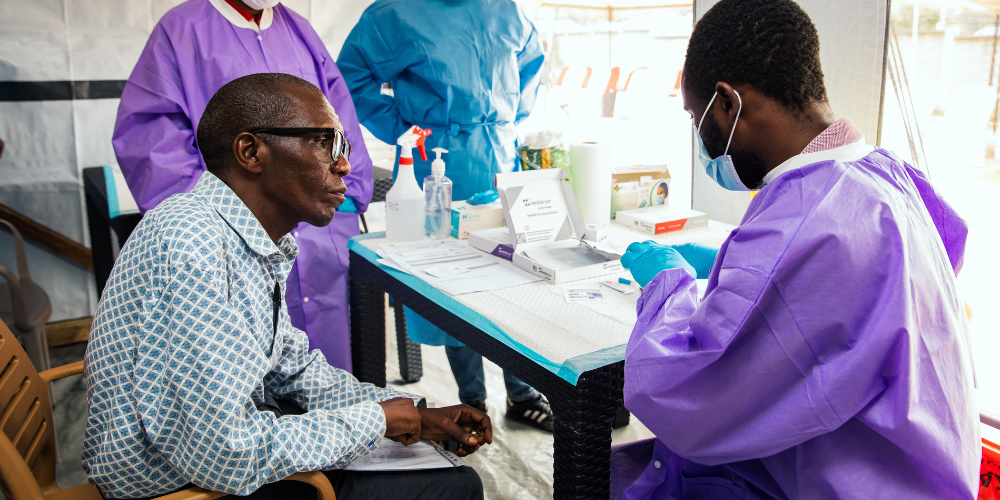
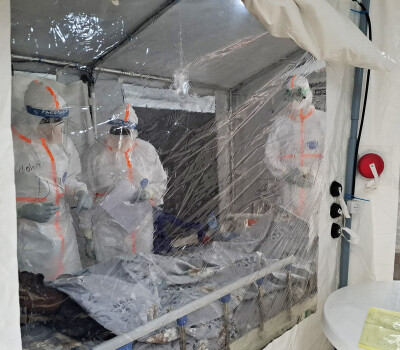
Picture: WHO/Dany Bitita
Tumaini, a pivotal Phase 2/3 clinical trial, will evaluate vaccine candidates including Ervebo as part of the Democratic Republic of the Congo’s (DRC) outbreak response.
There is currently no approved vaccine against Bundibugyo virus. Tumaini aims to close that gap by generating robust evidence about the performance of multiple vaccine candidates.
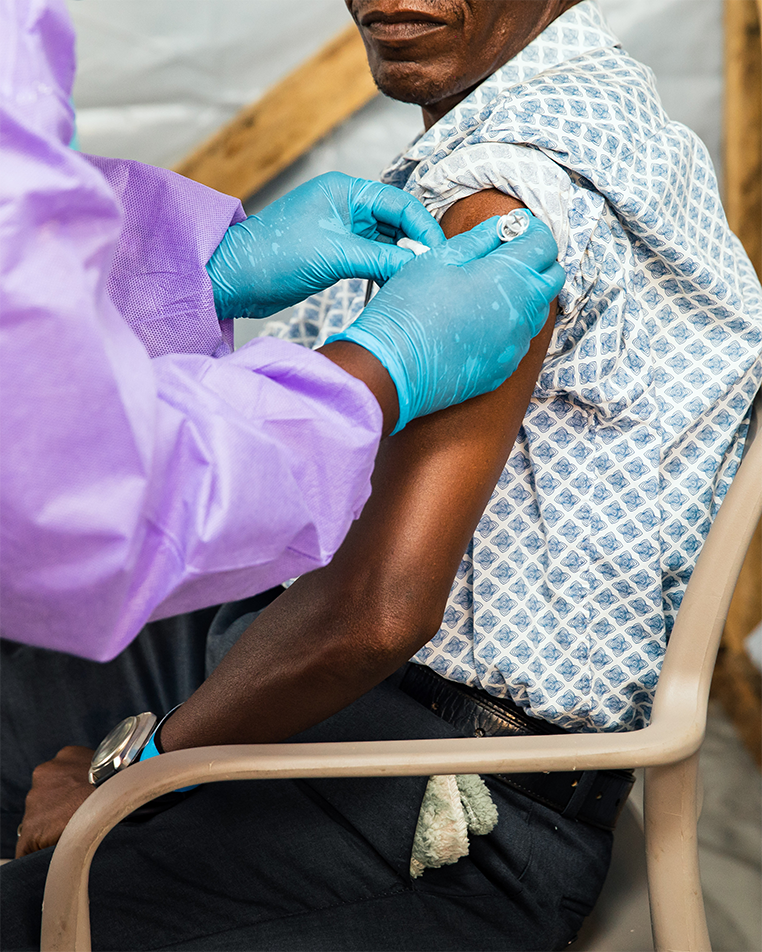
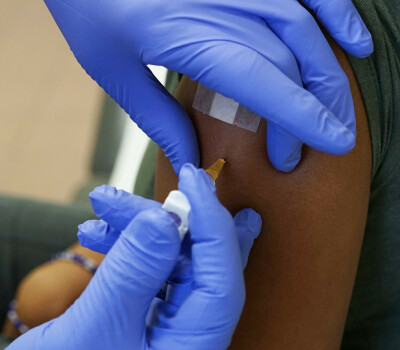
BUNIA, DEMOCRATIC REPUBLIC OF THE CONGO, 23 October 2026 – The first participant has been vaccinated in Tumaini, a pivotal Phase 2/3 clinical trial of vaccine candidates against Bundibugyo virus (BDBV). The vaccination, administered on 23 October 2026 in Bunia, DRC marks the start of the trial, which will support the Government-led response to the ongoing outbreak.
The trial begins as the DRC faces the largest recorded BDBV outbreak and the second-largest Ebola outbreak to date. The outbreak was officially declared on 15 May 2026 and was determined as a Public Health Emergency of International Concern by the World Health Organization (WHO) and a Public Health Emergency of Continental Security by Africa CDC in the days thereafter. As of 21 October 2026, 9,552 cases and 4,602 deaths had been confirmed in the DRC.
There is currently no approved vaccine to protect against BDBV. Tumaini, which means “hope” in Swahili, aims to close that gap by evaluating the safety, immunogenicity and efficacy of vaccine candidates, including Ervebo which is currently licensed for use to prevent Ebola virus (EBOV).
Tumaini will work closely with affected communities, health authorities and outbreak response partners to generate robust evidence on vaccine performance that could contribute to curtailing the epidemic, saving lives, and strengthening preparedness for future BDBV outbreaks.
Prof Steve Ahuka-Mundeke, Incident Manager of the Ebola Response, Democratic Republic of the Congo, said: “Bringing this trial into the Ebola response is an important step towards addressing the urgent needs of affected communities. Our priority is to stop transmission and save lives, while ensuring that research is closely coordinated with frontline response activities. We thank the participants, communities and partners whose trust and engagement make it possible to evaluate potential new tools against Bundibugyo virus.”
Tumaini is an adaptive platform trial, which allows several vaccine candidates to be evaluated in parallel within a single framework and saves valuable time during an outbreak. Candidates will be assessed through ring vaccination, which focuses on contacts at high risk of infection. Technical details are available on ClinicalTrials.gov (NCT07842107).
Vaccine candidates are selected through an independent prioritisation process led by the WHO Technical Advisory Group on Candidate Vaccine Prioritisation (TAG-CVP), and corresponding protocol amendments are approved by ACOREP, the national regulatory authority. The first candidate to enter the trial is Ervebo. Preparations are underway for two CEPI-funded BDBV-specific vaccine candidates, under development by Moderna and by the University of Oxford in collaboration with Serum Institute of India, to enter the trial shortly.
The Institut National de Recherche Biomédicale (INRB) and the University of Antwerp (Global Health Institute) co-lead and co-sponsor the trial. The DRC Ministry of Health provides national leadership and oversight. A Trial Steering Committee, chaired by the Ministry’s Incident Response Manager, provides strategic oversight and aligns the trial with the wider outbreak response and with other studies of medical countermeasures in the region.
Our involvement
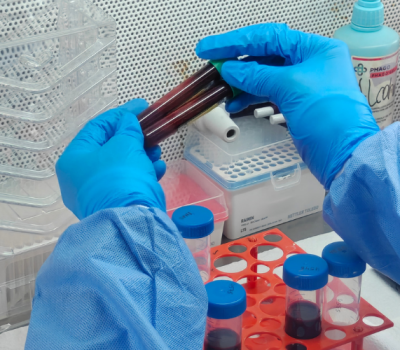
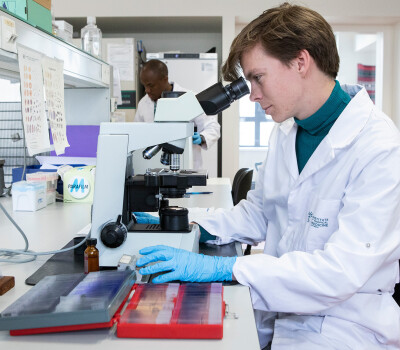
The Institute of Tropical Medicine (ITM) is a key partner in this project, building on its long-standing collaboration with INRB. ITM is responsible for the laboratory activities and immunogenicity assessments that are essential for the registration and licensing of candidate vaccines.
In addition, ITM contributes to research into the social and societal aspects of vaccination and supports a significant part of the logistical operations through its experienced shipment service.
Prof Hugo Kavunga, Tumaini Co-Sponsor and Principal Investigator, Institut National de Recherche Biomédicale, said: “Vaccinating the first participant is an important milestone, made possible by the dedication of Congolese researchers, health workers and our partners. With affected communities at the heart of this effort, we are placing national scientific leadership at the service of the outbreak response. Our priority is to establish which vaccines can safely and effectively protect those at risk.”
Prof Jean-Pierre Van geertruyden, Tumaini Co-Sponsor and Co-Principal Investigator, University of Antwerp, said: “During an outbreak, speed and scientific rigour must go hand in hand. Tumaini brings together Congolese and international expertise to generate reliable evidence on vaccines against Bundibugyo virus. Through this partnership, we aim to support the response today while building the knowledge needed to protect communities in future outbreaks.”
Africa CDC plays a strategic role in advancing African-led clinical research, strengthening regional coordination, ensuring that emerging scientific evidence informs public health decision-making and the wider Ebola outbreak response, and supporting timely and equitable access to successful vaccine candidates.
Through the R&D Blueprint, WHO has developed protocols for filovirus vaccine studies that were adapted rapidly for the Tumaini trial. WHO provides leadership in the BVD response supporting the Ministry of Health of the DRC. For the Tumaini trial, WHO provides strategic, technical and scientific advice along with on-the-ground experience to stand up a vaccine trial embedded in an emergency response.
CEPI provides funding, scientific expertise and operational support and is backing a portfolio of BDBV-specific vaccine candidates that could be evaluated in the study. Partners including Epicentre, Médecins Sans Frontières (MSF), the Institute of Tropical Medicine Antwerp (ITM), WHO and Africa CDC support implementation of the trial. MSF uses the organisation’s own funding and operational capacity to support the trial.
Tumaini is funded by CEPI’s Bundibugyo virus vaccine development programme, which, to date, is backed by the European Commission, the U.S. Department of State, the Fund for Science and Technology, the Republic of Korea and CEPI’s core funding. Beyond the trial, Tumaini is part of a broader “push–pull” partnership between CEPI and Gavi, the Vaccine Alliance, in which Gavi has committed up to US$40 million to fund manufacturing readiness to ensure vaccines are available at scale as soon as they are approved for deployment.
Dr Richard Hatchett, CEO of CEPI, said: “There is still no licensed vaccine against Bundibugyo virus, and the cost of that absence is being counted in the DRC every day, in lives lost and in health workers who go to work without protection. Tumaini aims to change that. Today’s first vaccination opens a pivotal trial to generate the evidence needed to get safe and effective vaccines to the people who need them most.”
Dr Chikwe Ihekweazu, Executive Director, Health Emergencies Programme, World Health Organization, said: "The launch of the Tumaini trial marks a critical step towards establishing whether candidate vaccines can effectively protect people against the Bundibugyo virus. This is much more than a research study. The trial reflects WHO’s strong recommendation to evaluate candidate vaccines through well-designed research during outbreaks, using a single adaptive platform and a ring vaccination approach. This is an approach WHO and countries have used in previous outbreaks to test vaccines, including the one that is effective against Ebola virus (previously known as Zaire ebolavirus). The trial is an opportunity to generate the rigorous evidence needed to determine whether these vaccines can protect people at risk. If successful, this would be the first time we have clear evidence of vaccine efficacy against Bundibugyo virus, a major advance that could transform how we respond to this outbreak and prepare for future outbreaks and help save lives."
Prof Placide Mbala, Director of Research, Clinical Trials and Innovation at Africa CDC, said : “Tumaini means hope, and today that hope is being translated into action. At a time when our communities are facing the largest recorded Bundibugyo outbreak, this trial demonstrates the power of African-led research to address African public health challenges. This is our collective commitment to generating high-quality evidence that can save lives today while strengthening preparedness for future epidemics.”

Prof Wim Adriaensen, Head of the Clinical Immunology Unit at ITM, said: “Through the long-standing partnership between INRB and ITM, we can quickly bring the required laboratory capacity to the affected region. This helps us identify the immune responses associated with vaccine protection. We can then compare vaccines that arrive late in, or even after, the outbreak with those protective immune responses, so promising candidates aren’t overlooked simply because they become available at a later stage.”
Valérie Briand, Head of the Research Department, Epicentre, said: “Children are among those hardest hit by the Ebola outbreak in certain regions, yet they have historically been under-represented in clinical research. The inclusion of pregnant women and children aged 12 years and older, as well as children from one year of age for the Ervebo vaccine, represents an important step towards generating evidence for populations that are often excluded from clinical trials. Discussions are already ongoing to extend inclusion to younger children for specific vaccine candidates.”
Bern-Thomas Nyang'wa, Medical Director, MSF, said: “The Tumaini trial represents a critical step towards addressing the urgent needs of people most affected by Bundibugyo virus. MSF brings to this trial its experience of doing clinical research in close collaboration with affected communities. Working in partnership with communities is essential for building trust and ensuring meaningful participation in the development of vaccines that are effective, adapted, and accessible to those who need them most.”

Media contacts
Institute of Tropical Medicine
Anna Dams, adams@itg.be, +32 477 45 88 38
CEPI
press@cepi.net, +44 7387 055214
University of Antwerp
jean-pierre.vangeertruyden@uantwerpen.be, maha.salloum@uantwerpen.be, amber.coolens@uantwerpen.be
World Health Organization
mediainquiries@who.int
Spread the word! Share this story on
More stories
-
 - Press releases
Institute of Tropical Medicine welcomes four new members to its Board of Governors
New appointments strengthen expertise in innovation, global health and strategic leadership as ITM shapes its future.Read more -
- Press releases
Could vaccines against Zaire Ebola virus also protect against Bundibugyo virus?
EBO-BOOST-BRIDGE analyses blood samples from over 600 people vaccinated against the Zaire ebolavirus.Read more -
- Press releases
Three ITM alumni win Global Research Award of the province of Antwerp
With this award, the province honours the research of thirteen promising young researchers.Read more -
- Press releases
A study into two treatments for the Bundibugyo virus is set to begin in Bunia
Since the outbreak began, more than 1,400 people have been infected and more than 430 have died.Read more -
- Press releases
Launch of the IMPACT project to develop the first antibody-based countermeasure for orthopoxviruses
ITM brings mpox cohorts and antibody expertise to IMPACTRead more -
- Press releases
Tiger mosquito season begins
Since 2022, the tiger mosquito has already been observed in 40 municipalities.Read more -
- Press releases
Be-IMPACT aims to prevent and improve treatment of malaria in returning travellers
Rising resistance complicates treatment.Read more -
- Press releases
"I thought it wouldn't happen to me": why HIV prevention is not reaching everyone yet
Lack of knowledge, stigma and inequality are still major barriers to HIV prevention.Read more -
- Press releases
People who experienced mpox suspected to have long-term protection against reinfection
International follow-up study on booster vaccinationRead more -
- Press releases
New technologies boost fight against infectious diseases worldwide
International researchers gather in Antwerp to discuss innovations in healthcareRead more