Could vaccines against Zaire Ebola virus also protect against Bundibugyo virus?
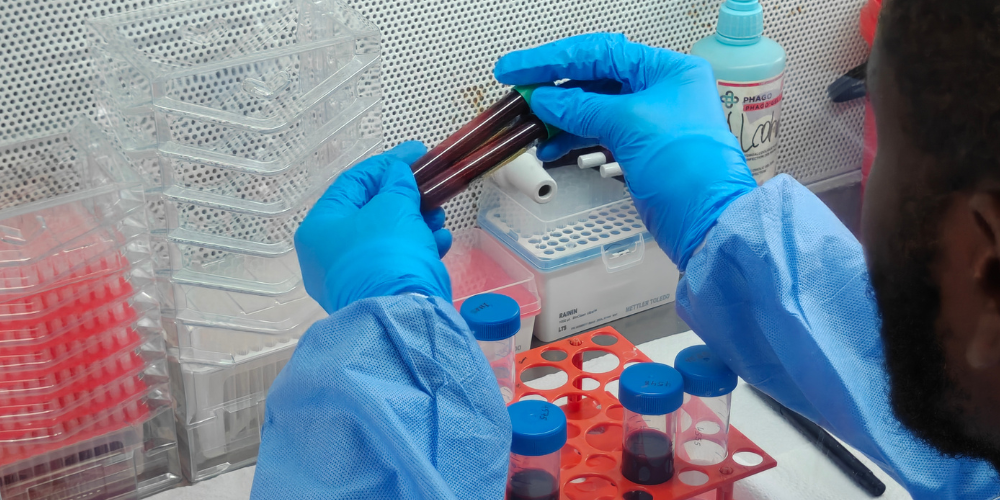
The Institute of Tropical Medicine (ITM) and the Congolese Institut National de Recherche Biomédicale (INRB) are launching a study into the potential protection offered by existing Ebola vaccines against the Bundibugyo Ebola virus. The researchers are analysing blood samples from more than 600 people who have previously been vaccinated against the Zaire Ebola virus. The initial results are expected within two to six months. The project is supported by CEPI, the Coalition for Epidemic Preparedness Innovations.
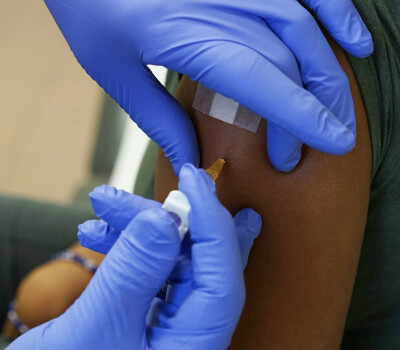
There is currently no approved vaccine against the Bundibugyo Ebola virus. There are candidate vaccines under development, but these are not yet available for use. Approved vaccines, however, do exist against the Zaire Ebola virus. Through the EBO-BOOST-BRIDGE study, ITM and INRB aim to investigate whether these existing vaccines also elicit an immune response against the Bundibugyo virus.
Existing blood samples give researchers a head start
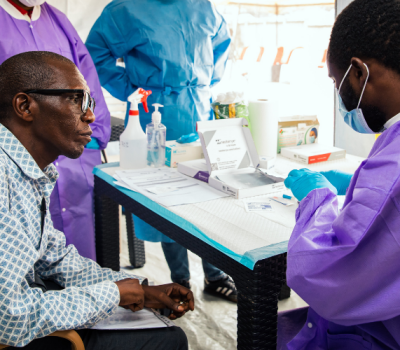
The study is using blood samples from more than 600 participants who received an approved vaccine against the Zaire Ebola virus during previous vaccination campaigns in the Democratic Republic of the Congo. This allows researchers to start quickly without first having to vaccinate new participants and monitor them over a long period. The laboratory tests are being carried out at ITM and INRB.
“Thanks to our biobank containing blood samples from people who have been vaccinated against the Zaire Ebola virus and our long-standing collaboration with INRB, we do not have to start from scratch in the event of an outbreak such as this.”
Wim Adriaensen, professor of clinical immunology at ITM and principal investigator of the EBO-BOOST-BRIDGE study
“This foundation gives us a significant head start in investigating whether existing Ebola vaccines can also offer protection against the Bundibugyo Ebola virus and other Ebola virus species. The knowledge we gain can help us respond more quickly to future outbreaks of lesser-known Ebola viruses.”
Sabue Mulangu, professor of clinical immunology at INRB
Better tests and faster vaccine development
The study aims to provide greater clarity on the immune response to the Bundibugyo virus, through both antibody and cellular immune responses. The results will help researchers develop laboratory tests for these antibodies. These tests are also important for future clinical trials. They can help determine which immune responses a vaccine elicits and whether certain antibodies are associated with protection against the disease.
In the longer term, the results may contribute to the development and evaluation of vaccines that could potentially provide protection against multiple Ebola strains.
Building on EBO-BOOST
EBO-BOOST-BRIDGE builds on the CEPI-funded EBO-BOOST Phase II study. In that study, ITM and INRB investigated the immune response following revaccination against the Zaire Ebola virus. The associated biobank contains blood samples from more than 600 participants. By re-analysing these existing samples, researchers can determine to what extent the antibodies generated also react to the Bundibugyo Ebola virus.
Strengthening laboratory capacity in the DRC
The project is one of four CEPI-supported studies investigating the potential immune responses elicited by existing Ebola vaccines to the Bundibugyo virus. CEPI has awarded US$1.02 million to the project. Part of the funding will be used to strengthen the INRB’s laboratory capacity, enabling it to operate in accordance with the same international standards and to respond more quickly to future Ebola outbreaks.
Part of a broader European collaboration
This work forms part of a broader European collaboration on Ebola vaccines. In May 2026, a working group of vaccine immunology laboratories was established within the European Vaccine Hub (EVH) to standardise tests for immune responses. By using the same methods, researchers can better compare results and assess new Ebola vaccines quicker and more reliably.
The study is funded by the Coalition for Epidemic Preparedness Innovations (CEPI).
Spread the word! Share this story on
More stories
-
 - Press releases
First participant vaccinated in pivotal Phase 2/3 Bundibugyo vaccine trial in DRC
There is currently no approved vaccine against Bundibugyo virus. Tumaini aims to close that gap.Read more -
- Press releases
Institute of Tropical Medicine welcomes four new members to its Board of Governors
New appointments strengthen expertise in innovation, global health and strategic leadership as ITM shapes its future.Read more -
- Press releases
Three ITM alumni win Global Research Award of the province of Antwerp
With this award, the province honours the research of thirteen promising young researchers.Read more -
- Press releases
A study into two treatments for the Bundibugyo virus is set to begin in Bunia
Since the outbreak began, more than 1,400 people have been infected and more than 430 have died.Read more -
- Press releases
Launch of the IMPACT project to develop the first antibody-based countermeasure for orthopoxviruses
ITM brings mpox cohorts and antibody expertise to IMPACTRead more -
- Press releases
Tiger mosquito season begins
Since 2022, the tiger mosquito has already been observed in 40 municipalities.Read more -
- Press releases
Be-IMPACT aims to prevent and improve treatment of malaria in returning travellers
Rising resistance complicates treatment.Read more -
- Press releases
"I thought it wouldn't happen to me": why HIV prevention is not reaching everyone yet
Lack of knowledge, stigma and inequality are still major barriers to HIV prevention.Read more -
- Press releases
People who experienced mpox suspected to have long-term protection against reinfection
International follow-up study on booster vaccinationRead more -
- Press releases
New technologies boost fight against infectious diseases worldwide
International researchers gather in Antwerp to discuss innovations in healthcareRead more