DGD Scholarships
DGD Scholarships
Who can apply?
Citizens from any low or middle-income country (LMIC) can apply. Applicants need to be citizen of a LMIC and actually live there, as defined in the OECD-DAC* list of LMICs. The majority of scholarships, but not all, will be awarded to citizens from the countries defined as priority countries** by the Directorate-General for Development Cooperation (DGD).
Candidates with a second citizenship in a high-income country (e.g. through double nationality) and candidates with employment in a high-income country are not eligible for a DGD scholarship.
* Development Assistance Committee (DAC) of the Organisation for Economic Co-operation and Development (OECD)
** The DGD list of priority countries includes: Benin, Bolivia, Burkina Faso, Burundi, Cambodia, Democratic Republic of the Congo, Ecuador, Ethiopia, Guatemala, Guinea, Haiti, Indonesia, Kenya, Madagascar, Mali, Morocco, Mozambique, Niger, Palestine, Peru, Philippines, Rwanda, Senegal, South Africa, Tanzania, Uganda, Vietnam.
What is included?
The DGD scholarship can include registration and tuition fees, required insurance, accommodation and a living allowance to support your stay in Belgium.
The DGD scholarship for short courses and master’s programmes can include registration and tuition fees, required insurance, accommodation and a living allowance to support your stay in Belgium.
Please note that for the short courses and master's programmes travel costs to and from Belgium are not covered by the DGD scholarship. Applicants who are academically selected and are selected for a DGD-scholarship are therefore expected to arrange and cover the costs of their own travel to Belgium.
Only in truly exceptional circumstances, where the inability to cover travel costs would constitute a serious barrier to taking up the scholarship, can a contribution to travel costs be considered. Such support will be assessed on a case-by-case basis, and will be subject to the availability of specific funds.
A DGD scholarship for a short course or a master’s programme can be full or partial, covering only one item or a few items (e.g., only tuition fees or only living allowance). In a part-time MSc study track, a DGD scholarship can also cover the costs of course components (modules) outside ITM, in the framework of credit mobility (e.g. in the tropEd network*), or at partner institutions within the framework of a collaborative or joint programme.
* Network for Education in International Health
How are the DGD scholarships awarded? What is the selection process?
Please note that the academic selection process is separate from the scholarship selection. All applications will first be assessed by the academic selection committee, based on the applicant’s background, relevant experience and motivation. Only a limited number of applicants will be selected for a DGD scholarship.
Scholarships can only be awarded to candidates who fulfil all criteria for academic admission to the course. During the online application process, applicants will be able to download a DGD scholarship application form. ITM and DGD will jointly award the available scholarships among the academically highest ranked candidates. DGD scholarships can only be awarded to early- or mid-career candidates, as stated in ITM's scholarship regulations.
Selection criteria, as defined by DGD
Personal motivation
Gender (preference for female scholarship candidates in case of equal qualification)
Preferably no previous awarded DGD scholarship in the past
Employment characteristics and prospects, as per support of an employer
Likelihood of professional (re)integration after the course
Employment in a context where the learnings can be applied and developed for a significant period of time
Procedure to request travel support
As mentioned in the previous section, travel costs are not included in the DGD scholarship.
Only in truly exceptional circumstances, where the inability to cover the travel costs would constitute a serious barrier to taking up the scholarship, may a contribution towards travel costs be considered. Any such support will be strictly limited, assessed on an individual basis, and subject to the availability of dedicated funds.
If you believe that you are in such an exceptional situation and wish to request consideration for travel support, please follow the procedure below:
Submit a motivation letter explaining why you are unable to cover the travel costs yourself. The request should be sent to itmedu@itg.be and addressed to the Head of Education, Bruno Broucker.
Use the following subject line: [First name + Surname] – Travel Support.
Provide supporting documentation to substantiate your request. This may include, for example, a recent payslip, a letter from your employer confirming that they are unable to contribute to your travel costs, or other relevant documentation or contextual information.
Please note that submitting a request does not imply that travel support will be granted. Requests will only be considered after the academic selection process and will be assessed on the basis of the applicant’s individual circumstances, the motivation and supporting documentation provided, and the funds available for this purpose.
Please send your request before the application deadline of the programme you have applied for.
Important guiding principles
Applicants who have previously undertaken master's studies in a high-income country are not eligible for additional travel support.
Please carefully consider whether you genuinely require this additional support before submitting a request. ITM has very limited funding available for this purpose and wishes to ensure that it can be directed towards applicants for whom travel costs represent a genuine and significant barrier to taking up the scholarship.
Travel support is not guaranteed. Applicants should therefore only request it when there is no other funding available and when their inability to cover travel costs would prevent them from taking up the scholarship. If ITM cannot provide travel support, ITM will regard the applicant as unable to take up the scholarship and the scholarship will be reassigned to another candidate.
Are doctoral candidates from LMICs eligible for a DGD scholarship?
Each year, three to five PhD scholarships are awarded to ITM alumni and other people with high potential who are admitted to the ITM doctoral (PhD) programme. Applying PhD candidates have to comply to DGD eligibility criteria* before a DGD PhD scholarship can be awarded. A PhD scholarship provides financial support for up to 48 months of doctoral training. These are sandwich scholarships whereby the student can be at ITM for up to 24 months.
* Nationality, home address, home institution, stage in career
Browse other scholarship opportunities
Romain De Cock scholarship
The Romain De Cock scholarship is awarded yearly to a master's student in the field of international health, with a research focus on surgical, obstetrical or gynaecological topics, policies, or clinical questions of interest for surgical practice and public health.
Marleen Boelaert Scholarship
The Marleen Boelaert scholarship is awarded yearly to a student or researcher with a focus on neglected tropical diseases, disease control or elimination, conflict settings or populations in danger.
Armand Van Deun Scholarship
The Armand Van Deun scholarship is awarded yearly to a student of the Clinical Decision-Making for Drug-Resistant Tuberculosis (DR-TB) course.
External funding
Alternative scholarship opportunities exist from a variety of sponsors, such as employers, private sponsors, development cooperation projects, and national agencies supporting studies abroad.
News
All news-
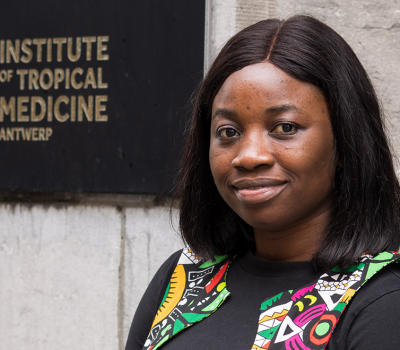
 Introducing graduate Fatmata Bintu Kargbo
 -
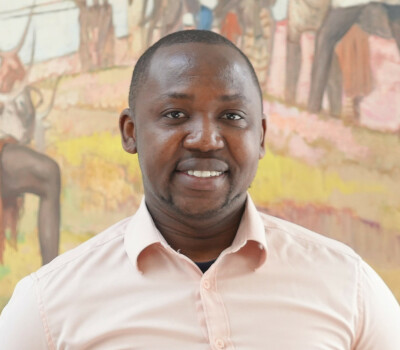
An interview with Dr Amani Kikula, a researcher in obstetrics and gynaecology from Tanzania.
-
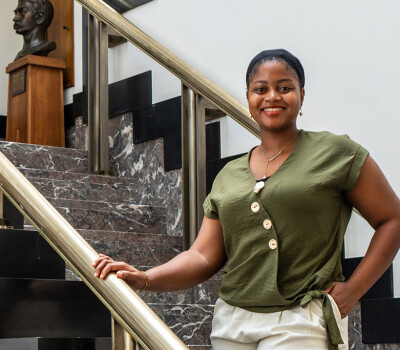
Introducing Dr Zeynab Olamide Rabiu, recipient of the Armand Van Deun Scholarship
-
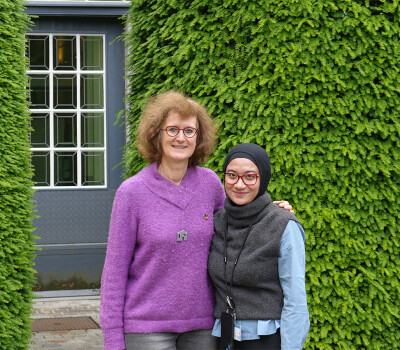
A conversation with Marleen Boelaert Scholarship grantee Faradiba Faradiba (Indonesia) and Professor Raffaella Ravinetto (ITM)
-
Impact stories
"I realised that I could not help as many people as I wanted by sitting behind a desk in a hospital"
 Insights from Dr Moïse Saa Denah Tenkiano, Romain De Cock scholarship grantee 2024-2025
 -
Articles
On dedication and on the future
Double interview with Marleen Boelaert scholarship student Richard Ndayisaba and Laura Moreno Reyes.