"This research will have a far greater impact on the people of Tanzania than the PhD degree I have earned."

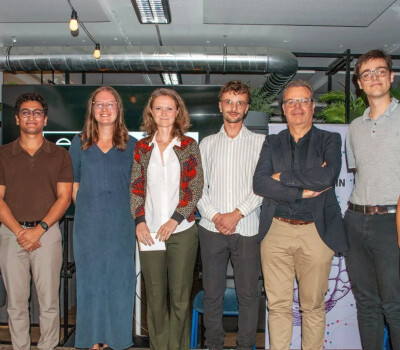
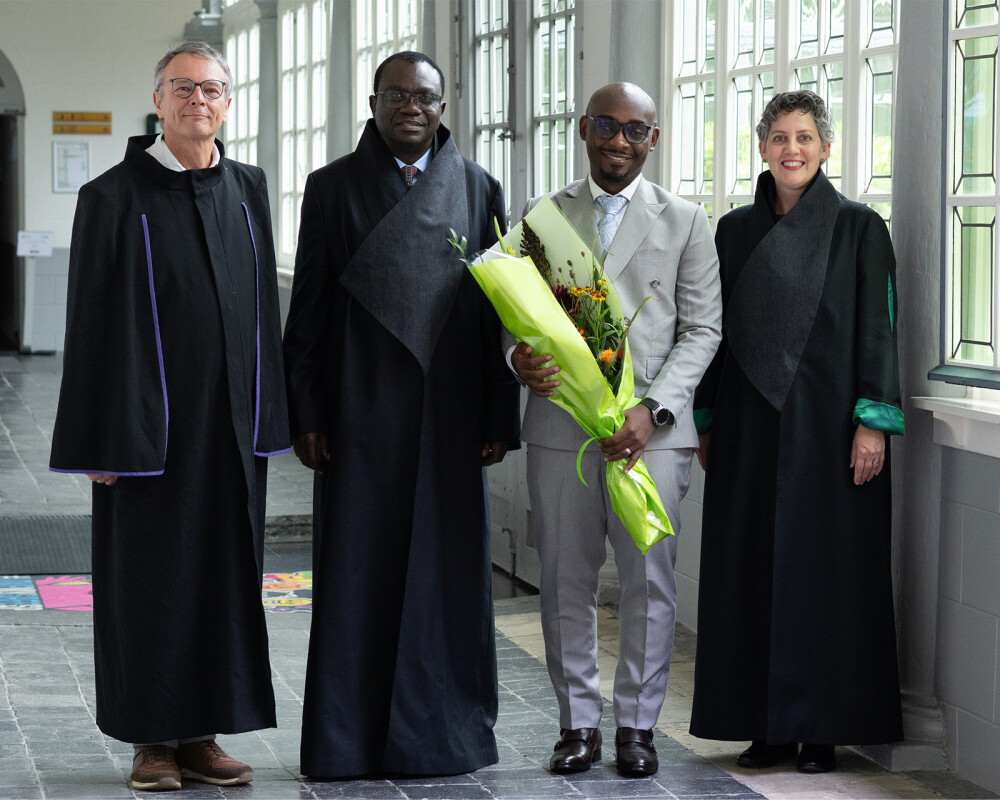
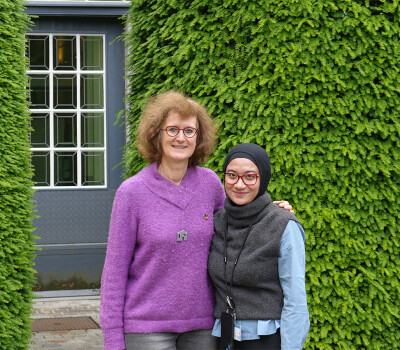
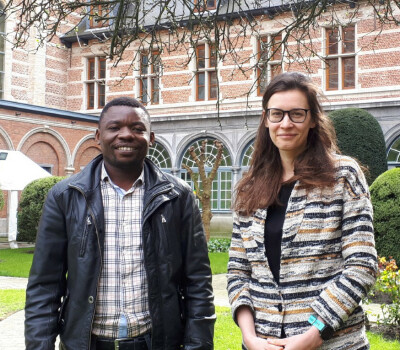
Header: Prof Dr Lenka Beňová and Dr Amani Kikula
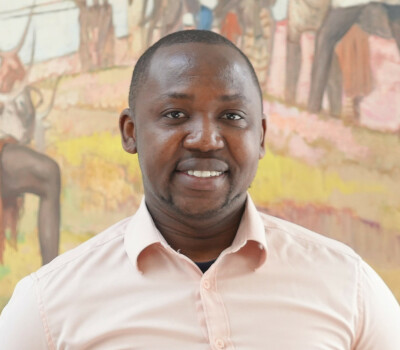
Amani Kikula's academic journey began with some advanced courses at ITM, and he recently successfully defended his PhD on "Optimizing screening for gestational diabetes mellitus in Tanzanian primary health care facilities".
He has a clinical practice at Muhimbili National Hospital in Dar es Salaam, he is a senior lecturer at the Muhimbili University of Health and Allied Sciences and a reproductive health researcher.
How did you get into contact with ITM?
AMANI: When I was in the final months of my master's programme at Muhimbili University, Prof Andrea B. Pembe introduced me to Prof Lenka Beňová, who heads ITM's Unit of Maternal and Reproductive Health. She emailed me on the possibility of working on a planned maternal health project in Tanzania. I first met with Lenka in person in February 2020, when I came to Antwerp for the Qualitative and Mixed Methods in International Health Research course (QMM), to optimally prepare myself for this project.
What motivated you to accept Lenka's offer? Did you know ITM before you met her?
AMANI: I did not know ITM before I was introduced to Lenka. Our initial email conversation felt personal, she asked about my family (no one at work had ever asked anything about my family). I knew she was someone special, she made me have faith in ITM. When I started reading about ITM, I was convinced I wanted to be part of that community. At the time I was still new to research, finding my way to get a balance between my clinical training and merging it with public health.
How did you collaborate with ITM in the following years?
AMANI: When I was introduced to Lenka, there was already ongoing work to develop and submit a protocol on maternal health in Tanzania. After completing the QMM course, I led the field work coordination and data collection in Tanzania. This led to another project in Tanzania: supporting the postnatal care proposal of Aline Semaan, an ITM researcher. We collaborated on several manuscripts.
What made you apply for a PHD at ITM? How did that process go?
AMANI: I developed an interest in merging research with clinical practice during my master's training. After following fundamental research courses at ITM and MUHAS, research projects in Tanzania and the projects with Aline, I realised it made more sense to venture into a PhD programme. While I was in Antwerp in February 2020, Lenka and I visited the hospital in Mechelen. It was an eye-opener to see how different the labor ward was from those in my home country. On the train back to Antwerp, I asked Lenka if she was willing to support my proposed PhD concept (I had been scribbling in my notebook for a couple of months about what I wanted to do). Lenka replied "This is great Amani, send it over by email and I will be more than happy to support you”.
The next one-two years, the scribbles in my notebook developed into a full proposal. I followed the "Write your paper based on DHS data on reproductive and child health" short course at ITM. The output of this course, a published manuscript, formed one of the chapters in my PhD thesis. I was awarded the competitive DGD PhD sandwich scholarship, starting in January 2023.
Throughout the process, Lenka was instrumental in guiding me, allowing me to share my knowledge, challenging me to be better and helping me prepare for the PhD programme.
About the DGD scholarships
The Belgian Directorate-General for Development Cooperation (DGD) offers scholarships to students from low or middle-income countries (LMIC). Applicants need to be citizen of a LMIC and actually live there. The majority of scholarships, but not all, will be awarded to citizens from the countries defined as priority countries by DGD.
You received a DGD scholarship, how has this opportunity impacted your academic and professional path?
AMANI: ITM is a diverse, rich 'global academic village'. The DGD scholarship allowed me to interact with brilliant minds, share, discuss and collaborate with them. The DGD scholarship opened a lot of opportunities: promotion at my home institution, training in a different culture and environment, which broadened my scope of knowledge, and building professional relationships. ITM has become my professional family. I hope and look forward to working with ITM in the future.
"ITM offers an amazing and unique professional environment for any aspiring public health researcher to grow and dream of reaching even higher academic grounds."
Dr Amani Kikula
ITM DGD Scholarship grantee
How do you envision your research contributing to the healthcare landscape in your home country?
AMANI: The results from my PhD have led me to be involved in being part of the team coordinating the revision of national maternal health guideline (antenatal care guideline) where a revised gestational diabetes mellitus (GDM) screening modality is being proposed to be implemented in Tanzania.
This will have a far greater impact on the people of Tanzania than the PhD degree I have earned.
I aim to elaborate my work on diabetes mellitus through a postdoc and see how care beyond GDM screening can be improved in Tanzania.
What would you say to someone who is still at the beginning of their PhD journey?
AMANI: A PhD is like a marathon. Consistent effort throughout the journey, accompanied by great support, makes it easier. ITM offers an amazing and unique professional environment for any aspiring public health researcher to grow and dream of reaching even higher academic grounds.
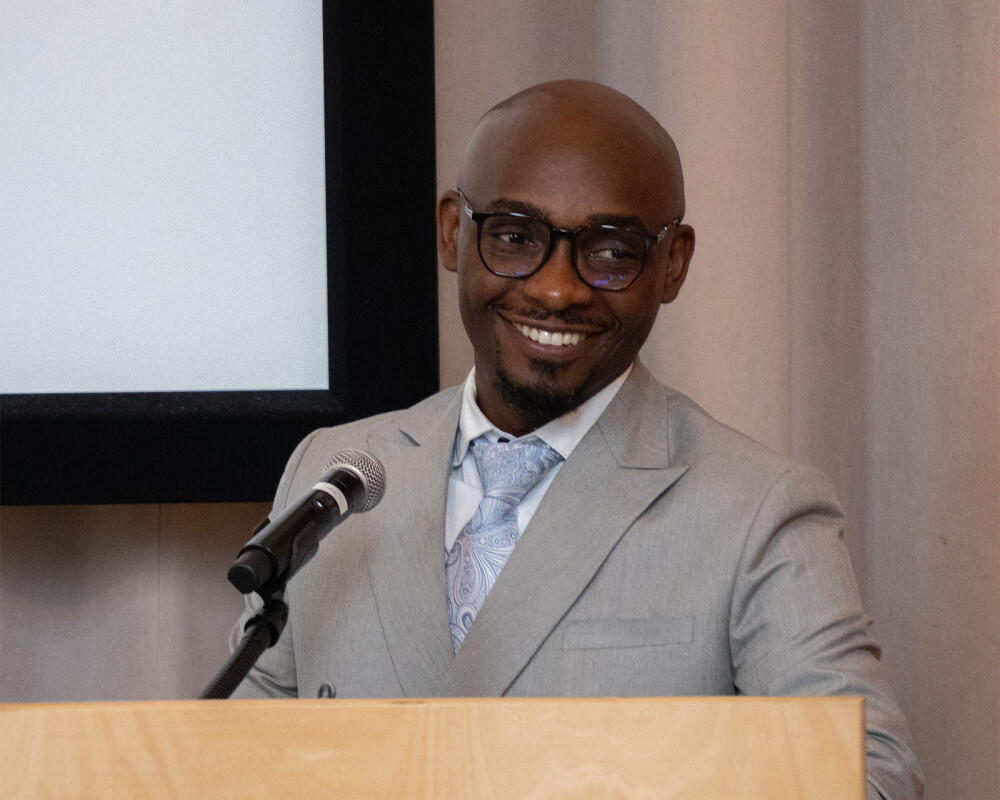
Want to know more about Amani?
Amani won the "Young and Upcoming Researcher in Obstetrics and Gynaecology" award from AGOTA (Association of Gynaecologists and Obstetricians in Tanzania) in 2025. He has written several papers and regularly presents at various high-level fora, such as the AlignMNH conference in Nairobi (March 2026) and an invitation-only forum in Stockholm. He is currently the Vice President of the Association of Gynaecologists and Obstetricians in Tanzania.
News
All news-
 Introducing graduate Fatmata Bintu Kargbo
 -
An interview with Dr Amani Kikula, a researcher in obstetrics and gynaecology from Tanzania.
-
Introducing Dr Zeynab Olamide Rabiu, recipient of the Armand Van Deun Scholarship
-
A conversation with Marleen Boelaert Scholarship grantee Faradiba Faradiba (Indonesia) and Professor Raffaella Ravinetto (ITM)
-
Impact stories
"I realised that I could not help as many people as I wanted by sitting behind a desk in a hospital"
 Insights from Dr Moïse Saa Denah Tenkiano, Romain De Cock scholarship grantee 2024-2025
 -
Articles
On dedication and on the future
Double interview with Marleen Boelaert scholarship student Richard Ndayisaba and Laura Moreno Reyes.

Spread the word! Share this story on
More stories
-
- Articles
Final preparations underway for pivotal Phase 2/3 Bundibugyo vaccine trial
Tumaini, a pivotal Phase 2/3 clinical trial, will evaluate vaccine candidates including Ervebo as part of the DRC's outbreak response. There is currently no approved vaccine against Bundibugyo virus. Tumaini aims to close that gap.Read more -
- Articles
Who is at risk, and who is reached? Eight new insights into infection, care and prevention
With the Fresh Off The Journal series, we bring you our monthly research highlights.Read more -
- Articles
First 100 medical crisis intervention volunteers are undergoing training at ITM
One hundred volunteer doctors and nurses will form a Medical Reserve Unit (MRE) in Flanders that can be deployed rapidly in the event of acute, local health crises. They are gathering today for the first time for a training day on infectious diseases and outbreaks at the Institute of Tropical Medicine in Antwerp. They were welcomed by Caroline Gennez, the Flemish Minister for Welfare and Public Health, who will be providing 250,000 euros per year to the MRE over the next three years.Read more -
- Articles
How a nurse from Sierra Leone broadened her perspective at ITM
Introducing graduate Fatmata Bintu KargboRead more -
- Articles
Connecting research, policy and partnerships for better access to cancer medicines
Tinashe Zigomo, a PhD candidate at the University of the Western Cape School of Public Health, reflects on a four-week visiting scholar period at ITM Antwerp, focused on access to essential breast cancer medicines in low-resource settings.Read more -
- Articles
An infectious disease anywhere is an infectious disease everywhere
From the frontlines of the current Ebola outbreak in Central Africa to the resurgence of drug-resistant TB in Europe, weakening global health systems make all of us less safe.Read more -
- Articles
Infectious disease specialist Isabel Brosius wins Eos Pipet 2026 for her leadership in mpox research
The jury praises her strong scientific work and pronounced societal engagement.Read more -
- Articles
Strong collaboration strengthens the response: how jointly developed sequencing expertise helps to unravel the Bundibugyo Ebola outbreak
When the current Bundibugyo Ebola outbreak emerged in the Democratic Republic of Congo, researchers at ITM’s partner institute, Institut National de Recherche Biomédicale (INRB), responded immediately. ITM Professor Koen Vercauteren talks about the role of long-term investment in sequencing technologies and scientific partnerships.Read more -
- Articles
"Infectious diseases cannot be studied from one discipline alone"
Ahead of the 66th ITM Colloquium, scientific leads Prof Dr Johan van Griensven from the Institute of Tropical Medicine (ITM) in Antwerp and Dr Endalamaw Gadisa from the Armauer Hansen Research Institute (AHRI) in Addis Ababa discuss why mobility is central to understanding infectious diseases and why researchers need to look beyond their own discipline.Read more -
- Articles
Staying ahead of resistance: from bacteria to better care
With the Fresh Off The Journal series, we bring you our monthly research highlights.Read more