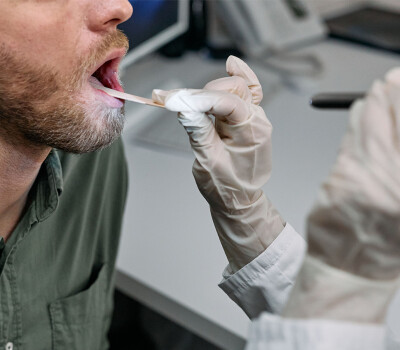
EOS Pipet Award: Isabel Brosius investigated the mpox virus during the outbreak
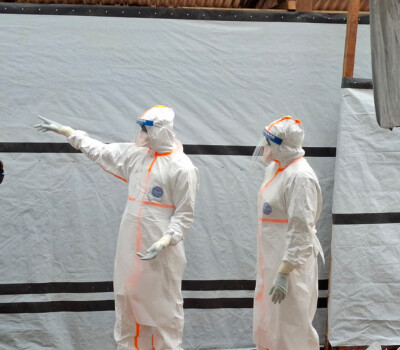
In 2023, researchers from the Institute of Tropical Medicine were just finishing up their fieldwork in the Democratic Republic of the Congo when suddenly all the alarm bells went off. Local health authorities informed them that cases of mpox had been reported in South Kivu in the east of the country, even though the disease had never been seen there before. Moreover, the number of people affected was strikingly high, suggesting that the virus was being transmitted from person to person rather than from animal to human, as had usually been the case in Congo up to that point.
"A thorough description of the disease is important because it provides the foundation for strategies to contain it."
Isabel Brosius
Infectious disease specialist
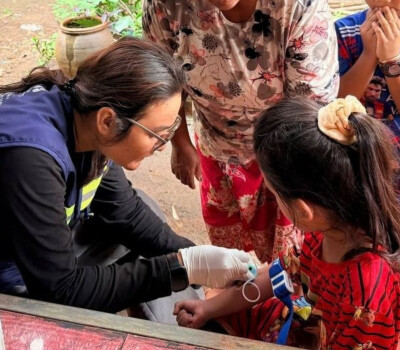
"We had been conducting research into mpox for some time and had already established strong partnerships, so we were ideally positioned to study the situation on the ground," explains infectious disease specialist Isabel Brosius. Two years earlier, she had joined the Outbreak Research Team at ITM, a group of scientists who are always on standby to travel to epidemic hotspots anywhere in the world.
When the researchers arrived on the ground, it turned out that more than a hundred people had already contracted the disease, presenting with flu-like symptoms, painful sores and swollen glands. Local healthcare providers had their hands full caring for the patients, and the regional hospital lacked the infrastructure to carry out scientific research.
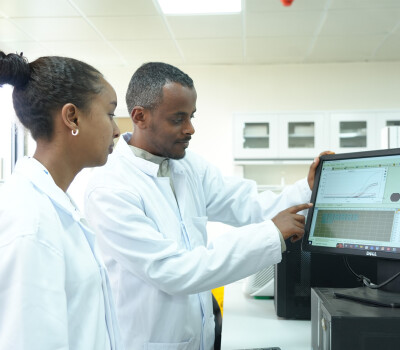
The team set everything in motion to establish a diagnosis, treatment and research centre, complete with a local testing laboratory and a free treatment centre. This meant that all patients could receive care while the research team gathered crucial information about the virus during the ongoing outbreak.
Eos Pipet Award 2026
Each year, Eos honours a young scientist who has made a significant contribution to scientific research. In a series of five profiles, they introduce the nominees of the Eos Pipet Award, in collaboration with the Young Academy. The winner will be announced in September.
Searching for pieces of the puzzle
As a clinical researcher, Brosius began gathering all kinds of information relating to the new virus variant immediately, in order to gain insight into the course of the disease as quickly as possible. "A thorough description of the disease is important because it provides the foundation for strategies to contain it, particularly in low- and middle-income countries where fewer diagnostic tools are available, meaning healthcare providers often have to rely on case reports," she says.
The research yielded clear information about the new virus variant immediately, which was feared to cause much more severe illness than the variant that spread in 2022. "If you look at the literature from before and after 2022, you can see that a huge amount of research has been launched since then because it suddenly became clear that this virus could spread much more widely than just in Africa," Brosius explains. "Yet, despite that realisation, it proved difficult to quickly mobilise resources and support to promptly launch research in response to this new outbreak. The World Health Organization has incorporated the findings into the global mpox guidelines, enabling health authorities worldwide to accurately assess the risk and prepare for any local cases."
The disease spread from South Kivu to neighbouring countries, including Burundi, Rwanda and Uganda, where hundreds of people were affected, before spreading to other countries in East Africa, as well as Europe and the US. "We know that the mpox virus occurs in two major genetic groups, also known as clades: clade 1, which was mainly found in Central Africa, and clade 2, which was mainly found in West Africa," says Brosius. "Until 2022, researchers assumed that clade 1 infections were usually severe, with many complications and a high mortality rate, while clade 2 caused a milder clinical picture." The first time the virus spread among people outside Africa, it was clade 2b. However, it later emerged that a subgroup of clade 1, clade 1b, can also spread among people and often does not result in the expected severe clinical presentation. With every new outbreak, it is therefore crucial to quickly determine how severe and deadly the infections are, and how the virus variant is spreading."
Everyone is susceptible
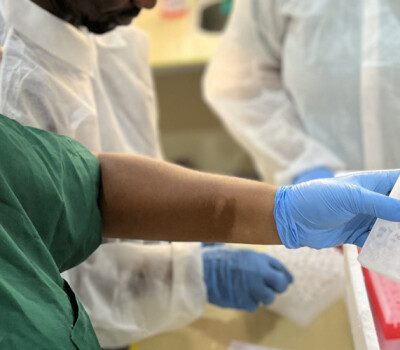
In 2022, when hundreds of people in Belgium contracted the virus, Brosius conducted research and served as an adviser to the National Risk Assessment Group. Her main aim was to establish how the disease spreads between people. To this end, she established a cohort of individuals who had been in close contact — sexual or otherwise — with someone who had recently been diagnosed with the disease. "We systematically collected samples from these individuals after their high-risk contact with an mpox patient, but before they showed any symptoms themselves. This allowed us to determine whether the risk of infection is higher through sexual contact than through other forms of close contact and whether patients are infectious before they develop symptoms."
Brosius is currently working on a publication about the various bodily fluids in which the virus can be detected. This will clarify which samples are suitable for diagnosis, even in the absence of visible skin lesions, and will also provide greater insight into how the virus is transmitted.
Meanwhile, the research centre and its associated protocols provided a platform that enabled other researchers to document the effects of mpox on the eye and during pregnancy in detail. Ongoing cohort studies will also provide further insight into the effectiveness of mpox vaccines in practice. In the future, Brosius would like to carry out a formal comparison of all mpox virus sub-variants. "There is currently a strong perception that the disease only spreads amongst men who have sex with men," she explains. "While it is true that they were disproportionately affected by the global clade 2b outbreak in 2022, the clade 1b outbreak shows that other groups are also affected in a different context. In principle, therefore, everyone is susceptible, and many factors play a role. The better we understand all these factors, the better we can assess risks in the event of a new outbreak and predict how the virus will behave. Furthermore, I hope that we can apply the lessons we learn from this disease to other emerging infectious diseases, enabling us to respond more quickly when a new threat emerges."
Isabel Brosius
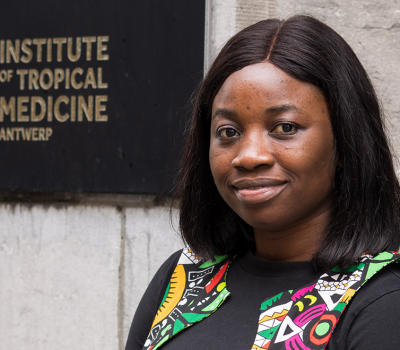
Isabel Brosius (1984) is a general internist, infectious disease specialist, and clinical researcher at the Institute of Tropical Medicine in Antwerp. She is also a consultant in infectious diseases at Antwerp University Hospital and a PhD researcher at KU Leuven and the University of Antwerp. She is a key contact for scientific communication on outbreak-prone infectious diseases, including mpox, at ITM, where she also delivers lectures on outbreak investigation.
Eos Pipet Award 2026
Each year, Eos honours a young scientist who has made a significant contribution to scientific research. In a series of five profiles, they introduce the nominees of the Eos Pipet Award, in collaboration with the Young Academy. The winner will be announced in September.
Spread the word! Share this story on
More stories
-
 - Articles
Who is at risk, and who is reached? Eight new insights into infection, care and prevention
With the Fresh Off The Journal series, we bring you our monthly research highlights.Read more -
- Articles
First 100 medical crisis intervention volunteers are undergoing training at ITM
One hundred volunteer doctors and nurses will form a Medical Reserve Unit (MRE) in Flanders that can be deployed rapidly in the event of acute, local health crises. They are gathering today for the first time for a training day on infectious diseases and outbreaks at the Institute of Tropical Medicine in Antwerp. They were welcomed by Caroline Gennez, the Flemish Minister for Welfare and Public Health, who will be providing 250,000 euros per year to the MRE over the next three years.Read more -
- Articles
How a nurse from Sierra Leone broadened her perspective at ITM
Introducing graduate Fatmata Bintu KargboRead more -
- Articles
Connecting research, policy and partnerships for better access to cancer medicines
Tinashe Zigomo, a PhD candidate at the University of the Western Cape School of Public Health, reflects on a four-week visiting scholar period at ITM Antwerp, focused on access to essential breast cancer medicines in low-resource settings.Read more -
- Articles
An infectious disease anywhere is an infectious disease everywhere
From the frontlines of the current Ebola outbreak in Central Africa to the resurgence of drug-resistant TB in Europe, weakening global health systems make all of us less safe.Read more -
- Articles
Infectious disease specialist Isabel Brosius wins Eos Pipet 2026 for her leadership in mpox research
The jury praises her strong scientific work and pronounced societal engagement.Read more -
- Articles
Strong collaboration strengthens the response: how jointly developed sequencing expertise helps to unravel the Bundibugyo Ebola outbreak
When the current Bundibugyo Ebola outbreak emerged in the Democratic Republic of Congo, researchers at ITM’s partner institute, Institut National de Recherche Biomédicale (INRB), responded immediately. ITM Professor Koen Vercauteren talks about the role of long-term investment in sequencing technologies and scientific partnerships.Read more -
- Articles
"This research will have a far greater impact on the people of Tanzania than the PhD degree I have earned."
An interview with Dr Amani Kikula, a researcher in obstetrics and gynaecology from Tanzania.Read more -
- Articles
"Infectious diseases cannot be studied from one discipline alone"
Ahead of the 66th ITM Colloquium, scientific leads Prof Dr Johan van Griensven from the Institute of Tropical Medicine (ITM) in Antwerp and Dr Endalamaw Gadisa from the Armauer Hansen Research Institute (AHRI) in Addis Ababa discuss why mobility is central to understanding infectious diseases and why researchers need to look beyond their own discipline.Read more -
- Articles
Staying ahead of resistance: from bacteria to better care
With the Fresh Off The Journal series, we bring you our monthly research highlights.Read more