Two Horizon Europe projects awarded to ITM
Horizon Europe is the European Union's flagship research and innovation funding programme. The health cluster aims to improve and protect the health and well-being of citizens of all ages by generating new knowledge and developing innovative solutions to prevent, diagnose, monitor, treat and cure diseases. In spring 2026, two of ITM's five-year projects were awarded Horizon Europe grants: one focused on managing cardiovascular risk factors, and the other on preventing and treating infectious diseases with epidemic potential.

ComBaScale, short for “Community-Based Scale up of integrated community health worker-led cardiovascular risk factor management”, aims to empower community health workers in under-resourced settings to deliver a high quality, evidence-based, holistic package of integrated frontline care for hypertension, diabetes, HIV, and tuberculosis.
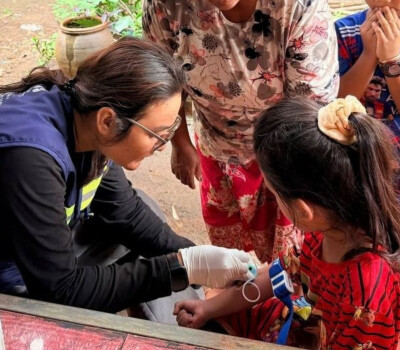
ComBaScale will be tested in two districts of Lesotho, a low-income country disproportionately affected by a growing burden of chronic diseases. Community health workers will be trained to manage blood pressure and diabetes in patients, adding this to their existing duties, such as HIV and tuberculosis screening. A dedicated app will guide them through safe, up-to-date treatment decisions. The programme will also look at cost-effectiveness and explore potential barriers such as stigma and gender dynamics. Community members and people with lived experience will be actively involved in shaping the programme. All tools, training materials, and lessons learned will be packaged into a practical toolkit for use across Lesotho and beyond.
ComBaScale brings together nine partners spanning academic institutions, government bodies, and NGOs in Lesotho (SolidarMed, Ministry of Health, National University of Lesotho), Switzerland (University of Basel, Swiss Tropical and Public Health Institute), Belgium (Institute of Tropical Medicine Antwerp), South Africa (University of KwaZulu-Natal), Germany (Ludwig Maximilian University of Munich), and the UK (University of Glasgow). The project will be coordinated by ITM’s Unit of HIV and TB.
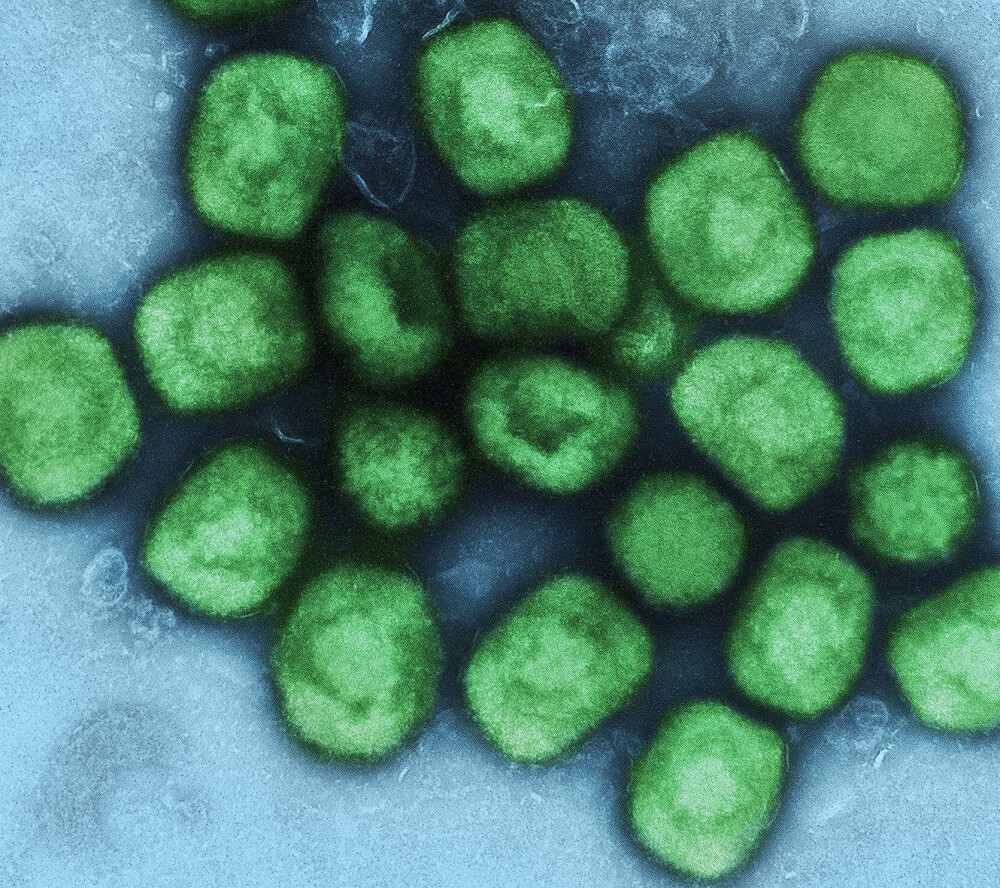
ITM’s Unit of Virus Ecology and Unit of Clinical Emerging Infectious Diseases became partners in the IMPACT project, which plans to develop antibodies and antibody-derived proteins for the prevention and treatment of infectious diseases with epidemic potential, such as orthopoxviruses (including mpox and smallpox). European research institutions will work together to design antibodies that can neutralize both types of virus with a single treatment. The team will use artificial intelligence to optimise the antibodies and extend how long they work in the body. These candidates will then be tested in animal models and, if successful, in a human clinical trial. The researchers will also study blood samples from people who have been infected or vaccinated to understand how the immune system responds and to establish safety markers. The goal is to create an effective therapeutic tool that strengthens Europe's ability to respond to outbreaks and biological threats.
IMPACT stands for “Innovative Monoclonal antibody against Poxviruses for Advanced CounTermeasures” and will be a collaboration between 11 institutions in Italy, Belgium, Norway, Germany, France, and the Democratic Republic of the Congo. The coordinating party is the Italy-based NGO, Sclavo Vaccines Association – Vaccines Against Poverty.
Spread the word! Share this story on
More stories
-
 - Articles
Who is at risk, and who is reached? Eight new insights into infection, care and prevention
With the Fresh Off The Journal series, we bring you our monthly research highlights.Read more -
- Articles
First 100 medical crisis intervention volunteers are undergoing training at ITM
One hundred volunteer doctors and nurses will form a Medical Reserve Unit (MRE) in Flanders that can be deployed rapidly in the event of acute, local health crises. They are gathering today for the first time for a training day on infectious diseases and outbreaks at the Institute of Tropical Medicine in Antwerp. They were welcomed by Caroline Gennez, the Flemish Minister for Welfare and Public Health, who will be providing 250,000 euros per year to the MRE over the next three years.Read more -
- Articles
How a nurse from Sierra Leone broadened her perspective at ITM
Introducing graduate Fatmata Bintu KargboRead more -
- Articles
Connecting research, policy and partnerships for better access to cancer medicines
Tinashe Zigomo, a PhD candidate at the University of the Western Cape School of Public Health, reflects on a four-week visiting scholar period at ITM Antwerp, focused on access to essential breast cancer medicines in low-resource settings.Read more -
- Articles
An infectious disease anywhere is an infectious disease everywhere
From the frontlines of the current Ebola outbreak in Central Africa to the resurgence of drug-resistant TB in Europe, weakening global health systems make all of us less safe.Read more -
- Articles
Infectious disease specialist Isabel Brosius wins Eos Pipet 2026 for her leadership in mpox research
The jury praises her strong scientific work and pronounced societal engagement.Read more -
- Articles
Strong collaboration strengthens the response: how jointly developed sequencing expertise helps to unravel the Bundibugyo Ebola outbreak
When the current Bundibugyo Ebola outbreak emerged in the Democratic Republic of Congo, researchers at ITM’s partner institute, Institut National de Recherche Biomédicale (INRB), responded immediately. ITM Professor Koen Vercauteren talks about the role of long-term investment in sequencing technologies and scientific partnerships.Read more -
- Articles
"This research will have a far greater impact on the people of Tanzania than the PhD degree I have earned."
An interview with Dr Amani Kikula, a researcher in obstetrics and gynaecology from Tanzania.Read more -
- Articles
"Infectious diseases cannot be studied from one discipline alone"
Ahead of the 66th ITM Colloquium, scientific leads Prof Dr Johan van Griensven from the Institute of Tropical Medicine (ITM) in Antwerp and Dr Endalamaw Gadisa from the Armauer Hansen Research Institute (AHRI) in Addis Ababa discuss why mobility is central to understanding infectious diseases and why researchers need to look beyond their own discipline.Read more -
- Articles
Staying ahead of resistance: from bacteria to better care
With the Fresh Off The Journal series, we bring you our monthly research highlights.Read more