Wanted: Artist to critically engage with ITM’s colonial heritage
Purpose of the residency
Background
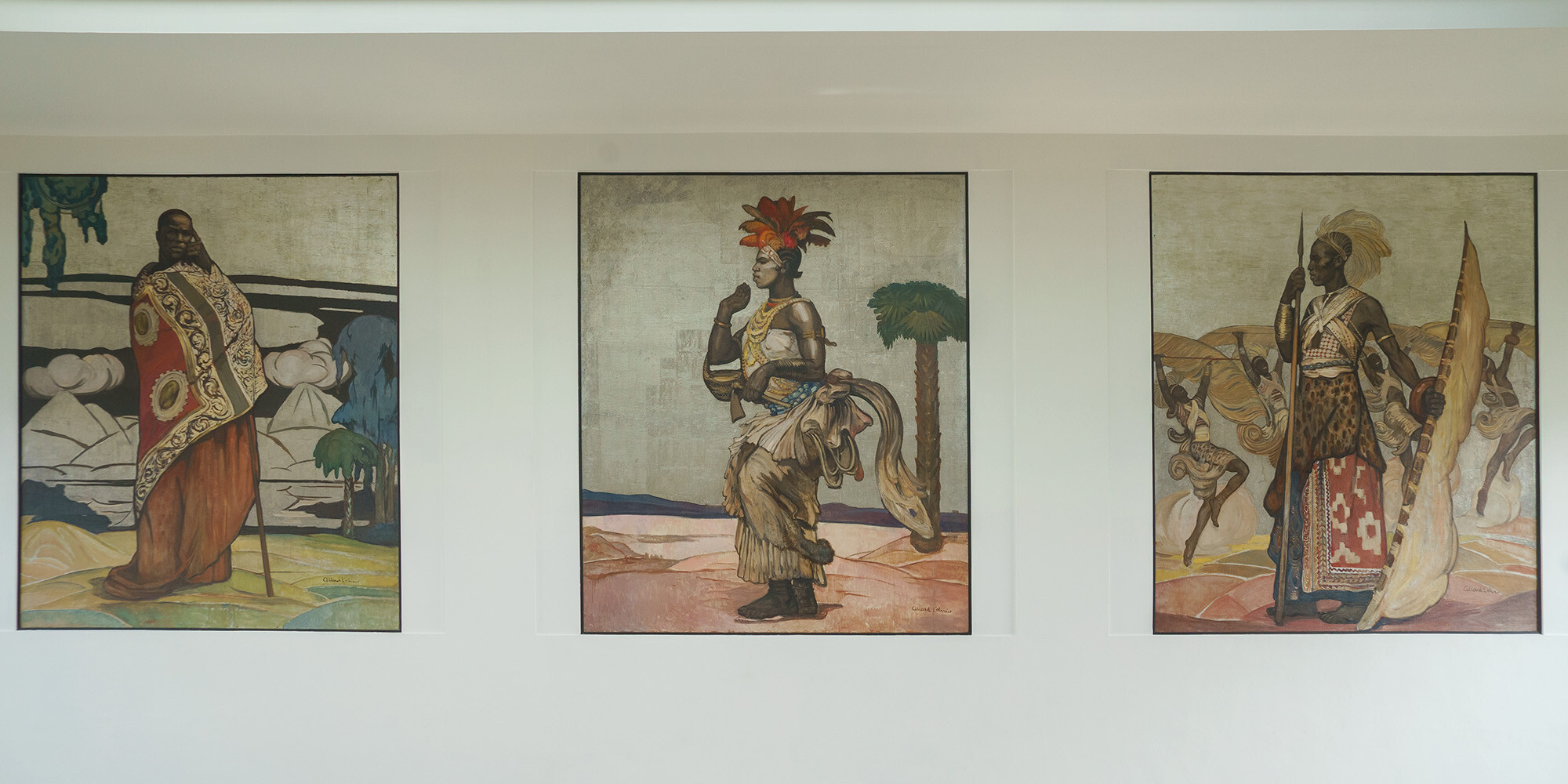
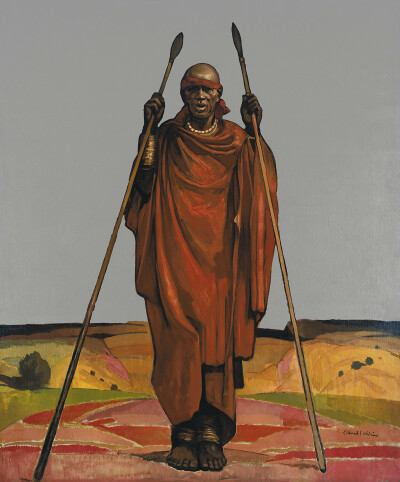
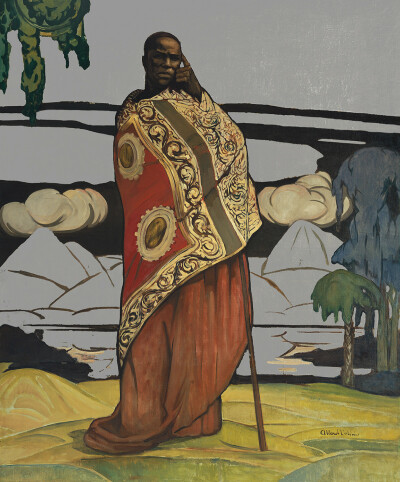
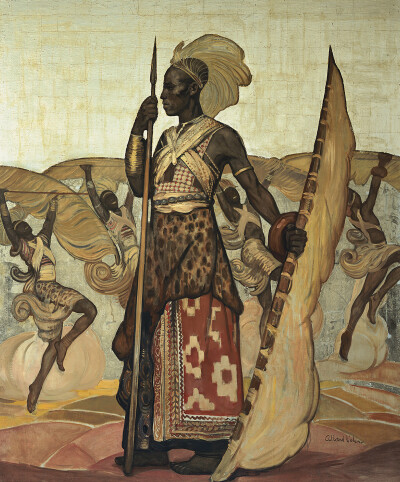
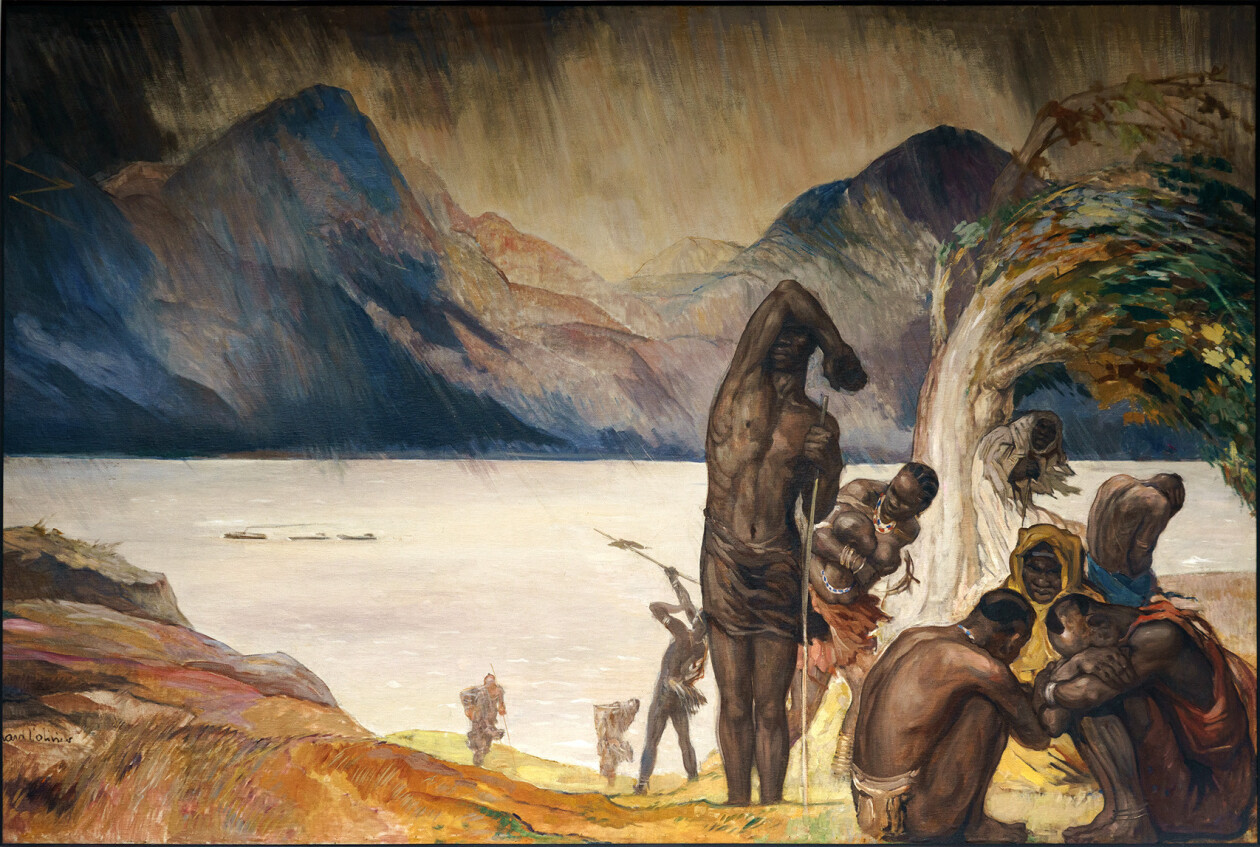
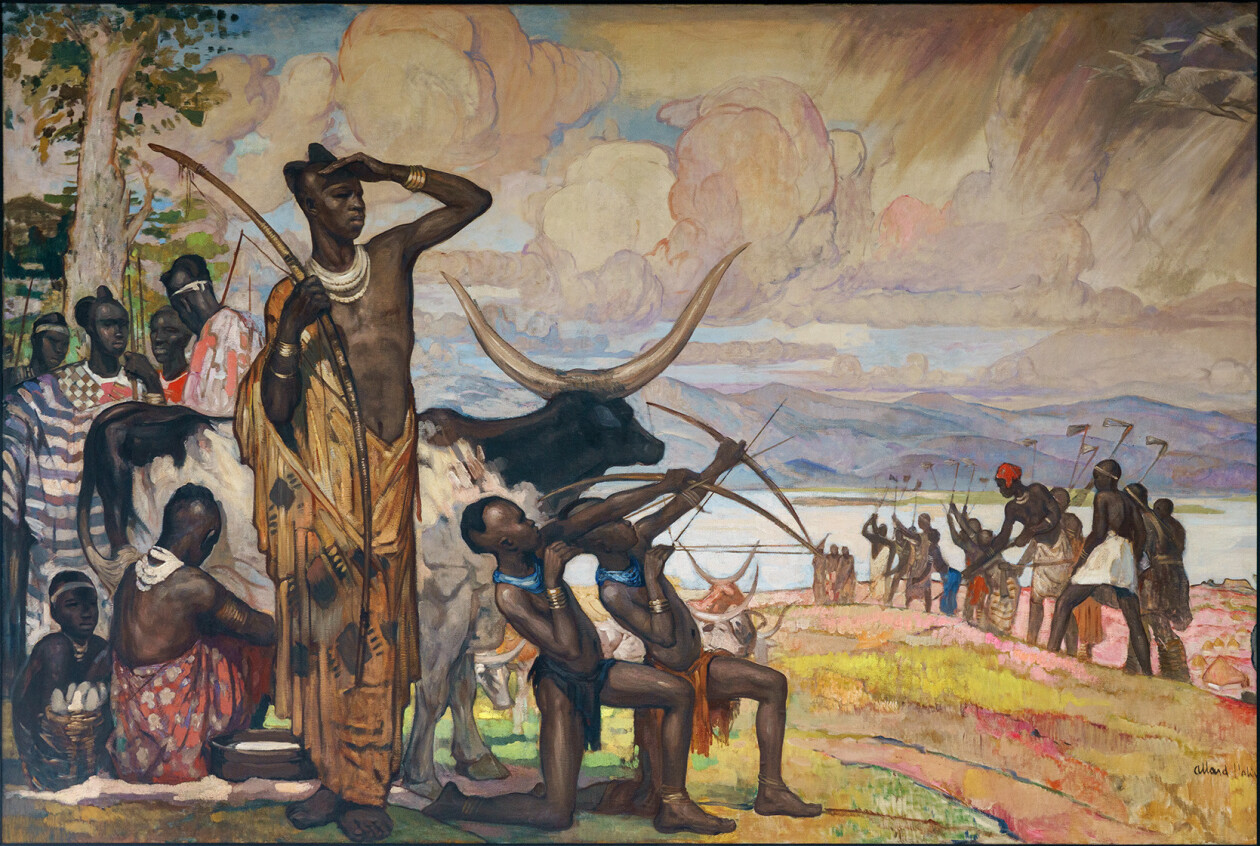
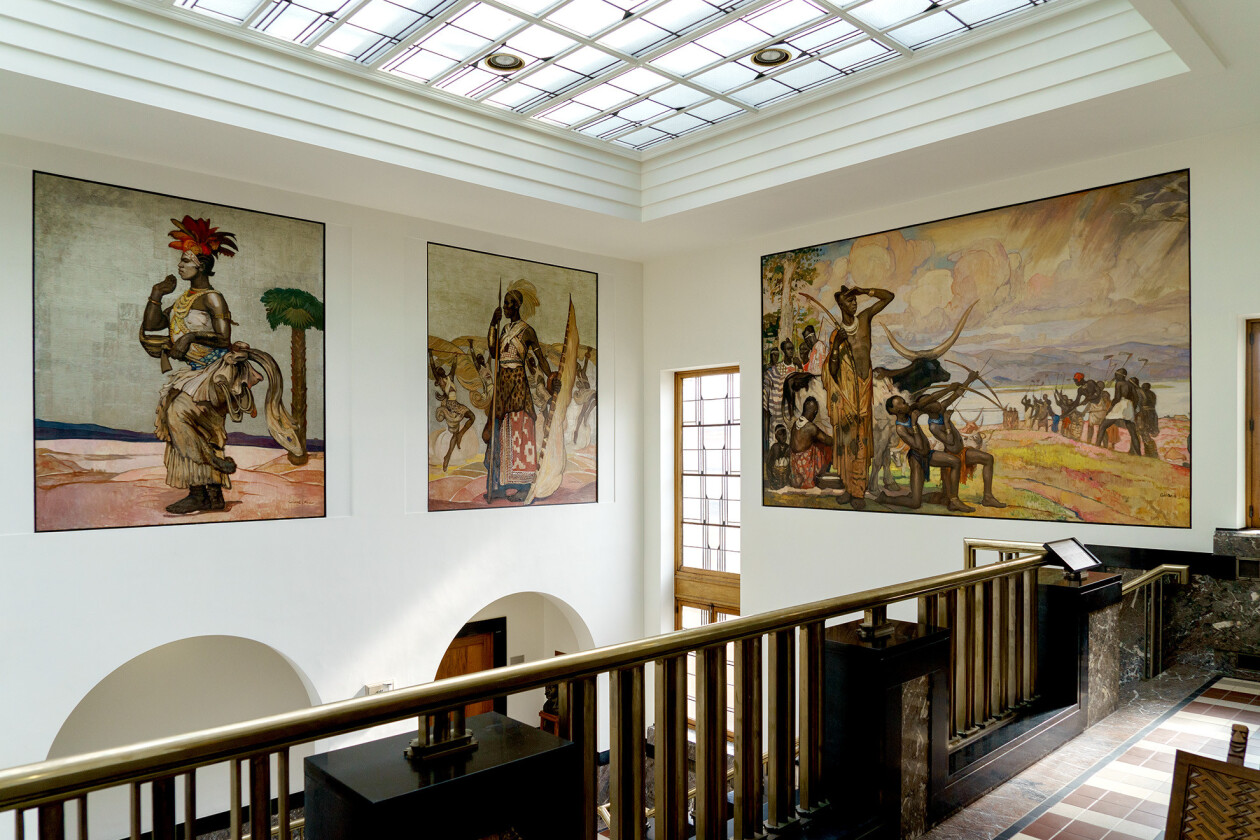
Following the 1930 World Exposition in Antwerp, twelve paintings by the Belgian artist Fernand Allard l’Olivier (who often signed his work using the acronym "FALO") were transferred to the Institute of Tropical Medicine. Today, several of these paintings remain on display in our clinic and administrative buildings in Antwerp.
The paintings depict landscapes and scenes from the Kivu region during the Belgian colonial period. While they possess artistic and historical value, they were also produced within a colonial context and contributed to narratives that supported and legitimised colonisation, the exploitation of people and resources, and the creation and reinforcement of tensions between different ethnic groups. As such, they invite critical reflection on how colonial histories have been represented, preserved and displayed within institutional spaces.
Objective
Through this residency, ITM and Africalia invite an artist to critically engage with these artworks and the broader questions they raise about institutional memory, colonial heritage and the continuing impact of colonialism on the present.
Rather than treating the paintings as static historical objects, we hope that they can become starting points for dialogue. We welcome proposals that combine artistic practice with research and encourage approaches that challenge, reinterpret or contextualise the collection from contemporary perspectives.
ITM is an internationally recognised educational institution, offering a wide range of master's programmes, PhD training and short courses through its Open Global Campus. Each year, it welcomes students from more than sixty countries, with over half coming from the African continent. The residency will coincide with the start of the academic year on 15 October, creating valuable opportunities for exchange with this diverse student community.
Overall, the residency offers the opportunity to contribute to ITM's ongoing process of institutional reflection and to stimulate conversations among staff and students.
Artists are therefore encouraged to incorporate moments of participation, dialogue or co-creation into their proposal. This could include workshops, discussions, collaborative research, or other forms of engagement that would enable students and staff to actively contribute to the artistic process. Applicants will develop these activities in close collaboration with an artist from the Congolese diaspora in Belgium.
The exact format is open and should align with the artist's practice and interpretation.
Residency duration
Residency duration: 1-2 months (tbd), starting in early to mid-October 2026.
Please note that the start date as well as the duration of the residency is subject to the approval of the relevant visa.
Interested to apply?
This call is closed.
-
Tornade sur le Kivu
-
Kivu Agricole
-
Many artworks of FALO are displayed in ITM's main building.
Interested to apply?
Who can apply?
Applicants must:
be a citizen or resident of the Democratic Republic of the Congo;
have experience in visual arts, art history, decolonisation, or a related field;
be able to obtain a visa on the basis of a letter of invitation.
How to apply?
Applications must also include:
CV/résumé covering educational background and professional experience
Statement of purpose outlining the proposed project, ideas and expectations for the residency (max 750 words)
Optional attachments: a video, visual presentation, drawings, photos, or anything else that helps illustrate the proposed approach
This call is closed.
Selection process
A committee made up of representatives from Africalia, ITM and external experts will review applications, followed by online interviews with shortlisted candidates. Proposals are assessed on:
Relevance to the FALO paintings and themes of colonial heritage and institutional memory
Co-creation potential with ITM's community and the Congolese diaspora artist
Methodological quality: how coherent and well-considered is the artistic and research approach?
Visibility and impact: the potential to spark conversation and reach audiences beyond ITM
Innovation: a fresh perspective on the collection or the broader theme
Grounding in contemporary DRC realities: perspectives, practices or contexts rooted in the DRC today
Feasibility within the residency's timeframe and resources
The selected artist will be notified by 15 September. All applicants will be informed of the outcome.
Compensation and expenses
Visa, travel, accommodation, and living costs will be covered.
Costs related to the creation of the artwork will be covered.
Compensation for the artist will be discussed with the selected candidate, based on the submitted project.
About ITM and Africalia
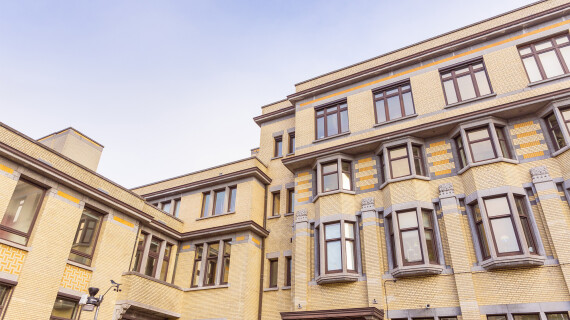
Institute of Tropical Medicine (ITM) Antwerp
ITM traces its origins to the country's colonial past. Founded in 1906 during the reign of King Leopold II, the institute was originally established to train doctors and nurses who would work in the Congo Free State. In 1933, ITM relocated from Brussels to its current campus in Antwerp, where the city's international port provided direct access to ships arriving with patients who had contracted diseases from the Belgian colonies.
Over the past century, ITM has undergone a profound transformation. It has evolved from a colonial institution into an internationally recognised centre for research and education, working in long-term partnerships with institutions across Africa, Asia and Latin America.
Today, ITM advances science and global health through innovative research, high-quality education, specialised patient care and capacity sharing with partner institutions worldwide. Its mission is to reduce the impact of diseases and other health challenges on populations around the world.
This transformation has also required ITM to critically examine its own history. In 2008, the institute introduced the motto Switching the Poles, expressing its desire to move beyond 'development cooperation’, towards genuine partnerships based on mutual knowledge exchange, shared resources, and joint decision-making and governance. This vision was further developed by the current partnership programme “Connecting the dots” and will be continued from 2027 in a next programme “The Health we Share”. Together, these programmes reflect the clear ambition to foster equitable partnerships in which resources, initiative and decision-making are shared, and where ITM positions itself as one of the centres of expertise within a broader network of partners.
While important progress has been made, we recognise that our institutional history continues to shape the present. Colonial legacies create blind spots that to this day, have a direct impact on how we collaborate, teach, conduct research and engage with our partners, students and staff. Acknowledging this history is an essential step towards building relationships that are equitable, collaborative and respectful.
ITM is therefore committed to engaging critically and constructively with its colonial past. As part of this commitment, the institute started a trajectory to examine different aspects of our institutional culture, our partnerships, our curricula, and our physical spaces. This artist residency forms part of that broader process of reflection and dialogue.
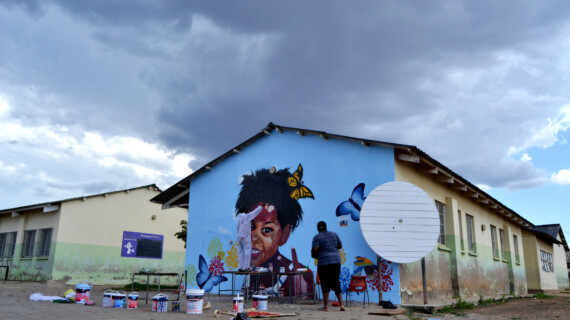
Africalia
Africalia supports the development of the cultural and creative sectors and promotes the visibility of African and Afro-descendant artists. True to its motto "Creativity is life", Africalia works towards the recognition of art and culture as essential drivers of sustainable human development.
To achieve this vision, the organisation collaborates with numerous cultural partners in Africa, Belgium and beyond. Through multi-year programmes, it strengthens organisations, networks, artists, entrepreneurs and others active in various contemporary art disciplines, ranging from performing arts and visual arts to audiovisual arts and literature.
Africalia's programmes in Africa aim to professionalise the cultural and creative industries, strengthen management capacities and cultural networks, and promote recognition of the transformative power of culture. The organisation is currently active in Burkina Faso, Burundi, the Democratic Republic of Congo, Kenya and Uganda. In Belgium, Africalia collaborates with cultural institutions to amplify African and Afro-descendant creative voices within the Belgian cultural network.
(c) image: Banele Njadayi
Spread the word! Share this story on
More stories
-
 - Articles
Final preparations underway for pivotal Phase 2/3 Bundibugyo vaccine trial
Tumaini, a pivotal Phase 2/3 clinical trial, will evaluate vaccine candidates including Ervebo as part of the DRC's outbreak response. There is currently no approved vaccine against Bundibugyo virus. Tumaini aims to close that gap.Read more -
- Articles
Who is at risk, and who is reached? Eight new insights into infection, care and prevention
With the Fresh Off The Journal series, we bring you our monthly research highlights.Read more -
- Articles
First 100 medical crisis intervention volunteers are undergoing training at ITM
One hundred volunteer doctors and nurses will form a Medical Reserve Unit (MRE) in Flanders that can be deployed rapidly in the event of acute, local health crises. They are gathering today for the first time for a training day on infectious diseases and outbreaks at the Institute of Tropical Medicine in Antwerp. They were welcomed by Caroline Gennez, the Flemish Minister for Welfare and Public Health, who will be providing 250,000 euros per year to the MRE over the next three years.Read more -
- Articles
How a nurse from Sierra Leone broadened her perspective at ITM
Introducing graduate Fatmata Bintu KargboRead more -
- Articles
Connecting research, policy and partnerships for better access to cancer medicines
Tinashe Zigomo, a PhD candidate at the University of the Western Cape School of Public Health, reflects on a four-week visiting scholar period at ITM Antwerp, focused on access to essential breast cancer medicines in low-resource settings.Read more -
- Articles
An infectious disease anywhere is an infectious disease everywhere
From the frontlines of the current Ebola outbreak in Central Africa to the resurgence of drug-resistant TB in Europe, weakening global health systems make all of us less safe.Read more -
- Articles
Infectious disease specialist Isabel Brosius wins Eos Pipet 2026 for her leadership in mpox research
The jury praises her strong scientific work and pronounced societal engagement.Read more -
- Articles
Strong collaboration strengthens the response: how jointly developed sequencing expertise helps to unravel the Bundibugyo Ebola outbreak
When the current Bundibugyo Ebola outbreak emerged in the Democratic Republic of Congo, researchers at ITM’s partner institute, Institut National de Recherche Biomédicale (INRB), responded immediately. ITM Professor Koen Vercauteren talks about the role of long-term investment in sequencing technologies and scientific partnerships.Read more -
- Articles
"This research will have a far greater impact on the people of Tanzania than the PhD degree I have earned."
An interview with Dr Amani Kikula, a researcher in obstetrics and gynaecology from Tanzania.Read more -
- Articles
"Infectious diseases cannot be studied from one discipline alone"
Ahead of the 66th ITM Colloquium, scientific leads Prof Dr Johan van Griensven from the Institute of Tropical Medicine (ITM) in Antwerp and Dr Endalamaw Gadisa from the Armauer Hansen Research Institute (AHRI) in Addis Ababa discuss why mobility is central to understanding infectious diseases and why researchers need to look beyond their own discipline.Read more