Community trust should be earned, not assumed
What 'resistance' really means
Over the past few weeks, media outlets have extensively reported on the ongoing Bundibugyo virus outbreak in the DRC: the rising number of cases and deaths, the spread of the disease, and the clinical and research interventions to fight this rare variant of the Ebola virus. But amid this coverage, a quiet but telling signal emerges: health centres have been set on fire, some residents are fleeing rather than engaging with the outbreak response, and some communities are reportedly refusing public health interventions and treatment.
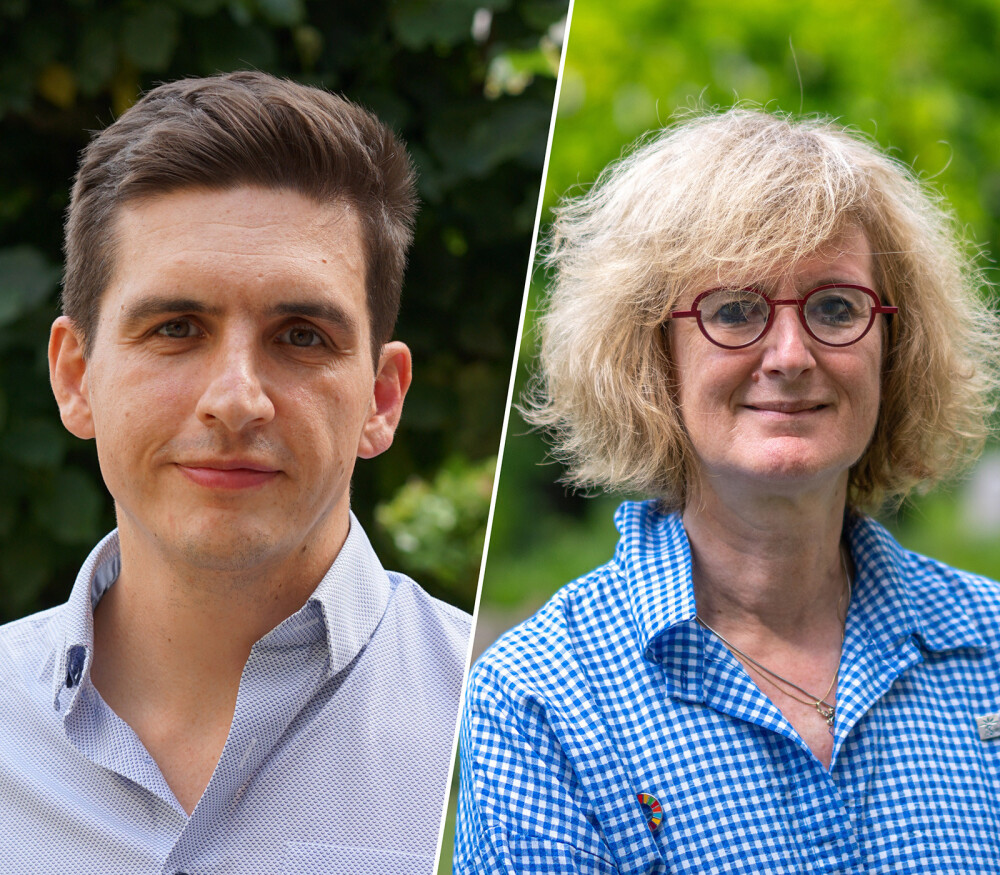
For Prof Laurens Liesenborghs, Professor of Clinical Emerging Infectious Diseases at ITM, who has been in Bunia since the start of the outbreak, this comes as no surprise. When a community "resists" an outbreak response, that "resistance" is rarely irrational. "It's a clear sign that the community was engaged too late. The media calls it 'resistance' or 'refusal to participate', but that framing gets it wrong," he explains. "It places the problem with the community, when in fact the community holds the key to a successful response".
Prof Raffaella Ravinetto, Professor of Pharmaceutical Public Health and Department Head of Public Health at ITM, shares that view. "This is especially important in the current Bundibugyo outbreak, because it's unfolding in a context debilitated by poverty, neglect and conflict, where trust in the health system is already fragile. Research institutions and donors should genuinely engage with the communities to gain their trust," she says.
There cannot be trust when, despite lessons from previous outbreaks, little is being done to build it.
The roots of distrust
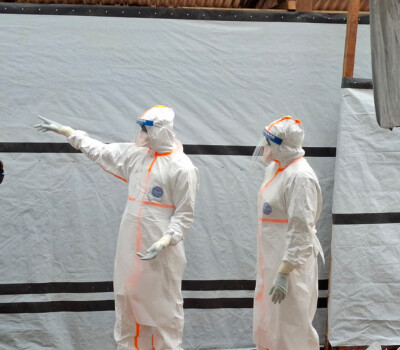
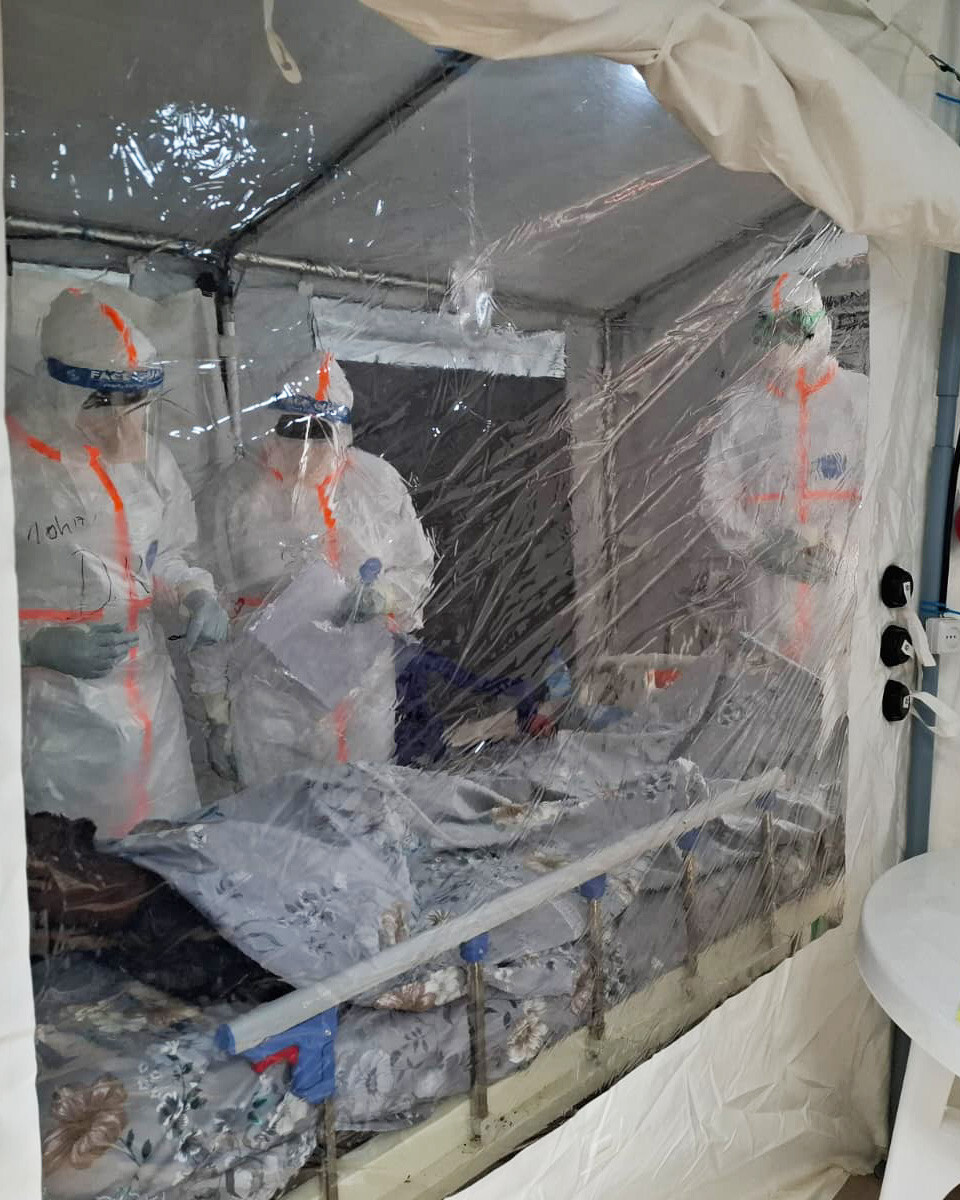
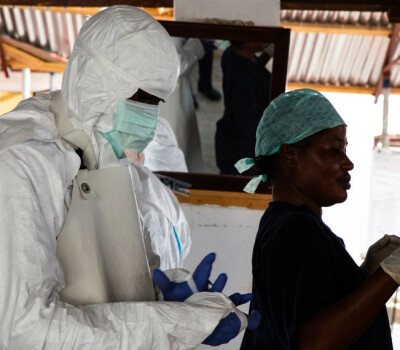
Distrust does not come from nothing. According to Laurens, outbreak response has long prioritised containing the disease over caring for the individual patient. Layered on top of that are rumours that, however implausible on the surface, are rarely baseless. The context of the outbreak response can also fuel distrust: a dangerous disease that carries a lot of stigma, treatment centres that resemble prisons, health workers sealed into full protective suits, and patients isolated from their families at the exact moment they need them most.
Few consequences of that isolation are more painful than its impact on burials. In many affected communities, death is not seen as an ending but as a transition, which makes burial rites, sometimes lasting several days, one of the most spiritually significant events a family will experience. Response teams typically follow 'safe and dignified burial' protocols, designed to let families take part where it's medically safe. But even with those adaptations, families are left with a burial that falls far short of what their customs require: they can't wash or touch the body, can't hold the rites they normally would, and are often left wondering what happens to their loved one's remains afterward.
Meanwhile, outside the spotlight of the outbreak, the structural gaps that shape all of this distrust remain unresolved. "For example, people still lack access to many essential medicines and vaccines: Ebola is not the only cause of preventable death for them," Raffaella points out. "It's a fragility that existed before the outbreak and will continue after it has ended."
Building trust from day one
None of this is new. As Raffaella says, this is largely a matter of applying lessons the sector has already learned, outbreak after outbreak. But there are solutions, and they start with doing things differently.
The first important factor is time: engaging communities from the very start of a response, not after "resistance" has already set in. Laurens points to a stark before-and-after in Ituri province itself. A site where treatment tents were once burned after the medical response bypassed the local population, now hosts a treatment centre built by, for, and with that same community.
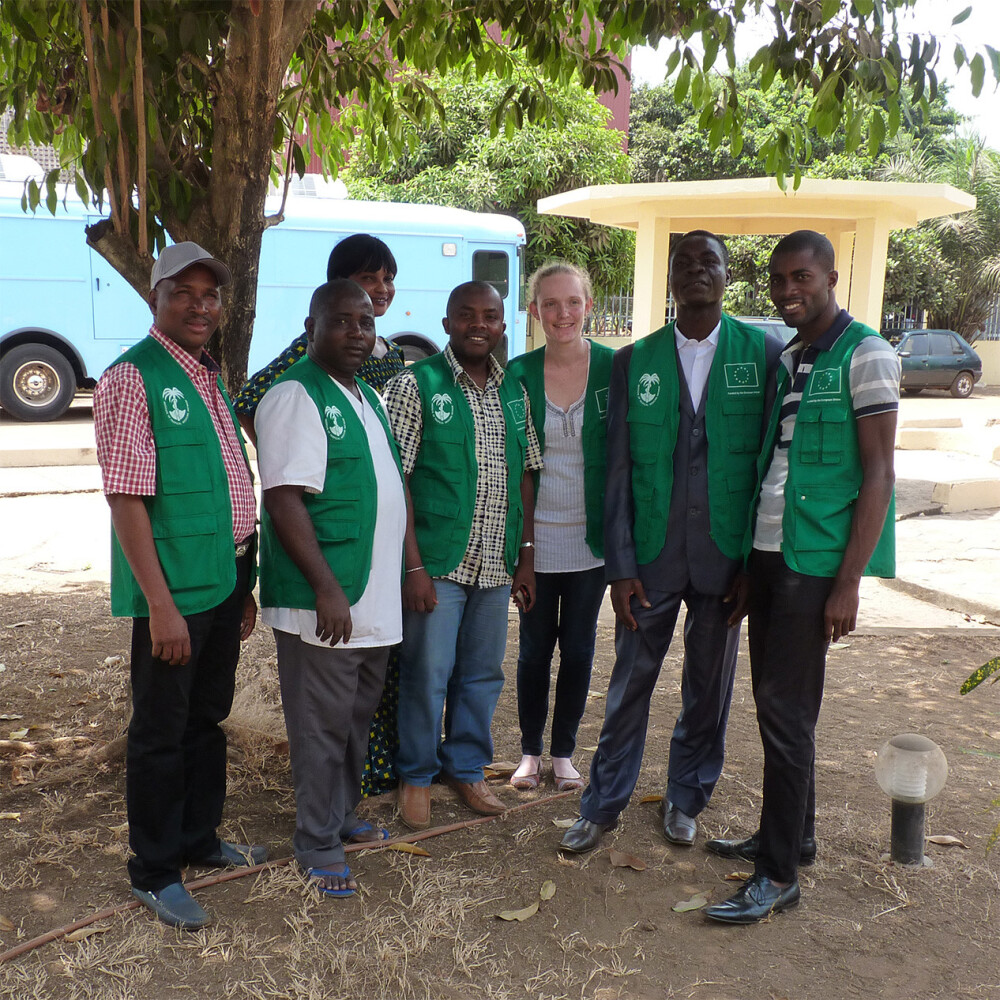
Just as important is identifying the right people to engage. Traditional and religious leaders remain an important entry point because, as Laurens says, they "have the ear of the population". Maya Ronse, a researcher at ITM's Unit of Socio-Ecological Health Research, found during the Ebola-Tx survivor plasma donation study in Guinea (West African Ebola outbreak, 2014-2016) that different groups place their trust in different people. Reaching young people or women, for example, often means identifying the individuals those groups already look to, rather than assuming a single group of community leaders represents everyone.
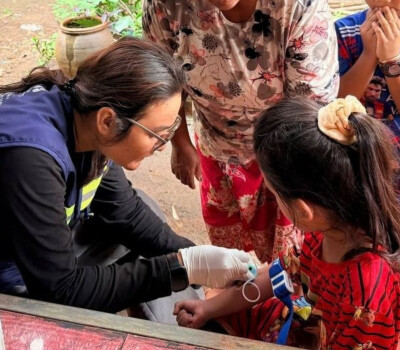
Survivors themselves can become some of the response's strongest allies. In the Ebola-Tx study in Guinea, trained survivors acted as peer educators, informing and motivating others to take part in the trial, not simply as messengers, but as people who understood, firsthand, what they were asking others to go through. Laurens sees the same potential in Ituri: survivors returning to their communities are credible advocates, and getting them on board early as equal partners pays off. Yet this approach comes with a challenge: Ebola's stigma, combined with the lack of trust between communities and health actors, can make survivors reluctant to speak publicly, a tension already seen in Guinea and likely to resurface in Ituri.
Building trust itself also requires time and resources. It means visiting people in their homes, listening without an agenda, and staying flexible. Maya found that home visits, which are rare in these settings, were consistently appreciated, and may have carried something close to a therapeutic effect for the people receiving them. Yet these are often the first activities to be scaled back when outbreak responses, and related resources, come under pressure.
Finally, Raffaella argues that community engagement and anthropological research into what communities actually expect from an outbreak response should be funded from the outset, not added once problems arise. Accountability, she argues, should not rest solely with communities expected to trust the response. Donors, health systems and research institutions should be held to a higher standard and asked whether they have done enough to earn that trust.
Trust, in other words, isn't a communication problem to be solved once "resistance" shows up. It has to be built into a response from the very first day. "The community isn't the problem," Laurens says. "It's the solution."
Read publication
Ronse, M., Marí Sáez, A., Gryseels, C., Bannister-Tyrrell, M., Delamou, A., Guillard, A., Briki, M., Bigey, F., Haba, N., van Griensven, J., & Peeters Grietens, K. (2018). What motivates Ebola survivors to donate plasma during an emergency clinical trial? The case of Ebola-Tx in Guinea. PLOS Neglected Tropical Diseases, 12(10), Article e0006885. https://doi.org/10.1371/journal.pntd.0006885
How do you build trust?
1. Engage early, before 'resistance' sets in
Start community engagement from day one, not after distrust has already taken hold.
2. Reach the right people, not just the obvious ones
Traditional leaders matter, but specifically identify which people to engage, rather than assuming one leader speaks for everyone.
3. Bring survivors in as equal partners
Their firsthand credibility makes them powerful peer educators, but stigma can make them reluctant to step forward, so this needs active, early support.
4. Invest time in listening
Make time for home visits and open, agenda-free conversations.
5. Fund trust-building from the outset
Community engagement and anthropological research need a budget line from day one, not only once things go wrong.
6. Hold funders and institutions accountable too
Trust isn't only the community's responsibility to give; donors and research institutions must also earn it.
News
All news-
 Since the outbreak began, more than 1,400 people have been infected and more than 430 have died.
 -
World View in Nature by Professor of Virology Kevin Ariën
-
Articles
Ebola outbreak in the DRC and Uganda
 ITM is working closely with Congolese partners
Spread the word! Share this story on
More stories
-
- Articles
Who is at risk, and who is reached? Eight new insights into infection, care and prevention
With the Fresh Off The Journal series, we bring you our monthly research highlights.Read more -
- Articles
First 100 medical crisis intervention volunteers are undergoing training at ITM
One hundred volunteer doctors and nurses will form a Medical Reserve Unit (MRE) in Flanders that can be deployed rapidly in the event of acute, local health crises. They are gathering today for the first time for a training day on infectious diseases and outbreaks at the Institute of Tropical Medicine in Antwerp. They were welcomed by Caroline Gennez, the Flemish Minister for Welfare and Public Health, who will be providing 250,000 euros per year to the MRE over the next three years.Read more -
- Articles
How a nurse from Sierra Leone broadened her perspective at ITM
Introducing graduate Fatmata Bintu KargboRead more -
- Articles
Connecting research, policy and partnerships for better access to cancer medicines
Tinashe Zigomo, a PhD candidate at the University of the Western Cape School of Public Health, reflects on a four-week visiting scholar period at ITM Antwerp, focused on access to essential breast cancer medicines in low-resource settings.Read more -
- Articles
An infectious disease anywhere is an infectious disease everywhere
From the frontlines of the current Ebola outbreak in Central Africa to the resurgence of drug-resistant TB in Europe, weakening global health systems make all of us less safe.Read more -
- Articles
Infectious disease specialist Isabel Brosius wins Eos Pipet 2026 for her leadership in mpox research
The jury praises her strong scientific work and pronounced societal engagement.Read more -
- Articles
Strong collaboration strengthens the response: how jointly developed sequencing expertise helps to unravel the Bundibugyo Ebola outbreak
When the current Bundibugyo Ebola outbreak emerged in the Democratic Republic of Congo, researchers at ITM’s partner institute, Institut National de Recherche Biomédicale (INRB), responded immediately. ITM Professor Koen Vercauteren talks about the role of long-term investment in sequencing technologies and scientific partnerships.Read more -
- Articles
"This research will have a far greater impact on the people of Tanzania than the PhD degree I have earned."
An interview with Dr Amani Kikula, a researcher in obstetrics and gynaecology from Tanzania.Read more -
- Articles
"Infectious diseases cannot be studied from one discipline alone"
Ahead of the 66th ITM Colloquium, scientific leads Prof Dr Johan van Griensven from the Institute of Tropical Medicine (ITM) in Antwerp and Dr Endalamaw Gadisa from the Armauer Hansen Research Institute (AHRI) in Addis Ababa discuss why mobility is central to understanding infectious diseases and why researchers need to look beyond their own discipline.Read more -
- Articles
Staying ahead of resistance: from bacteria to better care
With the Fresh Off The Journal series, we bring you our monthly research highlights.Read more