How community-based behavioural interventions in rural Burkina Faso and DRC improved antibiotic use
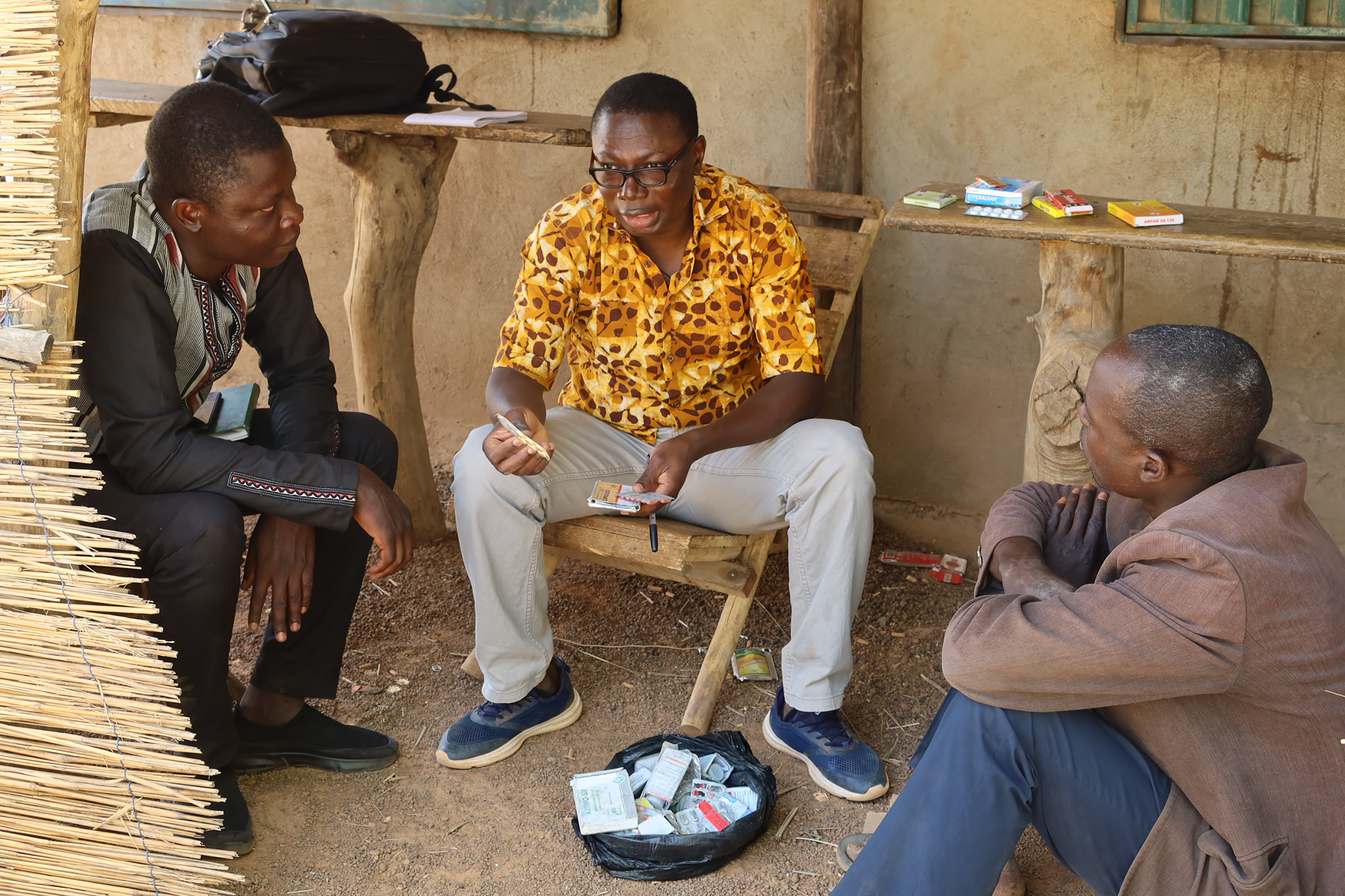
(c) Header: Dr Daniel Valia (middle) and Dr Eric Tiendrebeogo (left) from CRUN in an educational session with a medicine dispenser to recognise Watch-group antibiotics and discuss what they can be used for, Nanoro district, Burkina Faso
Antimicrobial resistance (AMR) is a major global health threat caused in part by incorrect use of antimicrobials across humans, animals, and plants. Its drivers and impacts are worsened by difficult access to good-quality healthcare and diagnosis, disproportionately affecting low- and middle-income countries.
Through the CABU-EICO project, researchers from ITM and partner institutions tested the effects of behavioural interventions at community level in rural Burkina Faso and the Democratic Republic of the Congo (DRC). Their results show significant reduction in the use of 'Watch-group' antibiotics: broad spectrum antibiotics which are essential for treating some of the most life-threatening bacterial infections but which are at risk of becoming ineffective due to increasing antimicrobial resistance. Their findings were published in The Lancet Infectious Diseases.
Researchers conducted the trial in 44 rural villages and urban neighbourhoods in two health districts in two countries: Kimpese in the Democratic Republic of the Congo and Nanoro in Burkina Faso. In these areas, nearly two thirds of the healthy general population carry resistant bacteria in their gut that can cause life-threatening sepsis, compared to around 5% of populations in Europe.
Read article
Read full article
The intervention study was rolled out in 63 health centres, 60 pharmacies, and 41 informal medicine vendors, whereby around 5000 patients were surveyed to evaluate the intervention's effect on antimicrobial use. Over nine months, three intervention rounds consisted of community health education campaigns and educational sessions with health care providers, introducing the WHO's AWaRe book guidance for infections with highest antibiotic use.
The AWaRe book is a global guideline on how to diagnose and treat common infections in primary care. It only recommends Watch-group antibiotics in primary care for dysentery, typhoid fever, sepsis, and certain sexually transmitted infections. Sadly, many of these important bacterial infections are becoming untreatable with available antibiotics due to resistance.
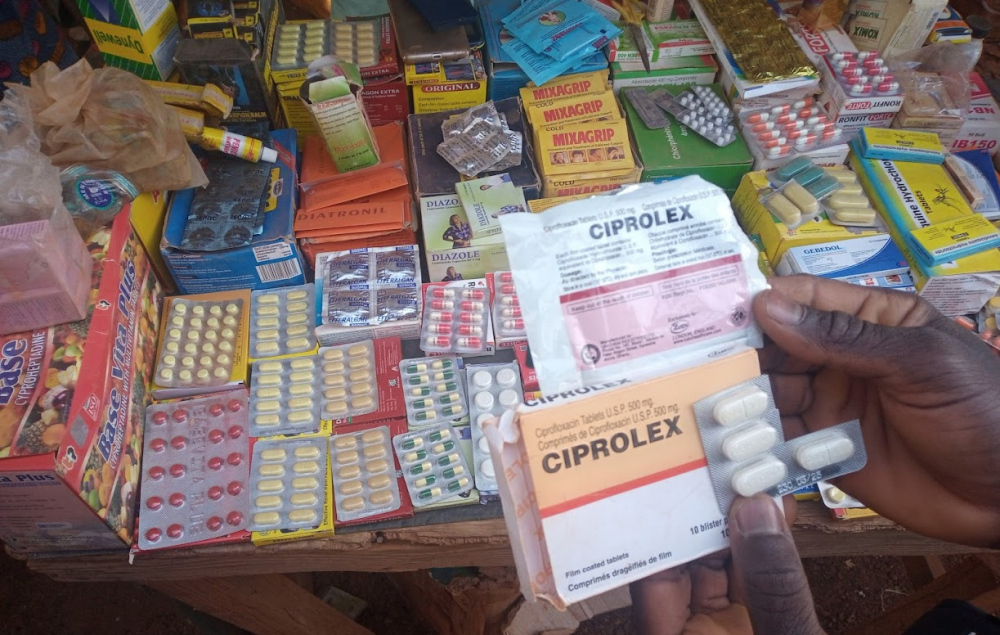
Because of difficulties accessing formal primary care in the studied areas, antibiotics are also increasingly used as self-medication, whereby community members obtain antibiotics without prescription from formal or informal pharmacies.
To address all main sources of antibiotics in the community, the intervention targeted formal primary care as well as formal and informal medicine vendors. Additionally, the interventions focused not only on healthcare providers (the “supply” side of antibiotic dispensing), but also sensitised populations on the importance of diagnosis and appropriate treatment of the infections patients had (the “demand” side for antibiotic treatment).
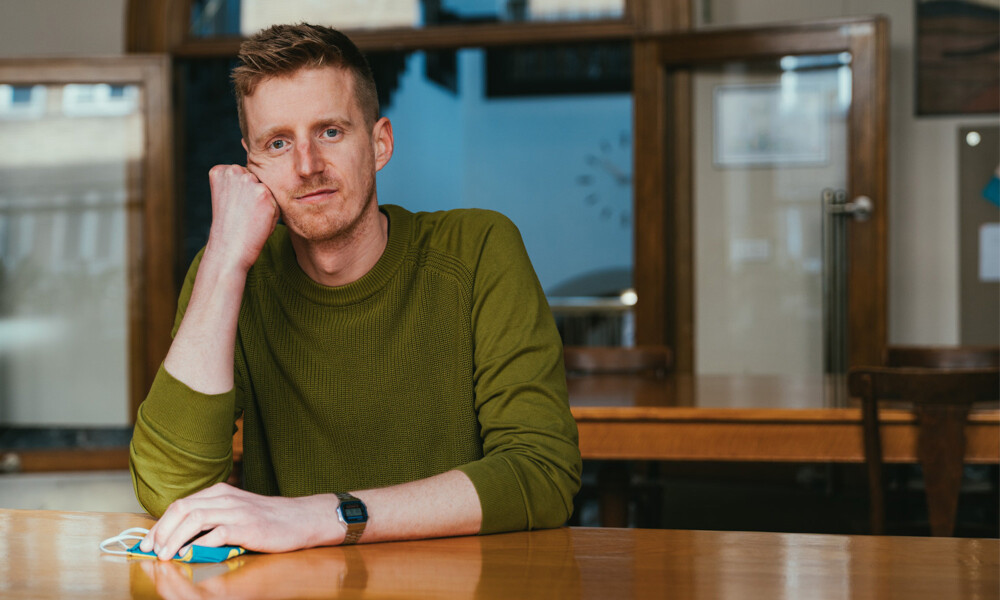
ITM epidemiologist Brecht Ingelbeen says: “The results of the study have been very encouraging. The intervention's main goal was to decrease the use of the most clinically important Watch-group antibiotics, and that was indeed reduced by more than half, compared to the providers without intervention. Because many healthcare providers' income depends on medicine sales, we assumed it would be difficult to curb the use of antibiotics in general. Nevertheless, not only was there a substantial switch from the Watch-group antibiotics to less critical antibiotics, but also about half of antibiotic treatment courses were replaced by non-antibiotic treatment.” To ensure the intervention wouldn't negatively impact patient management, this was evaluated with visits by “simulated patients”, actors mimicking an illness in a standardised way, to healthcare providers in the study.
Researchers found no negative effect on patient management, and possibly a modest improvement in patient management in health centres. “Such substantial reduction in the use of broad-spectrum antibiotics could help slow the rise of resistance to the most essential antibiotics,” Ingelbeen adds, “without costly, new diagnostic tests”.
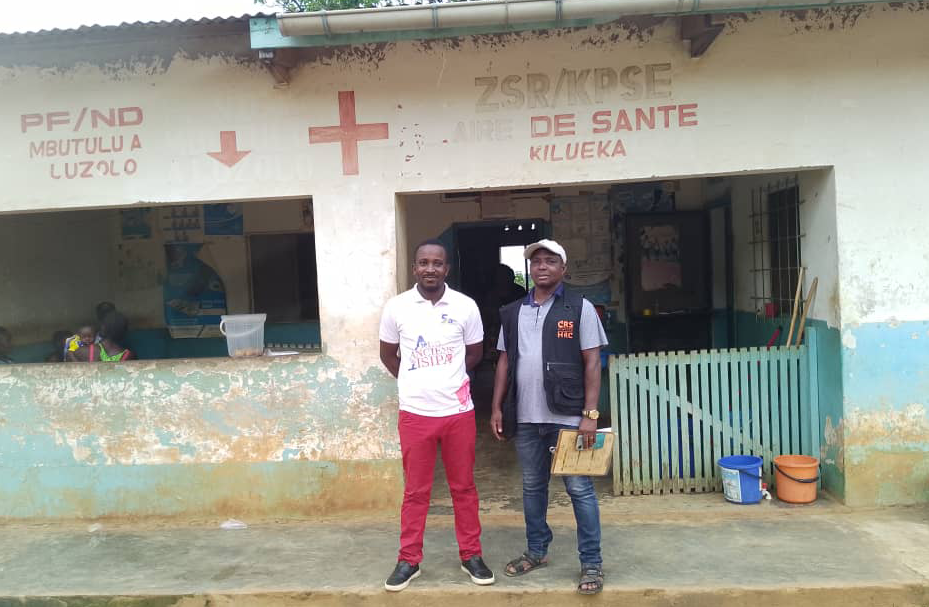
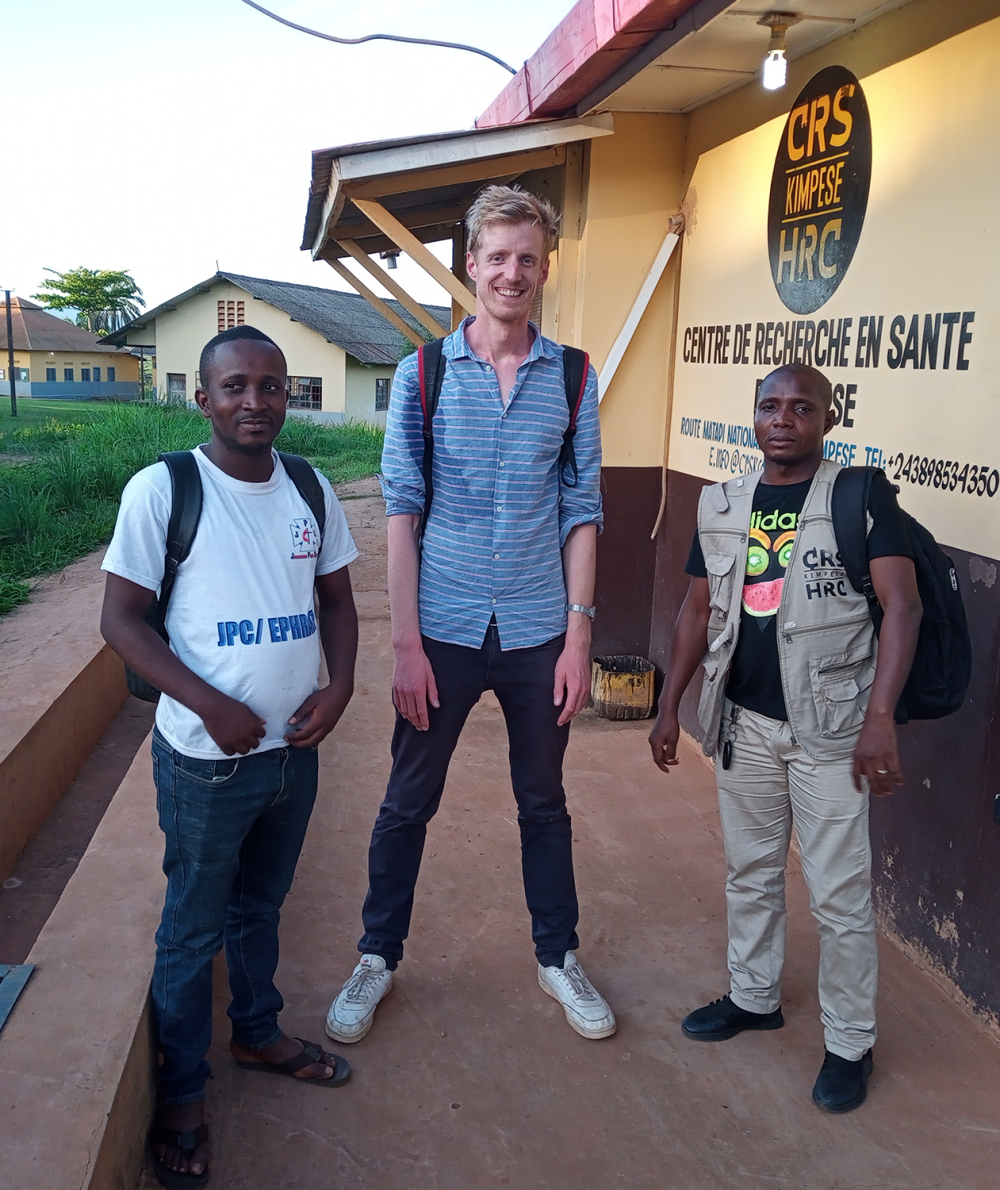
The project involved seven international partners, among them the Clinical Research Unit of Nanoro (CRUN), Burkina Faso, and the Centre de Recherche en Santé de Kimpese (CRSK), Democratic Republic of Congo, both long-time partners of ITM. Brecht Ingelbeen from ITM, Daniel Valia from CRUN and Bijou Mbangi from CRSK coordinated the intervention study, led its analyses and writing of the article, reflecting a very strong collaboration between the institutions. Several other articles, analysing the intervention's effect on transmission of resistant bacteria, how intervention components affect populations', prescribers' and medicine vendors' behaviour, and other analyses, are also underway.
The study was funded under the Joint Programme Initiative AMR with member state co-funding by the Research Foundation Flanders (FWO), Sida (the Swedish development cooperation agency), and the UK Medical Research Council. A framework agreement between Institute of Tropical Medicine, Clinical Research Unit of Nanoro and Centre de Recherche en Santé de Kimpese is financially supported by the Belgian Development Cooperation.
Experts explain
Dr Brecht Ingelbeen and Dr Daniel discuss the CABU-EICO trial in the The Lancet Infectious Diseases podcast.
Spread the word! Share this story on
More stories
-
 - Articles
Final preparations underway for pivotal Phase 2/3 Bundibugyo vaccine trial
Tumaini, a pivotal Phase 2/3 clinical trial, will evaluate vaccine candidates including Ervebo as part of the DRC's outbreak response. There is currently no approved vaccine against Bundibugyo virus. Tumaini aims to close that gap.Read more -
- Articles
Who is at risk, and who is reached? Eight new insights into infection, care and prevention
With the Fresh Off The Journal series, we bring you our monthly research highlights.Read more -
- Articles
First 100 medical crisis intervention volunteers are undergoing training at ITM
One hundred volunteer doctors and nurses will form a Medical Reserve Unit (MRE) in Flanders that can be deployed rapidly in the event of acute, local health crises. They are gathering today for the first time for a training day on infectious diseases and outbreaks at the Institute of Tropical Medicine in Antwerp. They were welcomed by Caroline Gennez, the Flemish Minister for Welfare and Public Health, who will be providing 250,000 euros per year to the MRE over the next three years.Read more -
- Articles
How a nurse from Sierra Leone broadened her perspective at ITM
Introducing graduate Fatmata Bintu KargboRead more -
- Articles
Connecting research, policy and partnerships for better access to cancer medicines
Tinashe Zigomo, a PhD candidate at the University of the Western Cape School of Public Health, reflects on a four-week visiting scholar period at ITM Antwerp, focused on access to essential breast cancer medicines in low-resource settings.Read more -
- Articles
An infectious disease anywhere is an infectious disease everywhere
From the frontlines of the current Ebola outbreak in Central Africa to the resurgence of drug-resistant TB in Europe, weakening global health systems make all of us less safe.Read more -
- Articles
Infectious disease specialist Isabel Brosius wins Eos Pipet 2026 for her leadership in mpox research
The jury praises her strong scientific work and pronounced societal engagement.Read more -
- Articles
Strong collaboration strengthens the response: how jointly developed sequencing expertise helps to unravel the Bundibugyo Ebola outbreak
When the current Bundibugyo Ebola outbreak emerged in the Democratic Republic of Congo, researchers at ITM’s partner institute, Institut National de Recherche Biomédicale (INRB), responded immediately. ITM Professor Koen Vercauteren talks about the role of long-term investment in sequencing technologies and scientific partnerships.Read more -
- Articles
"This research will have a far greater impact on the people of Tanzania than the PhD degree I have earned."
An interview with Dr Amani Kikula, a researcher in obstetrics and gynaecology from Tanzania.Read more -
- Articles
"Infectious diseases cannot be studied from one discipline alone"
Ahead of the 66th ITM Colloquium, scientific leads Prof Dr Johan van Griensven from the Institute of Tropical Medicine (ITM) in Antwerp and Dr Endalamaw Gadisa from the Armauer Hansen Research Institute (AHRI) in Addis Ababa discuss why mobility is central to understanding infectious diseases and why researchers need to look beyond their own discipline.Read more