Four ITM researchers awarded postdoctoral fellowships by the Research Foundation of Flanders
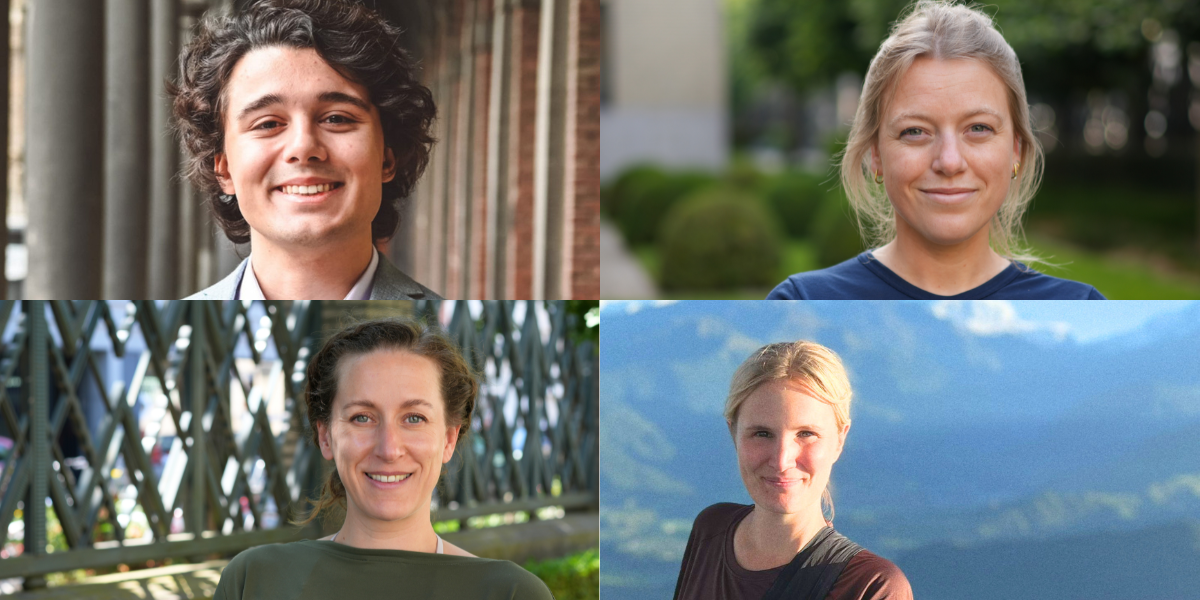
This prestigious FWO postdoctoral fellowship aims to help researchers develop an independent and international research career offering funding for a period of three years. FWO awarded 275 new postdoctoral fellowships out of the 1873 submitted projects, an overall success rate of 14.6%. ITM can be proud of its 28.6 % (4 awardees out of 14 submissions) success rate. Meet Mare, Sofie, Elise and Luis-Jorge. They will begin their research the coming fall.

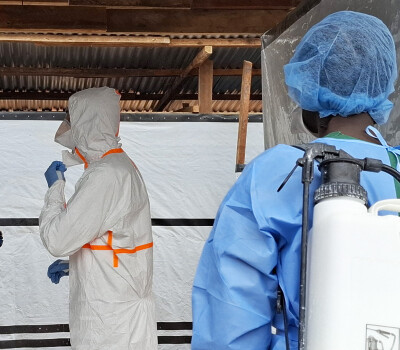
From Forest to Market: Viral Community Restructuring and Spillover Potential in the Wild-Meat Supply Chain
Mare Geraerts, Unit of Virus Ecology – Senior Postdoc Fellowship
In the Congo Basin, frequent hunting, handling, and consumption of wild mammals create interfaces where spillover of zoonotic viruses can occur. Yet, the true diversity of viruses circulating in these mammals remains poorly characterised, as most surveillance targets only known viruses in a limited number of hosts. This restricts our understanding of how viral diversity is structured and how spillover risk develops along the supply chain. This project will address these gaps using advanced genetic techniques across a broad range of mammalian host species. Combining a biobank and field sampling in Tshopo Province (DRC), it will characterise host and viral diversity across supply-chain stages. The project will investigate how the mix of animal species present, their biological traits, and the way carcasses are handled influence which viruses are detected, and which are most likely to jump to new hosts. The findings will sharpen our ability to identify high-risk moments in the supply chain and guide practical measures to prevent the next animal-to-human disease outbreak.

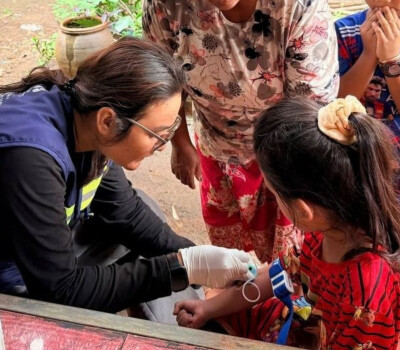
SENSITIVE: Using Genome Sequencing to Track Leprosy Transmission
Sofie Braet, Unit of Mycobacteriology – Junior Postdoc Fellowship
Current leprosy surveillance relies on case reporting, which cannot tell us whether transmission is ongoing or whether new diagnoses simply reflect infections acquired years ago. Whole-genome sequencing (WGS) could fill this gap, but its use for Mycobacterium leprae remains limited because only high–bacterial load samples can currently be sequenced. As a result, we still lack clear evidence on where transmission continues and whether drug resistance is transmitted or newly emerging. This project will improve WGS techniques to work on a much wider range of samples, including those with low bacterial levels. Using the unique, near-complete leprosy dataset from the Comoros, Sofie will establish the first genomic threshold that allows identification of which infections are likely linked through recent transmission. This approach will be applied to samples from Burundi, the DRC, Cameroon, Ghana, Pakistan and Suriname, and compared against existing surveillance data. Finally, Sofie will also assess whether drug resistance in M. leprae is transmitted, newly emerging, or absent. This project will, in an innovative way, develop a genetic threshold to identify which infections are likely linked through recent transmission, supporting the evaluation of true transmission interruption.
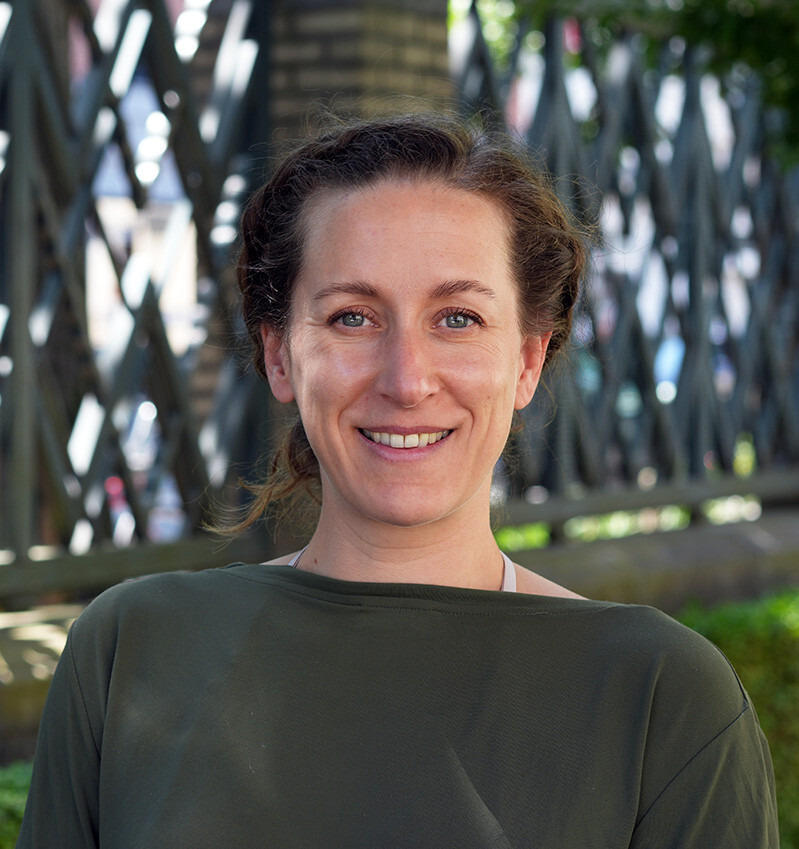
Mpox Clade I Outbreak Risk in Belgium: Transmission, Immunity, and Network Modeling
Elise de Vos, Unit of Clinical Emerging Infectious Diseases – Junior Postdoc Fellowship
Mpox has re-emerged globally through multiple Clade I lineages, raising concern about their epidemic potential in Europe. Belgium experienced a large Clade IIb outbreak in 2022, after which immunity accumulated in its high-risk population (men who have sex with men). However, immunity induced after the 2022 outbreak may be waning, and sexual networks may have reshaped. Additionally, transmission parameters of the Clade I variants are mostly still unknown, and vaccine effectiveness of existing vaccines against Clade I is still undetermined. These uncertainties complicate the estimation of potential outbreaks. This project integrates data from the Democratic Republic of the Congo and Belgium to assess vulnerability to emerging mpox variants. Elise and colleagues will estimate Clade I transmission parameters, quantify real-world vaccine protection, measure current immunity in the Belgian high-risk population, and help characterize sexual network structures — feeding a Belgium-specific network model to simulate outbreak risk and evaluate control strategies. The project will deliver the first integrated assessment of Clade I transmissibility, vaccine performance, immunity durability, and network connectivity for Belgium, directly informing vaccination policy and outbreak preparedness.

Making Onchocerciasis-Associated Epilepsy Visible: Quantifying the Global Burden and Impact of Integrated Care
Luís-Jorge Amaral, Unit of Eco-epidemiology & the Global Health Institute at the University of Antwerp – Junior Postdoc Fellowship
Onchocerciasis-associated epilepsy (OAE) is a severe but preventable and treatable form of epilepsy linked to the parasite that causes onchocerciasis, also known as river blindness. Yet, OAE remains absent from Global Burden of Disease (GBD) metrics, limiting prioritisation and funding for the millions affected or at risk. Luís will deliver the first GBD-compatible estimates of the OAE burden and assess how sustained onchocerciasis control combined with community-based epilepsy care can prevent new cases, reduce disability and premature deaths, and at what cost. Burden will be measured in disability-adjusted life years (DALYs), a standard metric capturing illness and premature death. Field studies in Tanzania and South Sudan are tracking epilepsy incidence, seizures, disability and survival, comparing communities with and without integrated interventions. The findings will provide policymakers with evidence to target prevention, match epilepsy medicine supplies to real need, and scale up affordable decentralised care, hence moving OAE from a neglected condition to one that is well managed and increasingly rare.
Spread the word! Share this story on
More stories
-
 - Articles
Final preparations underway for pivotal Phase 2/3 Bundibugyo vaccine trial
Tumaini, a pivotal Phase 2/3 clinical trial, will evaluate vaccine candidates including Ervebo as part of the DRC's outbreak response. There is currently no approved vaccine against Bundibugyo virus. Tumaini aims to close that gap.Read more -
- Articles
Who is at risk, and who is reached? Eight new insights into infection, care and prevention
With the Fresh Off The Journal series, we bring you our monthly research highlights.Read more -
- Articles
First 100 medical crisis intervention volunteers are undergoing training at ITM
One hundred volunteer doctors and nurses will form a Medical Reserve Unit (MRE) in Flanders that can be deployed rapidly in the event of acute, local health crises. They are gathering today for the first time for a training day on infectious diseases and outbreaks at the Institute of Tropical Medicine in Antwerp. They were welcomed by Caroline Gennez, the Flemish Minister for Welfare and Public Health, who will be providing 250,000 euros per year to the MRE over the next three years.Read more -
- Articles
How a nurse from Sierra Leone broadened her perspective at ITM
Introducing graduate Fatmata Bintu KargboRead more -
- Articles
Connecting research, policy and partnerships for better access to cancer medicines
Tinashe Zigomo, a PhD candidate at the University of the Western Cape School of Public Health, reflects on a four-week visiting scholar period at ITM Antwerp, focused on access to essential breast cancer medicines in low-resource settings.Read more -
- Articles
An infectious disease anywhere is an infectious disease everywhere
From the frontlines of the current Ebola outbreak in Central Africa to the resurgence of drug-resistant TB in Europe, weakening global health systems make all of us less safe.Read more -
- Articles
Infectious disease specialist Isabel Brosius wins Eos Pipet 2026 for her leadership in mpox research
The jury praises her strong scientific work and pronounced societal engagement.Read more -
- Articles
Strong collaboration strengthens the response: how jointly developed sequencing expertise helps to unravel the Bundibugyo Ebola outbreak
When the current Bundibugyo Ebola outbreak emerged in the Democratic Republic of Congo, researchers at ITM’s partner institute, Institut National de Recherche Biomédicale (INRB), responded immediately. ITM Professor Koen Vercauteren talks about the role of long-term investment in sequencing technologies and scientific partnerships.Read more -
- Articles
"This research will have a far greater impact on the people of Tanzania than the PhD degree I have earned."
An interview with Dr Amani Kikula, a researcher in obstetrics and gynaecology from Tanzania.Read more -
- Articles
"Infectious diseases cannot be studied from one discipline alone"
Ahead of the 66th ITM Colloquium, scientific leads Prof Dr Johan van Griensven from the Institute of Tropical Medicine (ITM) in Antwerp and Dr Endalamaw Gadisa from the Armauer Hansen Research Institute (AHRI) in Addis Ababa discuss why mobility is central to understanding infectious diseases and why researchers need to look beyond their own discipline.Read more