Fragile and conflict-affected settings: post-abortion care generally satisfactory, but communication needs to be improved

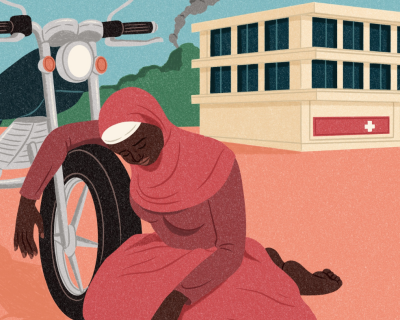
© Header illustration by Alice Wietzel
The AMoCo* study continues to highlight persistent challenges related to abortion care and complications in fragile and conflict-affected settings. Conducted in two hospitals in Bangui (Central African Republic) and Jigawa State (Nigeria), it reveals that a significant proportion of patients seeking post-abortion care experienced poor communication with healthcare staff and mixed experiences in terms of respect and dignity. Women with less education and adolescents appear to be particularly vulnerable. This study, which had already revealed that severe post-abortion complications were five to seven times more likely in these two hospitals, demonstrates the importance of listening to women, giving them the opportunity to ask questions, and ensuring their privacy. These elements are essential to ensuring quality care for all women, regardless of their age or level of education.
Approximately 70% of maternal deaths occur in sub-Saharan Africa (1). Among the five leading causes are abortion complications, for which little progress has been made in recent decades. However, most of these deaths are the result of unsafe induced abortions (2), which could be largely prevented by providing comprehensive abortion care, including post-abortion care, contraception services, and safe abortion services.
The AMoCo* study, conducted by Médecins Sans Frontières (MSF), Epicentre, the Institute of Tropical Medicine in Antwerp, Ghent Univeristy, the Guttmacher Institute, and Ipas, in partnership with the ministries of health of the Central African Republic (CAR) and Nigeria, (and co-funded by MSF and ELRHA/R2HC), assessed abortion-related complications in two hospitals located in fragile, conflict-affected settings in Bangui, Central African Republic, and Jigawa State, Nigeria. It has already revealed that severe complications are five to seven times more likely in these two hospitals than in African hospitals in more stable contexts assessed by the World Health Organization (WHO) using a similar methodology (3).
Silence surrounds post-abortion care
In a study recently published in BMC Public Health, researchers assessed two other key aspects among 700 women receiving post-abortion care: the quality of communication with healthcare providers (clarity of explanations, opportunity to ask questions) and respect for patient dignity (preservation of privacy, waiting times, attitude of providers, access to pain medication, and overall assessment of care).
More than half of the women hospitalized in Nigeria and 41% of those hospitalized in CAR reported receiving no explanation about the care they were receiving. Four out of five women reported not being able to ask questions during their examination and treatment. This phenomenon is further exacerbated among less educated women.
In terms of respect and dignity, the majority of women interviewed at the Nigerian hospital—with the exception of adolescents—reported generally positive experiences. In contrast, at the CAR hospital, shortcomings were noted, particularly with regard to privacy during physical examinations (68% reported that their privacy was not sufficiently respected during clinical examinations), as well as long or very long waiting times to see a healthcare provider for 38% of women.
In addition, the study found that women with low levels of education and adolescents reported more negative experiences of care (poor communication or less respect for dignity) than more educated and older women.
Furthermore, although the study reveals little link between reported induced abortions and poor experiences of care in hospitals in CAR—the only setting where this relationship could be analyzed—it highlights a worrying point: women who report an induced abortion to healthcare providers are less likely to ask them questions. This finding may reflect persistent discriminatory attitudes among some health professionals, or the shame women feel about this act. This reality is reflected in the qualitative study that complemented this quantitative study.
"One of the [health workers] who works here thought that I was the one who had induced the abortion.... She said to me, 'If you die because of the abortions you cause, [it] would be better... you are killing children, you don't deserve to be alive'... In her mind, we did it on purpose, because some of us have caused abortions.... As far as I was concerned, I had come to her for help, but she didn't know what had caused what had happened to me."
Testimony of one of the woman included in the study in CAR.
"[This hospital] is the best health center, the reception is good, and if it weren't for this health center, I wouldn't be here today to talk to you. [...] The techniques used at this health center are the best. This center provides better help to people."
Testimony of a woman in Bangui.
Post-abortion: quality of care is not enough without dialogue with women
However, another component of the AMoCo study, focusing on the knowledge, attitudes, practices, and behaviors (KAPB) among providers of abortion-related care, reveals an overall supportive attitude regarding comprehensive abortion care in the two hospitals studied.
When asked, "Would you feel comfortable personally providing safe abortion care in certain circumstances?", more than 80% responded affirmatively (82% in CAR and 87% in Nigeria). The most widely accepted reasons relate to situations where the woman's life or health is at risk, or in cases of fetal abnormality. In contrast, only 5% of professionals in Nigeria and 12% in CAR indicated that they would provide safe abortion care regardless of the reason.
Furthermore, another part of this extensive study published in Reproductive Health highlighted the high quality of post-abortion care provided in these two facilities, with the majority of indicators in the WHO quality of care framework for maternal and newborn health being met. This situation contrasts with that observed in many other African referral hospitals studied in more stable contexts. Another notable point is that almost all healthcare professionals have received specific training in post-abortion care. "This quality of care can certainly be explained in part by the significant support provided by MSF to both facilities, particularly in terms of the provision of equipment, medicines, staff, continuing education, supervision, and medical protocols," emphasizes Estelle Pasquier, PhD researcher at the Unit of Reproductive and Maternal Health at ITM and head of the AMoCo study. Overall, women say they are satisfied with the care they receive.
However, when asked more specifically about certain aspects of their healthcare experience, difficulties in communicating with healthcare providers, maintaining privacy, and waiting times emerge. These difficulties add to the already long and difficult journey women face in accessing post-abortion care, further exacerbating the complications and risks they face. In these two hospitals, more than 50% of women admitted for an abortion-related complication presented with a severe form, mainly haemorrhage (72% in the Nigerian hospital and 58% in the Central African hospital). Half of them took two days or more after the onset of the first symptoms to reach an adequate health center. Twenty-seven percent of women surveyed on the Nigerian side and 16% on the Central African side took six days or more.
These situations also occur in a context where the risk of exposure to sexual violence is high and access to contraception remains limited. These factors in turn increase the risk of unwanted pregnancy and unsafe abortions, particularly in contexts where abortion laws are restrictive.
Hospitals must strengthen their patient-centered approach by listening to women, involving them in their own care, and ensuring privacy, reduced waiting times, and quality interaction between providers and patients.

"While, on average, our study does not reveal any major stigmatization of patients, it does highlight an important problem: communication, especially when women have a low level of education. Essential work remains to be done to improve communication and listening to women."
Estelle Pasquier
PhD researcher at the Unit of Reproductive and Maternal Health at ITM and head of the AMoCo study
AMoCO
* AMoCo: Abortion-related Morbidity and Mortality in Fragile and Conflict-affected Settings. Conducted in collaboration with the Central African and Nigerian ministries of health, the AMoCo study collects data from 1,068 women with abortion-related complications.
**Severe abortion complications include life-threatening complications, near misses, and deaths, as defined by the WHO Multi-Country Study on Abortion (WHO-MCS-A) using a set of standardised clinical, biological, and management criteria.
Trends in maternal mortality 2000 to 2020: estimates by WHO, UNICEF, UNFPA, World Bank Group and UNDESA/Population Division https://www.who.int/publications/i/item/9789240068759
Grimes DA, Benson J, Singh S, Romero M, Ganatra B, Okonofua FE, et al. Unsafe abortion: the preventable pandemic. Lancet [Internet]. 2006 Nov 25 [cited 2020 Jul 13];368(October):1908–19. Available from: https://pubmed.ncbi.nlm.nih.gov/17126724/
Source
Médecins Sans Frontières. (2026, January 20). Fragile and conflict-affected settings: post-abortion care generally satisfactory, but communication needs to be improved. Epicentre. https://epicentre.msf.org/en/news/fragile-and-conflict-affected-settings-post-abortion-care-generally-satisfactory-communication
Spread the word! Share this story on
More stories
-
 - Articles
Final preparations underway for pivotal Phase 2/3 Bundibugyo vaccine trial
Tumaini, a pivotal Phase 2/3 clinical trial, will evaluate vaccine candidates including Ervebo as part of the DRC's outbreak response. There is currently no approved vaccine against Bundibugyo virus. Tumaini aims to close that gap.Read more -
- Articles
Who is at risk, and who is reached? Eight new insights into infection, care and prevention
With the Fresh Off The Journal series, we bring you our monthly research highlights.Read more -
- Articles
First 100 medical crisis intervention volunteers are undergoing training at ITM
One hundred volunteer doctors and nurses will form a Medical Reserve Unit (MRE) in Flanders that can be deployed rapidly in the event of acute, local health crises. They are gathering today for the first time for a training day on infectious diseases and outbreaks at the Institute of Tropical Medicine in Antwerp. They were welcomed by Caroline Gennez, the Flemish Minister for Welfare and Public Health, who will be providing 250,000 euros per year to the MRE over the next three years.Read more -
- Articles
How a nurse from Sierra Leone broadened her perspective at ITM
Introducing graduate Fatmata Bintu KargboRead more -
- Articles
Connecting research, policy and partnerships for better access to cancer medicines
Tinashe Zigomo, a PhD candidate at the University of the Western Cape School of Public Health, reflects on a four-week visiting scholar period at ITM Antwerp, focused on access to essential breast cancer medicines in low-resource settings.Read more -
- Articles
An infectious disease anywhere is an infectious disease everywhere
From the frontlines of the current Ebola outbreak in Central Africa to the resurgence of drug-resistant TB in Europe, weakening global health systems make all of us less safe.Read more -
- Articles
Infectious disease specialist Isabel Brosius wins Eos Pipet 2026 for her leadership in mpox research
The jury praises her strong scientific work and pronounced societal engagement.Read more -
- Articles
Strong collaboration strengthens the response: how jointly developed sequencing expertise helps to unravel the Bundibugyo Ebola outbreak
When the current Bundibugyo Ebola outbreak emerged in the Democratic Republic of Congo, researchers at ITM’s partner institute, Institut National de Recherche Biomédicale (INRB), responded immediately. ITM Professor Koen Vercauteren talks about the role of long-term investment in sequencing technologies and scientific partnerships.Read more -
- Articles
"This research will have a far greater impact on the people of Tanzania than the PhD degree I have earned."
An interview with Dr Amani Kikula, a researcher in obstetrics and gynaecology from Tanzania.Read more -
- Articles
"Infectious diseases cannot be studied from one discipline alone"
Ahead of the 66th ITM Colloquium, scientific leads Prof Dr Johan van Griensven from the Institute of Tropical Medicine (ITM) in Antwerp and Dr Endalamaw Gadisa from the Armauer Hansen Research Institute (AHRI) in Addis Ababa discuss why mobility is central to understanding infectious diseases and why researchers need to look beyond their own discipline.Read more