The Making of a Professor of Tuberculosis

Professor Tom Decroo has been leading the Unit of HIV and TB since April 2025. But as he says, "they are in transition", on the path to be called the Unit of Tuberculosis. In its long history, the unit was first called HIV and Co-infections, then the co-infections became tuberculosis. But tuberculosis is increasingly taking over the topics they teach and carry out research on. That's why the position of Professor of Tuberculosis was created—to complement the Unit of Mycobacteriology, which focuses on diagnostics, while Tom's unit covers therapeutics; and colleagues at public health focus on organisation of care. And what led Tom to this professorship? A long and winding road with many great mentors, and as he said several times during our interview: "lots of luck".
Let’s start at the very beginning. What inspired your career path?
TOM Remember the devastating famine in Ethiopia in the mid 1980s? I was in secondary school then and the images I saw on TV left a deep impression on me. I felt it was unfair that I had security while others didn't have what is needed to live. That injustice pushed me toward medicine. Later on, I came across a flyer of Doctors Without Borders (MSF). I thought, maybe I cannot change the world, but I can surely contribute somewhere. That's why I joined MSF after my studies and ended up in Mozambique, where I lived for almost a decade between 2003 and 2012.
People think of Mozambique as a country with lots of beaches, but where I worked was far away inland. The context was tough. Many expats did not finish their missions. But I felt useful, caring for HIV patients. Many of them were people with a tuberculosis co-infection, who would recover when diagnosed and treated, but come back again because of low immunity. Even though antiretrovirals were available in the West, there was no access to them in these rural communities. The system could not sustain purchasing them. When access improved, requirements of putting people on combination therapy for HIV was strict: people had to have a buddy, counselling, monitoring of CD4 counts, but tests were not available. Samples were sent and results never came back. Many people died before accessing care.
Together with colleagues and patients, we began organising peer groups, called Community ART Groups. Patients took turns to get the drugs from the clinic in the city and brought them to rural Mozambique. People got excited about this model of care – we once had a visit by Nathan Ford, a colleague from MSF, and my first mentor in the field of research. He said: "You should document and publish your experience." So we wrote a manuscript, got it published, and showed the care model and outcomes at many conferences. The idea of involving patients themselves in their chronic care became national guideline, adopted by others, and implemented in neighbouring countries.
Tom Decroo
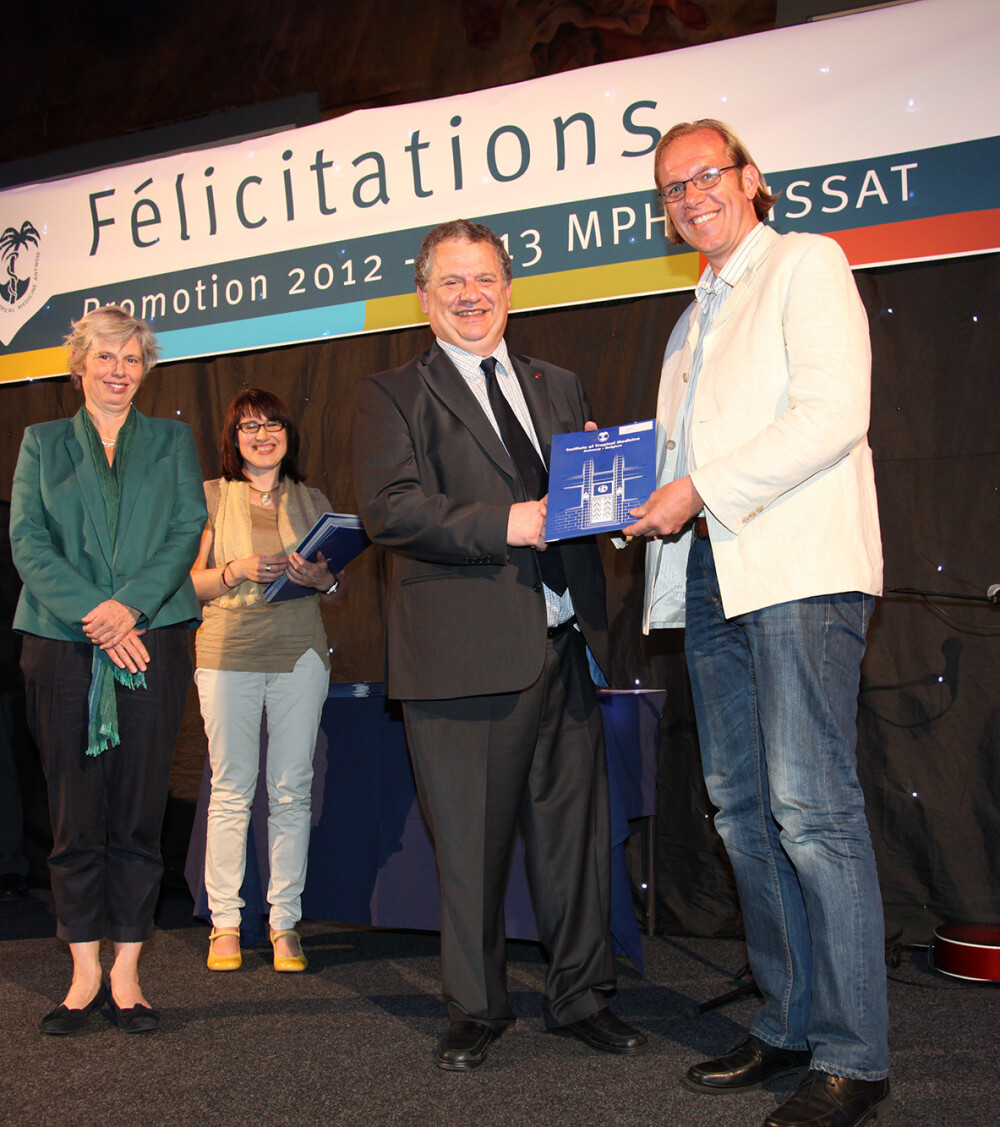
Tom Decroo is a medical doctor. He obtained his MSc in Public Health at ITM in 2013, and his PhD at the University of Antwerp in 2017 on “Community-based ART in sub-Saharan Africa.”
Between 2003 and 2012, he was based in Africa (Mozambique, Burkina Faso) as a clinician, researcher, and coordinator for Doctors Without Borders (MSF). Between 2014 and 2016, he worked as an Operational Research Programme Officer for MSF.
In 2016, he joined ITM's Unit of HIV and Co-infections. He obtained an FWO postdoctoral mandate for the period 2018-2021. Since 2025, he serves as Unit Head in his role as Professor of Tuberculosis.
Would you like to stay up to date on Tom's activities and pursuits?
Follow him on LinkedIn
Explore his ITM research profile
When did you first come to ITM?
TOM I consider myself very lucky to have had the opportunity to learn from the giants in my field. The concept behind the Community ART Groups was based on a paper by ITM's Professor Wim Van Damme: "Expert Patients and AIDS." I read it in 2006, and I was convinced: this could be a solution for Mozambique. Later on, after piloting the first groups, I met Wim in Mozambique, when he visited our project. We even cycled together (laughs).
Inspired by Nathan and Wim to engage in implementation research, in 2010, I participated in the short course in Clinical Research and Evidence-Based Medicine at ITM (SCREM). As a clinician, you have a sort of tunnel vision: you are very focused on your patients and their treatment. I had to learn how to ask a research question, formulate objectives, write a protocol, understand ethical requirements, clean data, and write a manuscript. The course was insightful.
When my son turned six, he went to a local primary school, but it was quickly apparent that he would not be able to have the education I had. In 2012, we returned to Belgium with my family, and I enrolled in the Master of Public Health at ITM.
But you did not start working for ITM right after that.
TOM Not just yet. I joined MSF first as programme officer for the Luxembourg Operational Research Unit. I learned structured writing from another giant, Rafael Van den Bergh: how to ask a question, collect and analyse data, and how to structure a manuscript. During the Ebola outbreak of 2014, we oversaw all of MSF Brussel's implementation research.
However, within MSF, you couldn't work on HIV and TB research from Brussels; that was done in South Africa, but that was where my interest lay. When Professor Lut Lynen had an open position at ITM, I applied and joined her Unit of HIV and Co-infections in 2016. This was another special moment in my career. Lut had been very important to me when I arrived in Mozambique back in 2003, as an inexperienced clinician. In the beginning, we had no ARVs: an HIV diagnosis was a death sentence. While our patients had many different infections, we hardly had any training or guidelines on these. Our "bible" was a book on the management of opportunistic infections that Lut had written. I felt privileged to join the unit of the person who had helped me improving the lives of so many patients.
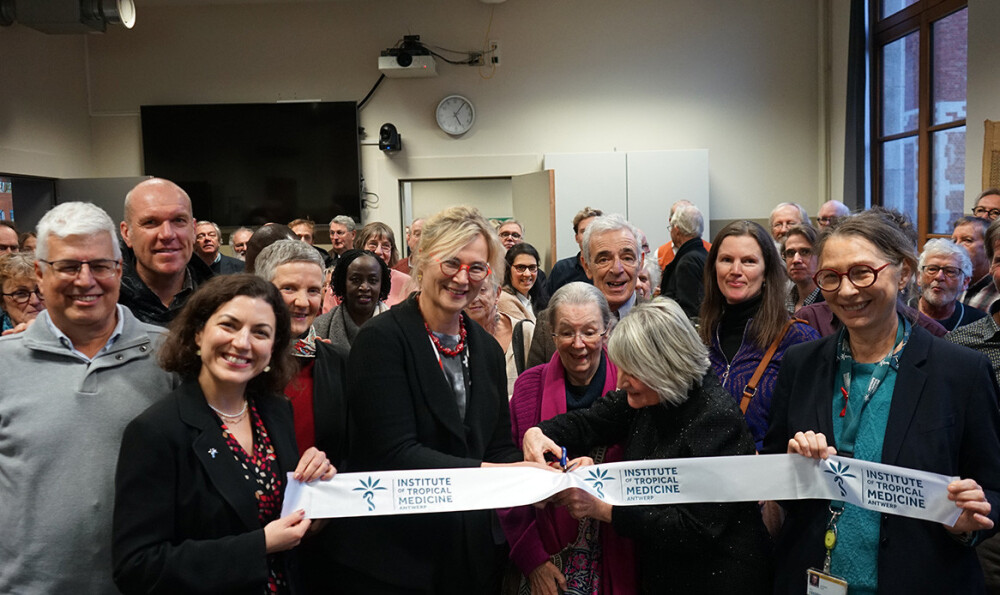
TOM When I arrived at ITM in 2016, the research in the unit was mainly on HIV and hepatitis C, so I brought in tuberculosis as a research line. Lut's vision was to focus more on TB, as for HIV better treatments were available, while for tuberculosis a lot still had to be done. I started working on the short course Clinical Decision-Making for Drug-Resistant Tuberculosis (DRTB), together with the late Armand Van Deun from the Unit of Mycobacteriology, who was a true pioneer in this field.
The drug-resistant tuberculosis course was full of debates about clinical decision-making and the evidence base for recommendations. At the time, the evidence base was limited, and much of the guidance was based on expert opinion. When Armand referred to his lessons learned, I took notes and later discussed with him: can we write this as a paper? That's how we ended up writing dozens of papers. He also had a lot of data that he never published. Since he was battling a chronic illness at the time, writing these papers felt like creating his legacy. In terms of publications, it was a highlight of my time at ITM. Working with him was a great privilege.
TOM There are many needs in the field, and public health is crucial. TB diagnosis is still imperfect. For treatment, resistance emerges even with new drugs. Armand warned us about this: it only takes a few years for resistance to pop up. That's why our course material needs continuous updating. Any new solution brings new problems. We gather and share information from different sources: our faculty includes international experts, we refer to evidence from our own projects and students, and to evidence we generate ourselves.
In 2017, I defended my PhD with professors Marie Laga and Bob Colebunders, on "Community-based ART in sub-Saharan Africa”. In the period between 2018 and 2021, I held a postdoctoral mandate from the Research Foundation of Flanders (FWO). Lut retired in 2024, and in March 2025, I became head of unit. And as I said, over the years the unit has progressively shifted its focus toward the evaluation of TB treatment regimens in resource-limited settings.
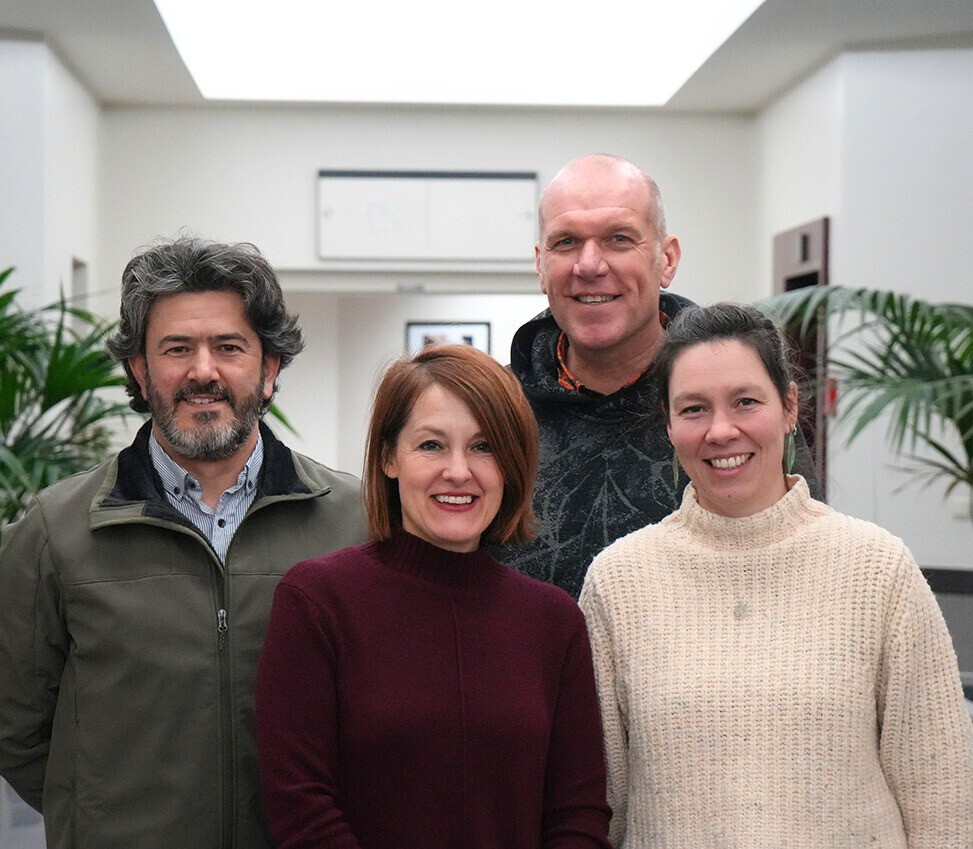
Tell us about your current team.
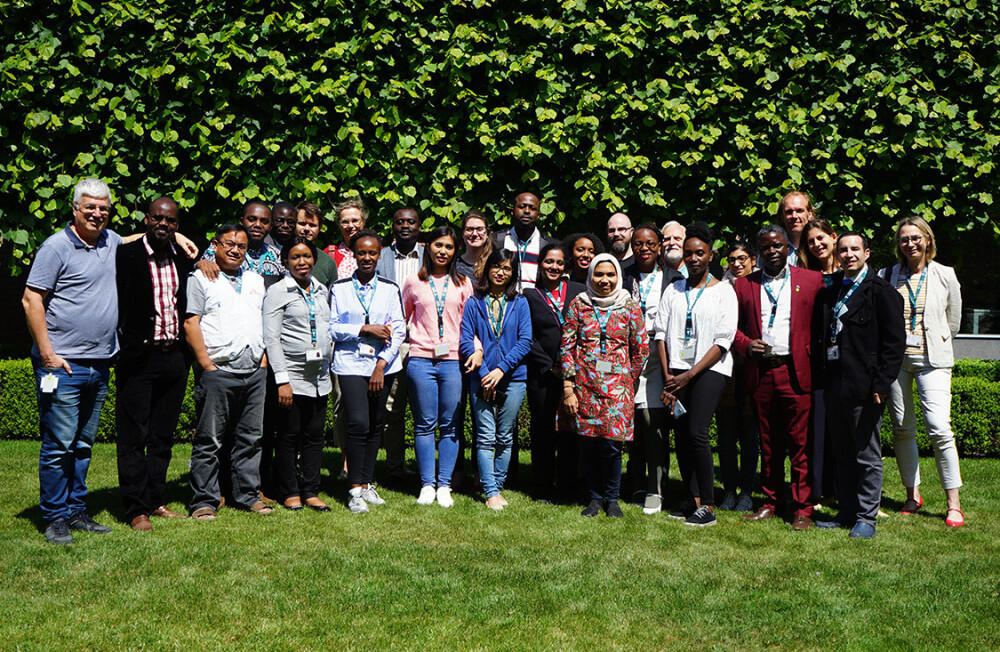
TOM: We are currently a team of four, soon to be six. All are postdocs or highly experienced. We cover service delivery, research, education, and capacity building. We have an expert on pediatric TB, another on clinical care for patients with (highly) resistant TB, and an expert in clinical decision-making and health economics. A postdoc will join us soon, with both clinical and biomedical expertise. She will support the implementation of two recently acquired EDCTP research projects, one on highly resistant TB, and another one on use of lung ultrasound for TB diagnosis. The sixth person will strengthen our capacity for education activities. This includes a third EDCTP project, covering a master’s programme with a return phase, during which participants will apply acquired skills through research embedded in the home institute.
My team is very passionate about education. We are heavily involved in the DR-TB short course, the SCREM, and the MSc in Tropical Medicine. On top of this, we have an active cohort of about 10 PhD students, many of them alumni of our courses. I try to instill a "yes, we can" mentality in them, and encourage them to publish their first paper early on in their PhD journey, to build confidence. Peer support is also incredibly important.
Academic life has intense periods, especially around grant writing. But since we rely on these grants, we continuously write. I try to ensure that intensive periods are followed by calmer ones, to keep a healthy work-life balance. We have been successful with grant writing in the past two years. I am very happy and proud of the team for these achievements.
What are your future plans?
We look forward to working on our EDCTP projects with our partners. These projects provide us with the time and resources needed to realise our scientific aspirations. In the Global South, collaborations often grow through the network of our PhD students and the programmes they work in. We strategically add partners with relevant expertise in settings with unmet needs. In case of the TASP project for example, which stands for "Tuberculosis Antimicrobial Stewardship Programme", we closely work together with South African partners, as well as partners from Mozambique and Nigeria. South Africa has strong TB expertise and high burden of disease. Evidence from South Africa is often translated to resource-limited settings.
Our current research and education projects secure work for the coming years and serve as a bridge towards the future. Ideally, in the years to come, ongoing projects and collaborations will help the unit’s postdocs to develop their own research portfolios, gain additional fundings, and manage projects more independently to further build their career within the Unit of TB. Doing so, we will grow as a team and become even more impactful.
Unit of HIV and TB
Tom Decroo (Head of Unit)
Ine Decuyper (pediaetric TB)
Anita Mesic (clinical care for patients with (highly) resistant TB)
Rodrigo Henriquez (clinical decision-making and health economics)
Jihad Snobre (clinical and biomedical expertise)
Explore the unit's current EDCTP projects
Tuberculosis Antimicrobial Stewardship Program (TASP)
The TASP project aims to investigate the safety and effectiveness of treatment regimens for tuberculosis with expanded resistance and to improve clinical decision-making.
The sub-Saharan Africa Health Research and Innovation Fellowship Program (SAHRI Fellowship)
The SAHRI Fellowship programme empowers a new generation of skilled researchers to address critical gaps in health research and innovation in sub-Saharan Africa.
Advanced diagnostics for pulmonary tuberculosis triage in Benin, Mali and South Africa (CAD LUS4TB)
The CAD LUS4TB project aims to develop and validate a novel digital technology based on lung ultrasound. This involves adapting an image-based analysis tools and software for mobile phone ultrasound applications. The technology will support primary healthcare workers in ruling out TB and guiding patient management quickly.
Spread the word! Share this story on
More stories
-
 - Articles
Final preparations underway for pivotal Phase 2/3 Bundibugyo vaccine trial
Tumaini, a pivotal Phase 2/3 clinical trial, will evaluate vaccine candidates including Ervebo as part of the DRC's outbreak response. There is currently no approved vaccine against Bundibugyo virus. Tumaini aims to close that gap.Read more -
- Articles
Who is at risk, and who is reached? Eight new insights into infection, care and prevention
With the Fresh Off The Journal series, we bring you our monthly research highlights.Read more -
- Articles
First 100 medical crisis intervention volunteers are undergoing training at ITM
One hundred volunteer doctors and nurses will form a Medical Reserve Unit (MRE) in Flanders that can be deployed rapidly in the event of acute, local health crises. They are gathering today for the first time for a training day on infectious diseases and outbreaks at the Institute of Tropical Medicine in Antwerp. They were welcomed by Caroline Gennez, the Flemish Minister for Welfare and Public Health, who will be providing 250,000 euros per year to the MRE over the next three years.Read more -
- Articles
How a nurse from Sierra Leone broadened her perspective at ITM
Introducing graduate Fatmata Bintu KargboRead more -
- Articles
Connecting research, policy and partnerships for better access to cancer medicines
Tinashe Zigomo, a PhD candidate at the University of the Western Cape School of Public Health, reflects on a four-week visiting scholar period at ITM Antwerp, focused on access to essential breast cancer medicines in low-resource settings.Read more -
- Articles
An infectious disease anywhere is an infectious disease everywhere
From the frontlines of the current Ebola outbreak in Central Africa to the resurgence of drug-resistant TB in Europe, weakening global health systems make all of us less safe.Read more -
- Articles
Infectious disease specialist Isabel Brosius wins Eos Pipet 2026 for her leadership in mpox research
The jury praises her strong scientific work and pronounced societal engagement.Read more -
- Articles
Strong collaboration strengthens the response: how jointly developed sequencing expertise helps to unravel the Bundibugyo Ebola outbreak
When the current Bundibugyo Ebola outbreak emerged in the Democratic Republic of Congo, researchers at ITM’s partner institute, Institut National de Recherche Biomédicale (INRB), responded immediately. ITM Professor Koen Vercauteren talks about the role of long-term investment in sequencing technologies and scientific partnerships.Read more -
- Articles
"This research will have a far greater impact on the people of Tanzania than the PhD degree I have earned."
An interview with Dr Amani Kikula, a researcher in obstetrics and gynaecology from Tanzania.Read more -
- Articles
"Infectious diseases cannot be studied from one discipline alone"
Ahead of the 66th ITM Colloquium, scientific leads Prof Dr Johan van Griensven from the Institute of Tropical Medicine (ITM) in Antwerp and Dr Endalamaw Gadisa from the Armauer Hansen Research Institute (AHRI) in Addis Ababa discuss why mobility is central to understanding infectious diseases and why researchers need to look beyond their own discipline.Read more