For the girls of Mumbra, playing football on the squares is so much more than just a game

(c) foto: Dinesh Parab
If you are a Muslim girl from a poor neighbourhood in the state of Maharashtra, India, your older brother decides whether you can go outside after school. Traditionally, girls stay at home. Activist Sabah Khan is trying to break through the gender norms that prevent adolescent girls and young women from realising their dreams through football.
After completing her master's degree in social work, Sabah returned to Mumbra and started an NGO that organises football training for girls and young women from the neighbourhood. What does football have to do with gender norms? According to a BBC study, only one in three Indian women participate in sports, a consequence of a deeply rooted norm that considers women's participation in sports to be unfeminine.
Sabah not only lets girls play football, but also tries to challenge the stereotype of “Muslim girls as passive and submissive”. At the same time, she wants to bridge the gap between Hindu and Muslim neighbours, which is wide in India today.
Girls from disadvantaged neighbourhoods want to be part of the new Indian middle class and pursue careers. But all too often, girls are unable to make independent decisions about what they do, often even when they turn 18. Once married, their mother-in-law then has a say in what they can and cannot do. Sabah gives them more freedom and uses football to show them that they too can take action in their neighbourhood and bring about lasting change for their own daughters.
The girls play in public squares where normally only boys play football. This was unheard of and often led to aggressive looks and catcalling. Once on the field, the girls learn to play as a team, develop leadership skills and tactics. In addition to sport, the organisation also introduces them to the Indian constitution, the principles of citizenship and their rights. The girls engage in dialogue with local community leaders and policymakers in their neighbourhood. In this way, they see what their role as “change agents” can mean for the neighbourhood and for strengthening local solidarity.
This led to results. The girls organised a petition to ask the municipality for their own football pitch. It worked, and now 500 girls play football in Mumbra, “openly and freely”, in public spaces. Over the years, the organisation has trained thousands of girls, increasing their assertiveness and autonomy, not only on the football pitch but also off it. They are putting the rights of girls and women on the map in the Mumbai region and challenging the social norms that previously kept girls indoors. For the girls of Mumbra, football on the squares is not just a game.
This article was translated from Dutch and originally published by EOS Wetenschap.
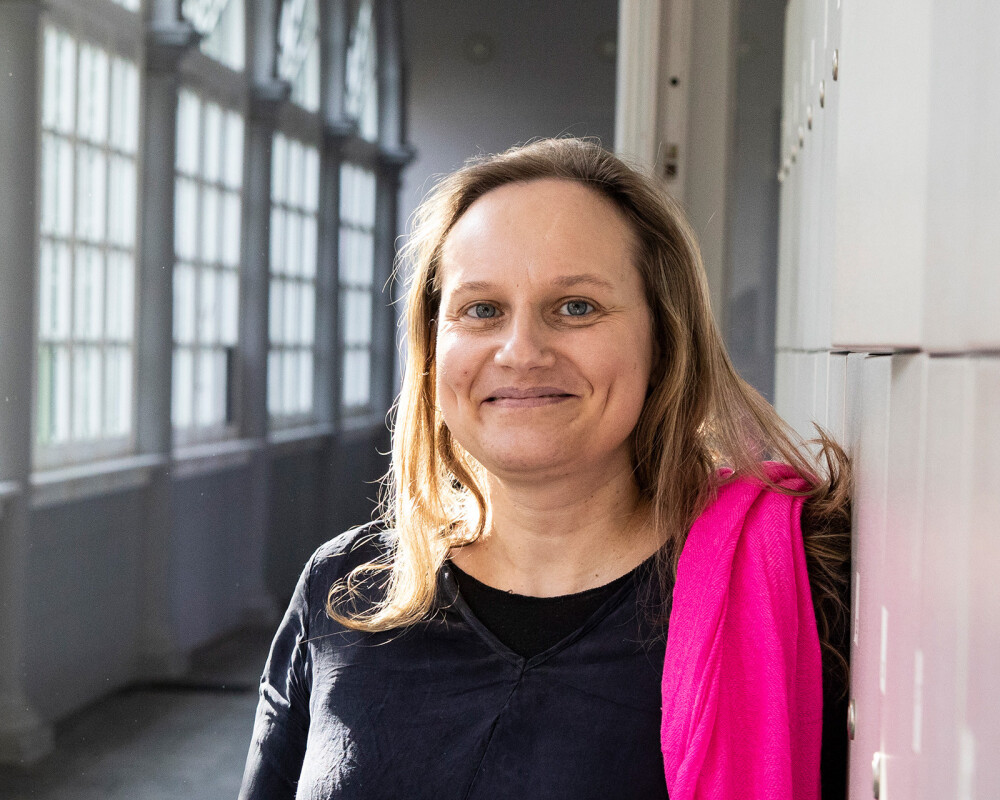
Sara Van Belle
Sara Van Belle is a senior researcher at the Institute of Tropical Medicine and a professor at the Faculty of Psychology and Educational Sciences, Vrije Universiteit Brussel. She researches how we can better tailor healthcare to the needs of adolescents and young women. Before her academic career, she worked for the European Parliament and the United Nations Population Fund (UNFPA), among others, and lived and worked in Senegal. She then became a health programme manager and conducted (or supervised) research in Cameroon, Mali, Burkina Faso, Rwanda, Sierra Leone, Burundi, Niger, Nigeria, Ghana, Tanzania, Uganda, Benin and South Africa (= thirteen African countries). Recently, she has been mainly active in India, where she is affiliated with the Institute of Public Health (IPH) in Bangalore. She is also an enthusiastic mentor to female doctoral students and supports girl power in Africa and Asia.
Spread the word! Share this story on
More stories
-
 - Articles
Final preparations underway for pivotal Phase 2/3 Bundibugyo vaccine trial
Tumaini, a pivotal Phase 2/3 clinical trial, will evaluate vaccine candidates including Ervebo as part of the DRC's outbreak response. There is currently no approved vaccine against Bundibugyo virus. Tumaini aims to close that gap.Read more -
- Articles
Who is at risk, and who is reached? Eight new insights into infection, care and prevention
With the Fresh Off The Journal series, we bring you our monthly research highlights.Read more -
- Articles
First 100 medical crisis intervention volunteers are undergoing training at ITM
One hundred volunteer doctors and nurses will form a Medical Reserve Unit (MRE) in Flanders that can be deployed rapidly in the event of acute, local health crises. They are gathering today for the first time for a training day on infectious diseases and outbreaks at the Institute of Tropical Medicine in Antwerp. They were welcomed by Caroline Gennez, the Flemish Minister for Welfare and Public Health, who will be providing 250,000 euros per year to the MRE over the next three years.Read more -
- Articles
How a nurse from Sierra Leone broadened her perspective at ITM
Introducing graduate Fatmata Bintu KargboRead more -
- Articles
Connecting research, policy and partnerships for better access to cancer medicines
Tinashe Zigomo, a PhD candidate at the University of the Western Cape School of Public Health, reflects on a four-week visiting scholar period at ITM Antwerp, focused on access to essential breast cancer medicines in low-resource settings.Read more -
- Articles
An infectious disease anywhere is an infectious disease everywhere
From the frontlines of the current Ebola outbreak in Central Africa to the resurgence of drug-resistant TB in Europe, weakening global health systems make all of us less safe.Read more -
- Articles
Infectious disease specialist Isabel Brosius wins Eos Pipet 2026 for her leadership in mpox research
The jury praises her strong scientific work and pronounced societal engagement.Read more -
- Articles
Strong collaboration strengthens the response: how jointly developed sequencing expertise helps to unravel the Bundibugyo Ebola outbreak
When the current Bundibugyo Ebola outbreak emerged in the Democratic Republic of Congo, researchers at ITM’s partner institute, Institut National de Recherche Biomédicale (INRB), responded immediately. ITM Professor Koen Vercauteren talks about the role of long-term investment in sequencing technologies and scientific partnerships.Read more -
- Articles
"This research will have a far greater impact on the people of Tanzania than the PhD degree I have earned."
An interview with Dr Amani Kikula, a researcher in obstetrics and gynaecology from Tanzania.Read more -
- Articles
"Infectious diseases cannot be studied from one discipline alone"
Ahead of the 66th ITM Colloquium, scientific leads Prof Dr Johan van Griensven from the Institute of Tropical Medicine (ITM) in Antwerp and Dr Endalamaw Gadisa from the Armauer Hansen Research Institute (AHRI) in Addis Ababa discuss why mobility is central to understanding infectious diseases and why researchers need to look beyond their own discipline.Read more