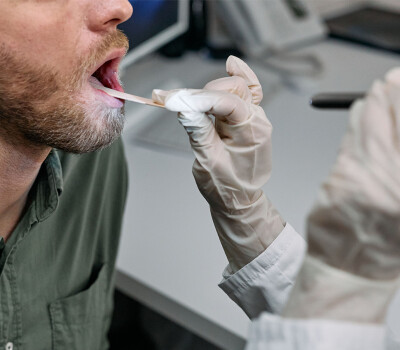
The strengths that matter in a crisis are built through years of partnership.
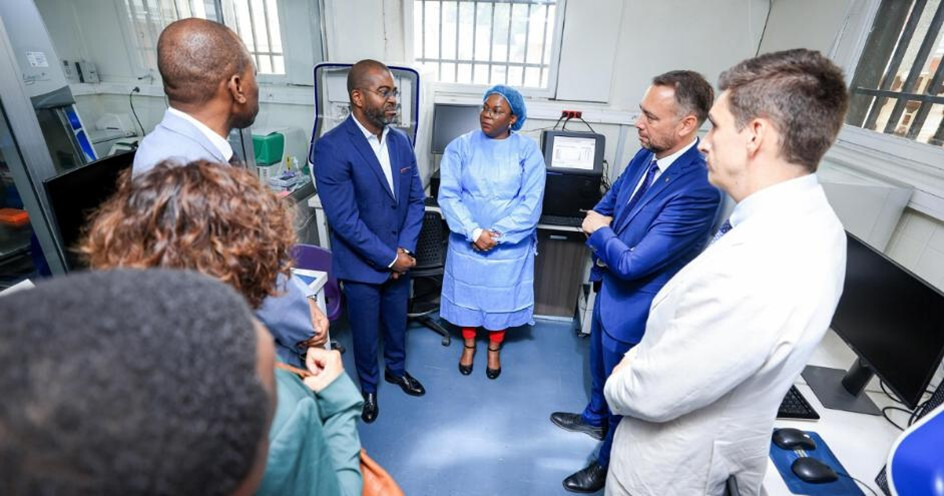
Health crises, geopolitical tensions and budget cuts are putting pressure on international cooperation. Nevertheless, the partnership between Belgium, the Democratic Republic of the Congo (DRC) and the Institute of Tropical Medicine (ITM) demonstrates how scientific collaboration can develop into a lasting relationship over the course of decades.
As ITM marks its 120th anniversary, we spoke in Kinshasa with Eric Willemaers, Head of Cooperation at the Belgian Embassy until August, Dr Urbain Menase, Health Adviser at the Belgian Embassy, and Dr René-Hubert Mendo’o Medjo, Head of ITM’s DRC office. The anniversary offers an opportunity to reflect on the partnership today, and where it is heading next.
The ITM office in Kinshasa has recently moved to a new location next to the Belgian Embassy. Does this proximity also say something about the ties between healthcare and diplomacy?
Eric Willemaers: Healthcare has traditionally been a priority within international cooperation. In the DRC, ITM occupies a special place thanks to its long-standing partnership with the National Institute for Biomedical Research (INRB). The fact that a Belgian and a Congolese centre of expertise work so closely together is of particular diplomatic value.
Moreover, recent health crises demonstrate just how important this cooperation is. The mpox epidemic and Ebola outbreaks have made it clear that investment in research, disease surveillance and outbreak response not only protects the Congolese population but also strengthens international preparedness.
What are DRC’s health priorities?
Urbain Menase: The gradual introduction of universal health coverage is a top priority. The focus here is on the most vulnerable population groups. One concrete measure is the introduction of free antenatal care, which is being rolled out even further. At the same time, there is a broader focus on strengthening the health system. This involves improving the organisation of services, reducing maternal and child mortality, and combating serious diseases.
The DRC is regularly confronted with health crises, such as Ebola or mpox outbreaks, as well as diseases such as malaria or sleeping sickness. Ongoing conflict and natural disasters make access to healthcare difficult for a lot of people, and there are many who are forced to flee.
Years of collaboration, rapid response
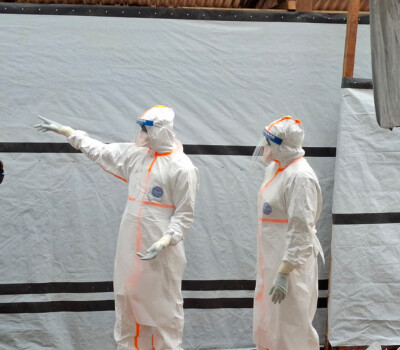
Since our conversation, a serious Ebola outbreak has emerged in eastern DRC. Scientists at the Institut National de Recherche Biomédicale (INRB) made the first diagnoses. Many of them are ITM alumni, with support from the Belgian federal government.
At the request of, and in close consultation with, the INRB, ITM researchers quickly mobilised to support the research on the ground. This collaboration builds on a long-standing partnership, made possible in part through the Belgian government’s multi-year programmes.
Congolese scientists are leading the research, local health workers are tackling the outbreak on the ground, and the Congolese government is coordinating the response. ITM contributes as one of a number of scientific institutions worldwide working to understand how the outbreak can be contained.
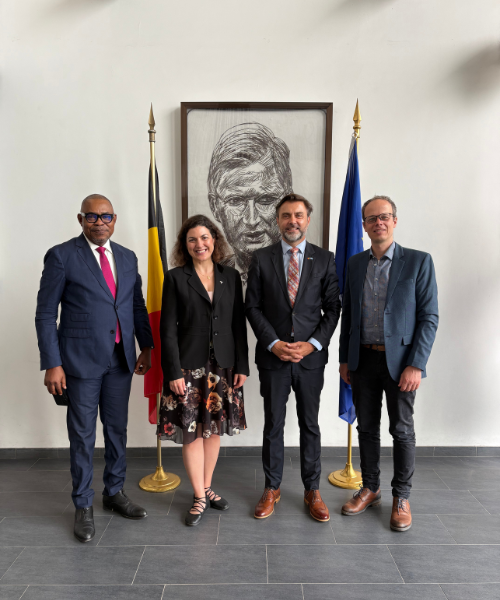
These challenges attract many international organisations. What ensures that ITM remains a credible and relevant partner both Congolese and Belgian institutions?
Eric Willemaers: ITM combines several strengths: recognised expertise and tangible results that save lives. It focuses on priorities that are important not only for the DRC but also for global health.
ITM also stands out thanks to its partnership with INRB. People often talk about equal partnerships, but in my view few collaborations are as balanced as that between ITM and INRB.
The fight against sleeping sickness is a good example of this. The number of cases is declining sharply, but governments, research institutions and donors must not withdraw too soon. If we succeed in eliminating the disease, it would truly be an exceptional achievement.
Urbain Menase: In the fight against diseases and epidemics, such as Ebola, responsibilities for research and laboratory work are clearly assigned to INRB and ITM.
ITM also plays an important role in training researchers. A large proportion of the public health experts currently working for the ministry are ITM alumni.
What role does ITM play in the cooperation strategy between Belgium and the DRC?
Eric Willemaers: Cooperation without demonstrable results can no longer be justified; there must be tangible and concrete results. And that is the case here.
This collaboration is also important from a global health perspective. Health issues are interconnected. Investment in the Congolese healthcare system makes it possible to meet local needs whilst at the same time strengthening international preparedness for epidemics.
René-Hubert Mendo’o Medjo: The mpox epidemic illustrates this well. The collaboration between ITM and INRB made it possible to identify a new variant. This gave us a better understanding of how the virus spreads and enabled us to adapt our response strategies.
This collaboration strengthens local capacity. Researchers are trained but continue to work in their own country or return there after their training. That is quite unique. It enables them to build a sustainable career there and contribute locally to research and the management of health crises.
Urbain Menase: Additionally, there is hardly any brain drain. The Congolese researchers return to continue their careers in their own countries. They do not leave the system; on the contrary, they actively contribute to it. At the same time, they maintain their international network. They continue to collaborate with colleagues from ITM and other international partners.
That is also the strength of the ITM training programmes. Participants often start with a specific public health problem from their own working environment. During the programme, they exchange experiences. Upon their return, they have solutions tailored to the local context.
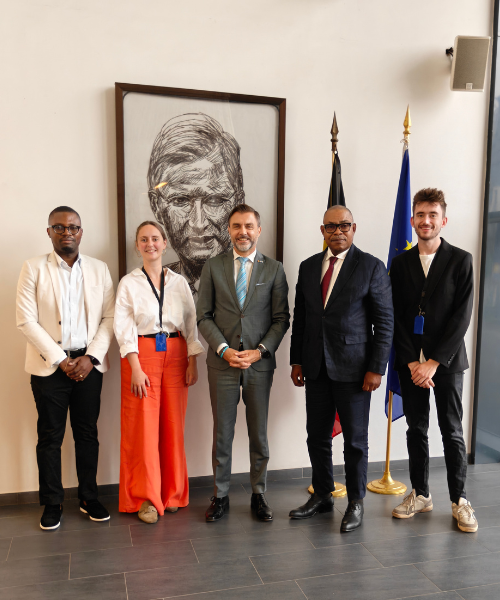
If you had to summarise the partnership between Belgium, the DRC and ITM, what would you say?
René-Hubert Mendo’o Medjo: Our collaboration has become more impact-oriented. We don’t just conduct research to produce evidence. The aim is for the results to be integrated into practice and policy. With the embassy’s support, we are trying to utilise every possible lever to achieve this.
The approach to sleeping sickness is a good example of this. ITM plays an important supporting role, while the Congolese government and local experts are in the lead. Thanks to this collaboration, the burden of disease in the affected communities is decreasing. This is the result of open consultation and a shared goal.
Urbain Menase: It is a tangible partnership which goes beyond a university collaboration and is focused on delivering concrete impact.
Eric Willemaers: It is a truly equal partnership between two centres of expertise. It is a win-win situation for both institutions and for both countries. The collaboration meets both the expectations of the Belgian taxpayer and the needs of the Congolese population.
How would you like the partnership to look in a few years’ time?
René-Hubert Mendo’o Medjo: In the next framework agreement with the Belgian Government, we want to move towards a multinational approach. In the past, programmes often centred on a single country or disease. Today, against a backdrop of dwindling resources, we want to bring together several countries to tackle shared challenges.
This helps build stronger partnerships that go well beyond traditional North–South relationships. Partner organisations in Guinea or Peru, for example, can draw inspiration from INRB’s experience in the DRC.
This also builds bridges between research and policy. Researchers can build on experiences from other countries, and policymakers can use that knowledge when developing their policies.
This vision fits within the decolonisation of global health. It should not automatically be the party with the most financial resources that sets the course. Local partners must be able to formulate the issues themselves, develop solutions and collaborate with other partners to implement them.
Urbain Menase: The word that springs to mind is sustainability. We must continue to rely on expertise, but we must also strengthen national ownership.
What we are building today must also stand the test of time. ITM cannot do this alone. It plays a key role as a partner, but the effort must be collective and carried out in consultation with various stakeholders, so that the national partner can truly take ownership of the actions.
The DRC is still heavily dependent on donors. Working sustainably means that, together with our partners, we succeed in strengthening national involvement, so that it becomes more active and independent.
Eric Willemaers: We believe in this partnership, and in ITM and INRB. We therefore hope that it can will continue in the long term. This requires not only trust, but also sufficient resources. The challenge will be to maintain this cooperation within a tighter budgetary framework. This calls for closer cooperation between countries and for a clearer demonstration of the returns on investment.
“In the next framework agreement with the Belgian Government, we want to move towards a multinational approach. This helps build stronger partnerships that go well beyond traditional North–South relationships. Partner institutions in countries such as Guinea or Peru could, for example, draw on the experience and expertise of the INRB in the DRC.”
Dr René-Hubert Mendo’o Medjo
Head of the ITM office in the DRC
Spread the word! Share this story on
More stories
-
 - Articles
Who is at risk, and who is reached? Eight new insights into infection, care and prevention
With the Fresh Off The Journal series, we bring you our monthly research highlights.Read more -
- Articles
First 100 medical crisis intervention volunteers are undergoing training at ITM
One hundred volunteer doctors and nurses will form a Medical Reserve Unit (MRE) in Flanders that can be deployed rapidly in the event of acute, local health crises. They are gathering today for the first time for a training day on infectious diseases and outbreaks at the Institute of Tropical Medicine in Antwerp. They were welcomed by Caroline Gennez, the Flemish Minister for Welfare and Public Health, who will be providing 250,000 euros per year to the MRE over the next three years.Read more -
- Articles
How a nurse from Sierra Leone broadened her perspective at ITM
Introducing graduate Fatmata Bintu KargboRead more -
- Articles
Connecting research, policy and partnerships for better access to cancer medicines
Tinashe Zigomo, a PhD candidate at the University of the Western Cape School of Public Health, reflects on a four-week visiting scholar period at ITM Antwerp, focused on access to essential breast cancer medicines in low-resource settings.Read more -
- Articles
An infectious disease anywhere is an infectious disease everywhere
From the frontlines of the current Ebola outbreak in Central Africa to the resurgence of drug-resistant TB in Europe, weakening global health systems make all of us less safe.Read more -
- Articles
Infectious disease specialist Isabel Brosius wins Eos Pipet 2026 for her leadership in mpox research
The jury praises her strong scientific work and pronounced societal engagement.Read more -
- Articles
Strong collaboration strengthens the response: how jointly developed sequencing expertise helps to unravel the Bundibugyo Ebola outbreak
When the current Bundibugyo Ebola outbreak emerged in the Democratic Republic of Congo, researchers at ITM’s partner institute, Institut National de Recherche Biomédicale (INRB), responded immediately. ITM Professor Koen Vercauteren talks about the role of long-term investment in sequencing technologies and scientific partnerships.Read more -
- Articles
"This research will have a far greater impact on the people of Tanzania than the PhD degree I have earned."
An interview with Dr Amani Kikula, a researcher in obstetrics and gynaecology from Tanzania.Read more -
- Articles
"Infectious diseases cannot be studied from one discipline alone"
Ahead of the 66th ITM Colloquium, scientific leads Prof Dr Johan van Griensven from the Institute of Tropical Medicine (ITM) in Antwerp and Dr Endalamaw Gadisa from the Armauer Hansen Research Institute (AHRI) in Addis Ababa discuss why mobility is central to understanding infectious diseases and why researchers need to look beyond their own discipline.Read more -
- Articles
Staying ahead of resistance: from bacteria to better care
With the Fresh Off The Journal series, we bring you our monthly research highlights.Read more