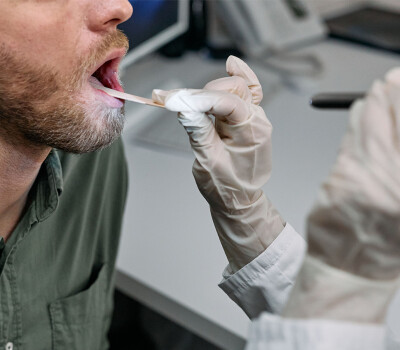
Increasing demand for specialist care regarding chemsex

The Institute of Tropical Medicine Antwerp (ITM) is launching a specialised centre of expertise for chemsex. With this new interdisciplinary care and research programme, ITM aims to support people who use drugs in a sexual context and experience physical, mental or social problems as a result. The centre builds on years of experience with care and research into sexual health.

The phenomenon of chemsex
Chemsex involves taking specific drugs before or during sex, often in the context of prolonged sessions with multiple partners, which increases health risks. It has been most frequently studied among men who have sex with men (MSM). A recent article (1) by Georgiadis et al. shows that, worldwide, 22% of MSM have experience with chemsex. The figures are compiled from 238 studies involving a total of 380,505 participants. For at least five of the substances, the figures in Europe were consistently the highest in the world.
"For many people who engage in chemsex, it remains difficult to find appropriate support," says Tom Platteau, a sexologist at ITM. "Support services often focus solely on sex or solely on substance use, whereas it is precisely the combination of these factors that is crucial to providing people with effective support. With this centre, we aim to bridge that gap."
ITM: a trusted place for the target group
ITM has maintained close contact with the target group for many years, including MSM who consult the institute for PrEP and HIV follow-up. "We see people experiencing negative consequences, but also people who are motivated to make a change," says Platteau. "That makes it crucial to link care and research and to ensure that support is grounded in reality."
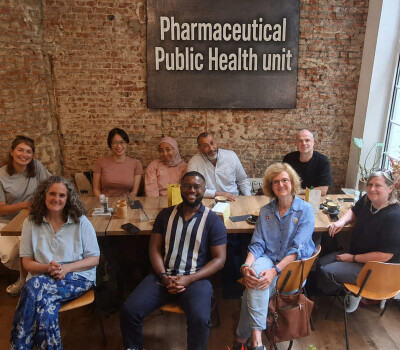
The new centre of expertise provides a point of contact for support relating to chemsex and other forms of sexualised drug use. People can access the service by booking an appointment, even if they are not receiving treatment elsewhere at ITM. The multidisciplinary team has specific expertise in substance use, sexual health, mental health and social support, and works together to provide the best possible care. This care is always delivered in a respectful, non-judgemental and person-centred manner.
To be able to provide high-quality care, scientific research is also conducted within the centre. This research will always be directly aimed at improving care for clients.
Collaboration
ITM collaborates with care partners such as Sensoa, the Flemish Expertise Centre for Alcohol and Other Drugs (VAD) and the University Hospital of Ghent (UZ Gent), and consults with policy-makers such as the Care and Health Agency and the National Institute for Health and Disability Insurance (RIZIV). There is also demand for support and expertise from the target group.
Discover our services
Find out more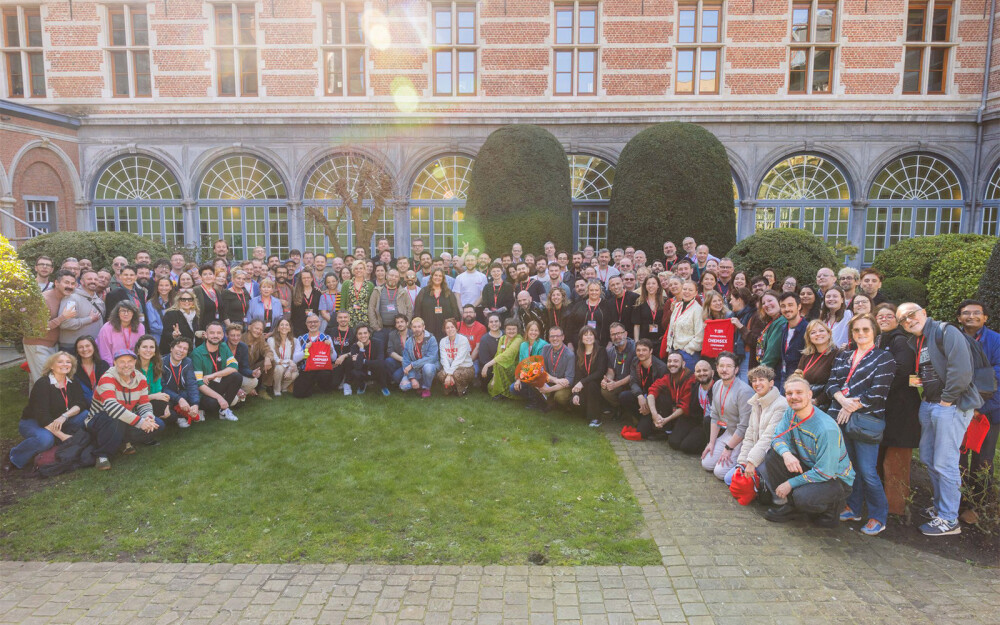
Science, healthcare and the community come together
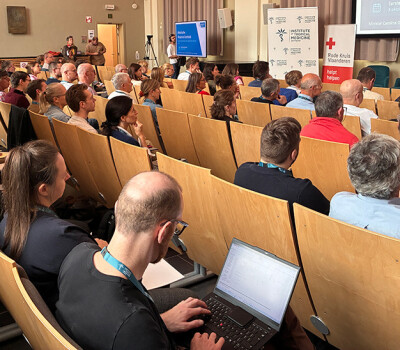
How can researchers, healthcare providers, community organisations and people with personal experience work together to improve care and support? That was the central question during the International Chemsex Conference, organised by ITM from 3 to 5 March. Over three days, 242 participants from 25 countries exchanged research findings, practical experiences and ideas. "Chemsex is an international phenomenon," said Tom Platteau. "By sharing knowledge and experiences, we enhance the quality and humanity of care for people affected by this."
References
Georgiadis, N., Katsimpris, A., Vatmanidou, M. A., Vassilakou, T., Beloukas, A., & Sergentanis, T. N. (2025). Prevalence of chemsex and sexualised drug use among men who have sex with men: A systematic review and meta-analysis. Drug and Alcohol Dependence, 275:112800. https://doi.org/10.1016/j.drugalcdep.2025.112800
Spread the word! Share this story on
More stories
-
 - Articles
Who is at risk, and who is reached? Eight new insights into infection, care and prevention
With the Fresh Off The Journal series, we bring you our monthly research highlights.Read more -
- Articles
First 100 medical crisis intervention volunteers are undergoing training at ITM
One hundred volunteer doctors and nurses will form a Medical Reserve Unit (MRE) in Flanders that can be deployed rapidly in the event of acute, local health crises. They are gathering today for the first time for a training day on infectious diseases and outbreaks at the Institute of Tropical Medicine in Antwerp. They were welcomed by Caroline Gennez, the Flemish Minister for Welfare and Public Health, who will be providing 250,000 euros per year to the MRE over the next three years.Read more -
- Articles
How a nurse from Sierra Leone broadened her perspective at ITM
Introducing graduate Fatmata Bintu KargboRead more -
- Articles
Connecting research, policy and partnerships for better access to cancer medicines
Tinashe Zigomo, a PhD candidate at the University of the Western Cape School of Public Health, reflects on a four-week visiting scholar period at ITM Antwerp, focused on access to essential breast cancer medicines in low-resource settings.Read more -
- Articles
An infectious disease anywhere is an infectious disease everywhere
From the frontlines of the current Ebola outbreak in Central Africa to the resurgence of drug-resistant TB in Europe, weakening global health systems make all of us less safe.Read more -
- Articles
Infectious disease specialist Isabel Brosius wins Eos Pipet 2026 for her leadership in mpox research
The jury praises her strong scientific work and pronounced societal engagement.Read more -
- Articles
Strong collaboration strengthens the response: how jointly developed sequencing expertise helps to unravel the Bundibugyo Ebola outbreak
When the current Bundibugyo Ebola outbreak emerged in the Democratic Republic of Congo, researchers at ITM’s partner institute, Institut National de Recherche Biomédicale (INRB), responded immediately. ITM Professor Koen Vercauteren talks about the role of long-term investment in sequencing technologies and scientific partnerships.Read more -
- Articles
"This research will have a far greater impact on the people of Tanzania than the PhD degree I have earned."
An interview with Dr Amani Kikula, a researcher in obstetrics and gynaecology from Tanzania.Read more -
- Articles
"Infectious diseases cannot be studied from one discipline alone"
Ahead of the 66th ITM Colloquium, scientific leads Prof Dr Johan van Griensven from the Institute of Tropical Medicine (ITM) in Antwerp and Dr Endalamaw Gadisa from the Armauer Hansen Research Institute (AHRI) in Addis Ababa discuss why mobility is central to understanding infectious diseases and why researchers need to look beyond their own discipline.Read more -
- Articles
Staying ahead of resistance: from bacteria to better care
With the Fresh Off The Journal series, we bring you our monthly research highlights.Read more