Respectful maternity care in sub-Saharan Africa: A matter of life and death
The association between mistreatment and postpartum depression
The study examined the association between mistreatment during facility-based childbirth and postpartum depression in Ethiopia and Guinea. Women were enrolled in the third trimester of pregnancy and followed until up to 16 weeks after birth. This study design allowed researchers to assess depressive symptoms both before and after birth and thus better understand how childbirth experiences in health facilities may affect women’s mental health after birth.
The findings are concerning. More than 8 in 10 women in Ethiopia and 7 in 10 in Guinea reported experiencing at least one form of mistreatment. Meanwhile, 31% of women in Guinea and 21% in Ethiopia showed symptoms suggestive of postpartum depression.
For Dr Anteneh Asefa, senior researcher at the Unit of Maternal and Reproductive Health and Principal Investigator of the study, the results confirm concerns that have emerged over years of research. “We know the problem [of mistreatment] is there,” he says. “But we also have to understand the drivers of the behaviour and its role in the development of postpartum depression. Is it only individual behaviour, or are there system-related drivers? And how are these drivers contributing individually or collectively to mistreatment?”
Read article
Read full article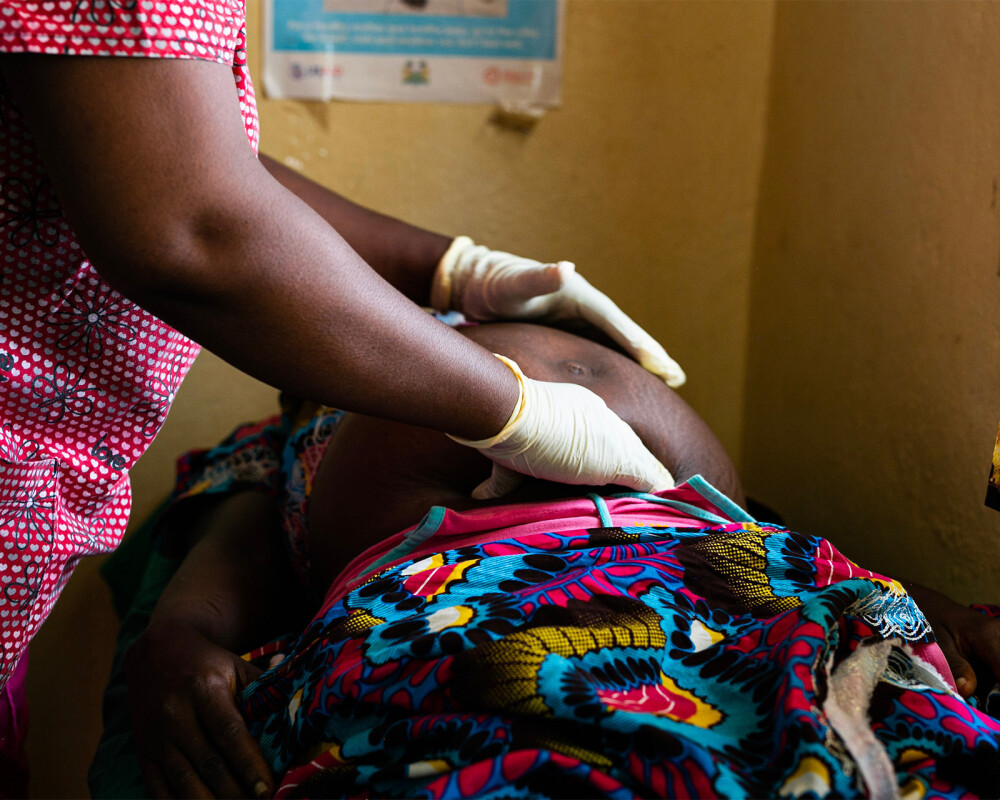
Looking beyond individual behaviour
Mistreatment can take many forms, including verbal and physical abuse, neglect, lack of privacy, denial of companionship, or practices that disregard women’s cultural beliefs. Yet, Anteneh emphasises that these experiences cannot be attributed solely to the shortcomings of individual health workers.
“Many patients tend to blame health workers for why mistreatment happens,” he explains. “However, when someone is working under extreme workload, with limited infrastructure and support, and within flawed power dynamics in the health system, those realities inevitably shape how care is provided.”
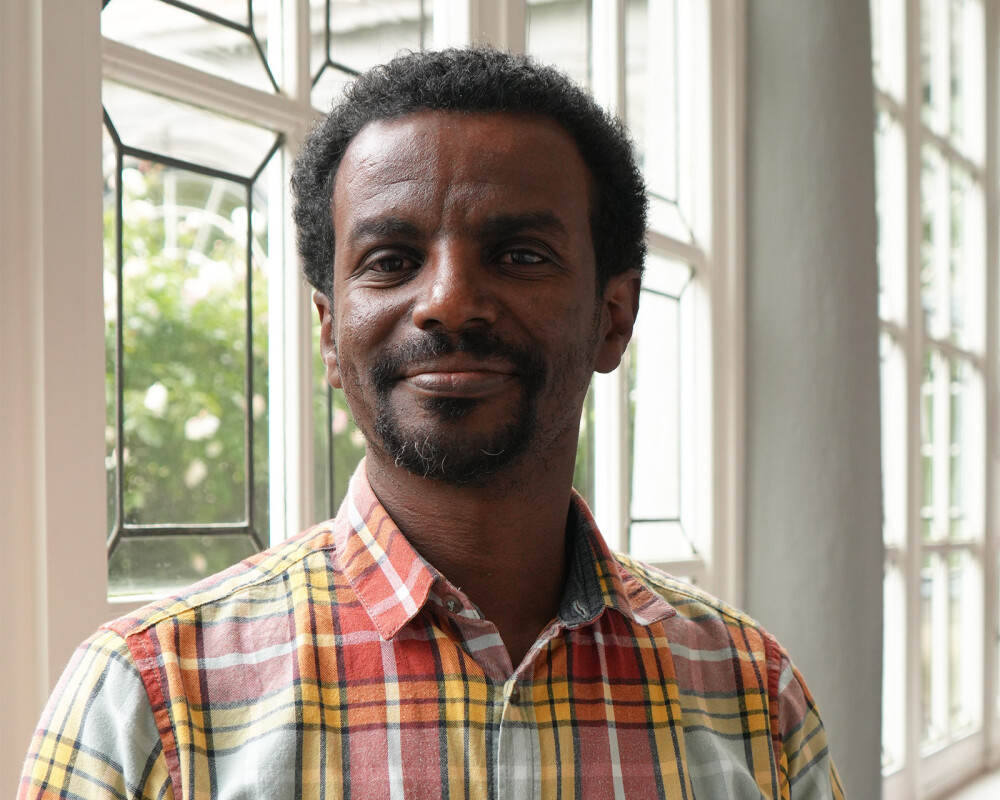
For this reason, Anteneh looks at respectful maternity care from a health systems perspective. Improving women’s experiences requires more than encouraging respectful interpersonal behaviour. Attention should also be paid to structural factors, such as working conditions, infrastructure and organisational culture. Sustainable change, Anteneh argues, depends on addressing both interpersonal and systemic drivers of mistreatment.
In sub-Saharan Africa, where maternal mortality remains a major challenge, improving women’s experience of care is not only about safeguarding rights. It also means ensuring women feel safe to give birth in health facilities. When women experience mistreatment during childbirth, it can undermine their trust in the health system and discourage them from seeking facility-based care in the future, potentially affecting their health and that of their newborns.
A research trajectory shaped by practice
Anteneh’s interest in respectful maternity care began during his master’s studies at Addis Ababa University, where he examined the quality of the HIV prevention services of mother-to-child transmission. In 2011, only 10% of women in Ethiopia gave birth in health facilities. He wondered why many preferred giving birth at home despite the risks and decades of investment.
In 2013, supported by a Young Champions of Maternal Health Fellowship from the Harvard T.H. Chan School of Public Health, he conducted one of the first studies in Ethiopia on the prevalence of disrespect and abuse in health facilities during childbirth. The findings revealed high levels of mistreatment and led to a collaboration with the Ethiopian Ministry of Health. Anteneh and his colleagues moved towards implementing solutions in the forms of respectful maternity care. They implemented interventions in three hospitals, combining staff training with modest structural changes to improve privacy and communication. The approach was later used as a key resource to scale up respectful maternity care nationally.
During this work, women began reporting emotional distress that persisted beyond childbirth. “It was more than just the temporary postpartum blues,” Anteneh recalls. “We started wondering whether there was a link between what women experience during childbirth and their mental health afterwards.” That question laid the foundation for the current study.
The silent and neglected burden of perinatal mental health
While considerable efforts focus on reducing mental mortality, perinatal mental health remains a neglected matter in many African settings, receiving limited policy attention and resources.
As the study shows, postpartum depression is not uncommon, and women’s experiences during childbirth play a critical role. Addressing perinatal mental health therefore requires not only the provision of clinical care for depression, but also improvements in the quality, dignity and overall experience of care, which can help prevent postpartum depression.
Looking ahead
Anteneh’s ongoing projects, including the REVISE project under his Senior FWO fellowship and his coordination of the CoPe consortium, continue to explore how respectful maternity care and perinatal mental health can be strengthened in low-resource settings.
Existing evidence suggests that improving maternal health involves more than just increasing access to facilities; it also requires ensuring that care is respectful, culturally sensitive and supportive. In resource-constrained contexts, respectful maternity care can influence whether women seek care, how they experience childbirth, and how they recover afterwards, thereby linking it closely to both survival and well-being.
Anteneh Asefa
Anteneh Asefa is a health systems researcher in the Unit of Reproductive and Maternal Health, with a strong expertise in maternal, sexual and reproductive health, and HIV/AIDS. He holds an MPH from Addis Ababa University (Ethiopia) and a PhD from the Nossal Institute for Global Health, University of Melbourne (Australia).
Anteneh's work centres on implementation research in low-income settings to help end preventable deaths. He has served as Principal Investigator and Co-Principal Investigator on regional and multi-country projects, and is a Fellow of several global health leadership programmes.
Follow Anteneh’s research on:
Anteneh's projects
Revisiting maternity and perinatal mental health experiences of women living with HIV for an HIV-free generation (REVISE)
FWO Senior Postdoc: 2025-2028
Pregnant and postpartum women living with HIV face high levels of obstetric violence and perinatal depression, undermining adherence to prevention of mother-to-child transmission (PMTCT) services and increasing the risk of HIV transmission to infants. In Ethiopia and Guinea, these challenges are widespread, yet respectful maternity care and perinatal mental health remain largely neglected.
The REVISE project aims to generate evidence and practical solutions. The study examines how obstetric violence and perinatal depression affect PMTCT outcomes, and co-designs, implements, and evaluates an intervention integrating perinatal mental health and respectful maternity care into HIV services for pregnant and postpartum women.
Enhancing Network for the Application of Technology-Based Support for Perinatal Mental Health (ENAT)
Funded by the Flemish Department of Work, Economy, Science, Innovation and Social Economy (WEWIS) and the Belgian Directorate-General for Development Cooperation (DGD), ENAT aims at developing and testing a context-adapted digital health innovation to improve the screening and management of perinatal depression in Ethiopia. The project integrates perinatal mental health into the WHO’s SMART guideline, currently piloted in Ethiopia, and includes the development of a mobile application for women. This innovation is expected to strengthen the limited capacity of frontline health workers to detect perinatal depression and provide appropriate care in line with the WHO-recommended stepped care approach.
Consortium for Global Research on Perinatal Mental Health (CoPe)
FWO Scientific Research Network Grant: 2026-2030
Hosted by the ITM Reproductive and Maternal Health Unit, CoPe connects Flemish and international researchers working on perinatal mental health across diverse settings. The network aims to advance research and policy, particularly in low-resource environments where perinatal depression remains highly neglected. Partners include the University of Antwerp and KU Leuven (Belgium), CERRHUD (Benin) Addis Ababa University (Ethiopia), the University of Oxford (United Kingdom), and the Universities of Melbourne and Queensland (Australia).
By connecting researchers across continents, CoPe will generate evidence to integrate perinatal mental health into maternal and child health services, strengthen collaboration across ongoing FWO projects, and engage strategic partners, including WHO and national Ministries of Health.
Spread the word! Share this story on
More stories
-
 - Articles
New study provides the first comprehensive overview of the Bundibugyo Ebola virus
Knowledge about the Zaire ebolavirus does not automatically apply to the Bundibugyo virus.Read more -
- Articles
New evidence for more accessible blood culture diagnostics
ITM researchers find that blood culture bottles and automated systems from different manufacturers can, in most cases, be used interchangeablyRead more -
- Articles
“What I learn here can improve care for tuberculosis patients in Nigeria”
Introducing Dr Zeynab Olamide Rabiu, recipient of the Armand Van Deun ScholarshipRead more -
- Articles
The strengths that matter in a crisis are built through years of partnership.
Belgium, the DRC and ITM continue to build a lasting partnership.Read more -
- Articles
Erasmus+ mobility: training programme on field approaches of vector control strategies and West Nile virus screening
From 6 to 17 July 2026, Stien Vereecken and Emma Vandenberghe, two ITM scientists from the Unit of Entomology, participated in a specialised training programme at Ecodevelopment in Greece, with the support of an Erasmus+ staff mobility grant.Read more -
- Articles
Wanted: Artist to critically engage with ITM’s colonial heritage
As part of our ongoing reflection on our colonial heritage and institutional history, ITM is launching an artist residency in collaboration with Africalia. We are looking for an artist from the Democratic Republic of the Congo to critically engage with the artworks by Fernand Allard l’Olivier and the broader questions they raise about institutional memory, colonial heritage and the continuing impact of colonialism on the present. Apply for our open call before 20 August.Read more -
- Articles
Community trust should be earned, not assumed
As health actors rush to curb the ongoing outbreak of the Bundibugyo virus in the Democratic Republic of the Congo (DRC), one question risks to remain unanswered: What have we done to earn the trust we assume we will receive from the local communities?Read more -
- Articles
Two new EDCTP grants awarded to ITM
In focus: tuberculosis diagnosis and enhancing expertise in clinical research in sub-Saharan AfricaRead more -
- Articles
From preparedness to practice: bringing evidence closer to reality
With the Fresh Off The Journal series, we bring you our monthly research highlights.Read more -
- Articles
EOS Pipet Award: Isabel Brosius investigated the mpox virus during the outbreak
At the start of a major outbreak of a new mpox variant in the Democratic Republic of the Congo, infectious disease specialist Isabel Brosius (ITM) decided to travel to the region immediately.Read more