Who is at risk, and who is reached? Eight new insights into infection, care and prevention
Fresh Off The Journal: September 2026
Why might some red blood cells make malaria parasites more transmissible? Which antibodies protect children from severe dengue? How far do people in the Philippines have to travel to access dialysis? And could a travel consultation open the door to HIV prevention for underserved groups?
In this month's Fresh Off The Journal, ITM researchers and partners look at infectious diseases and health systems from different angles. These studies show that disease control depends on understanding who is most at risk and why, and on designing care that reaches the people who are currently missed.
Researching (re-)emerging infections and outbreaks
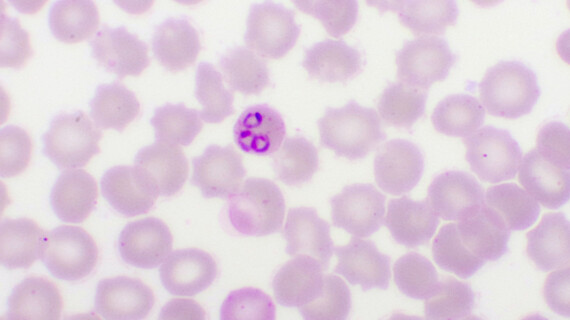
Study links haemoglobin variants to increased sexual conversion of malaria parasites
In a study of people naturally infected with malaria in Burkina Faso, researchers found that Plasmodium falciparum parasites converted to their sexual, transmissible forms at higher rates in red blood cells carrying the sickle-cell trait (HbAS) or haemoglobin C trait (HbAC) than in normal HbAA red blood cells. The increase was particularly pronounced for HbAS and was independently confirmed in controlled laboratory experiments. The study shows that P. falciparum sexual conversion is increased in HbAS and HbAC red blood cells in naturally infected individuals. The findings suggest that inherited haemoglobin variants may influence the transmission potential of malaria parasites.
Drissi-El Boukili, Y., Kühne, V., Natama, H. M., Moris, P., Tintó-Font, E., Bere, A. W., Goovaerts, O., Guetens, P., Moreno-Murillo, A., Valgaerts, Y., Traoré, T. E., Ouedraogo, D. F., Tinto, H., Van de Velde, A., Cortés, A., Caljon, G., & Rosanas-Urgell, A. (2026). Elevated Plasmodium falciparum sexual conversion in HbAC and HbAS red blood cells in naturally infected malaria patients. PLOS Pathogens, 22(9), e1014542. https://doi.org/10.1371/journal.ppat.1014542
What makes an antibody response protective against severe dengue?
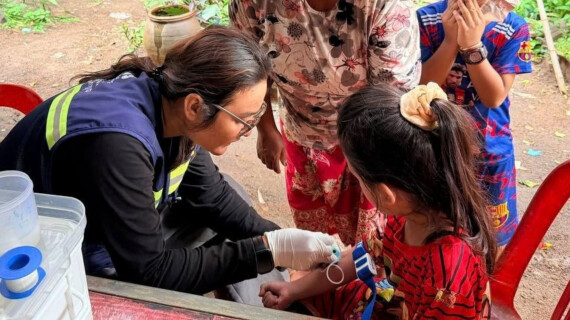
Researchers studying plasma collected from children with dengue in Cambodia found that different antibody responses were associated with disease severity. Antibodies targeting one region of the virus were more common in severe cases and showed greater potential to enhance infection in laboratory tests. In contrast, antibodies that recognise a specific structure on the surface of the dengue virus were better able to block infection and were associated with protection from severe disease.
Lay, S., Auerswald, H., Heng, S., Sorn, S., Ken, S., Duran, V., Rebellón Sanchez, D. E., Vinueza, D., Villar Centeno, L. A., Rosso, F., Einav, S., Sakuntabhai, A., Rey, F. A., Ariën, K. K., Ly, S., Duong, V., Barba-Spaeth, G., & Cantaert, T. (2026). Dengue virus envelope epitope-specific antibodies are associated with protection from severe dengue. EMBO Molecular Medicine, 18(9), 3448–3473. https://doi.org/10.1038/s44321-026-00485-7
Mpox can affect the eyes, study finds in South Kivu
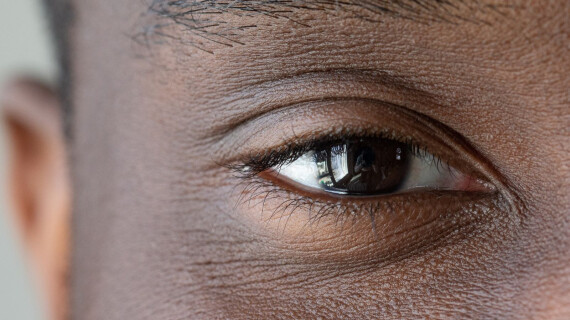
A study in South Kivu, Democratic Republic of the Congo, followed 310 people hospitalised with clade Ib mpox and found that 43% developed mpox-related eye disease. Most cases affected both eyes, with inflammation of the eye surface the most common problem. Corneal disease occurred in 8%, and two people remained blind after severe corneal ulcers. Young children and people with severe malnutrition were at higher risk.
Kabesha, T., Van Dijck, C., Mudwanga, S., Houben, S., Mujula, Y., Munganga, P., ... & Mbala-Kingebeni, P. (2026). Prevalence, characteristics, and clinical course of mpox-related ophthalmic disease (MBOTE-EYE): a prospective cohort study in South Kivu, Democratic Republic of the Congo. The Lancet Global Health. https://doi.org/10.1016/j.langlo.2026.104054
Designing sustainable health systems and strategies
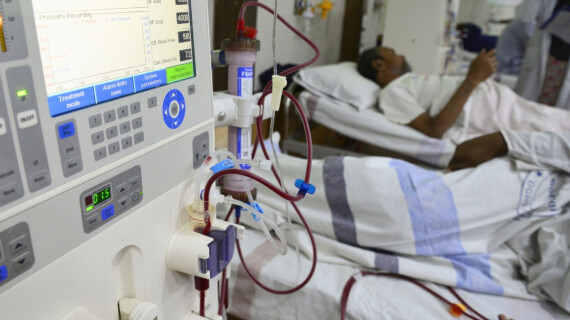
Mapping gaps in dialysis access across the Philippines
A national study mapped access to dialysis services across the Philippines. In 2023, about 68% of people lived within one hour of a haemodialysis facility, while 51% were within two hours of a peritoneal dialysis facility. Access was lowest in rural and geographically isolated regions. The researchers estimate that offering peritoneal dialysis at existing haemodialysis centres could extend its reach to 11 million more people, although this would depend on staff, supplies and patient eligibility. Mapping dialysis deserts shows where health insurance expansion has not reached rural populations, and gives policymakers a basis for sequencing service integration toward the least-served regions and reducing the travel burden borne by households.
Fajardo, M. S., Macharia, P. M., & Ku, G. M. V. (2026). Dialysis deserts in the Philippines: a national geospatial modeling study of dialysis services. Global Health Action, 19(1), 2727762. https://doi.org/10.1080/16549716.2026.2727762
Beyond weight gain: understanding recovery from childhood undernutrition
Recovery from childhood undernutrition is influenced by more than food alone. In Maputo, Mozambique, researchers followed 217 undernourished children during hospital treatment and after discharge. While most gained weight and body fat during treatment and recovery, progress varied widely. Children living with HIV showed slower recovery and smaller improvements in body composition, highlighting the important role of underlying health conditions. The findings underscore the need for integrated care that combines nutrition, HIV services, and continued support after hospital discharge to improve recovery and long-term health outcomes.
Cossa-Moiane, I., Dias, S. S., Doak, C., Campos-Ponce, M., Roucher, C., Durkin, A., ... & Polman, K. (2026). Predictors of Changes in Weight and Body Composition in Undernourished Children in Mozambique: A Longitudinal Study. The American journal of tropical medicine and hygiene, tpmd260014. https://doi.org/10.4269/ajtmh.26-0014
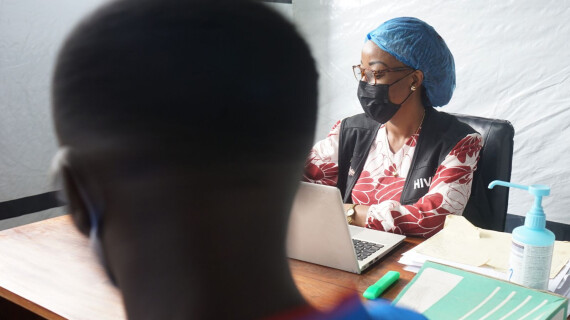
MSM in West Africa suggest ways to improve HIV testing in their communities
Researchers conducted focus group discussion with men who have sex with men (MSM) in Burkina Faso, Côte d'Ivoire, Mali and Togo about how HIV testing could be improved. Participants valued community-based, MSM-friendly services and called for improving awareness on HIV in general, improved confidentiality in clinics, more diversified testing options to also reach those who prefer to remain more 'hidden', e.g., including self-testing, peer support and better guidance before, during and after testing.
Reyniers, T., Fiorentino, M., Malama, M., Babo, S. A. Y., Ouedraogo, M., Kanta, I., ... & Laurent, C. (2026). Strategies for improving HIV testing suggested by and for men who have sex with men in West Africa: a focus group study in Burkina Faso, Côte d’Ivoire, Mali and Togo. BMC Public Health. https://doi.org/10.1186/s12889-026-29301-0
Accelerating disease elimination

Understanding rabies risk during military deployment
Rabies is almost always fatal once symptoms appear, but it can be prevented with timely vaccination and treatment after exposure. This review, which is a collaboration between ITM and the Ministry of Defense, examined rabies risks among military personnel, who may come into contact with stray dogs, cats, bats and other animals during deployments. The authors describe challenges such as underreported bites and limited access to care. They also discuss practical measures for clinical management ofthis vaccine-preventable disease in detail.
Monchatre-Leroy, E., Costescu Strachinaru, D. I., Itani, O., Wensierski, S., Servat, A., & Soentjens, P. (2026). Rabies in Military Personnel: Epidemiology, Clinical Challenges, and Strategies for Prevention and Management. Tropical Medicine and Infectious Disease, 11(9), 243. https://doi.org/10.3390/tropicalmed11090243

Could travel medicine help expand access to PrEP?
Pre-exposure prophylaxis (PrEP) can prevent HIV infection, but some people who could benefit from it may not access it. Researchers at the Institute of Tropical Medicine in Antwerp offered PrEP to travellers during pre-travel consultations. Among 31,280 consultations, 26 people were referred and 20 received a prescription. Most were heterosexual, a different profile from Belgium's usual PrEP users. The small study suggests travel consultations could help reach underserved groups. ITM researchers plan to explore this further at the ITM Polyclinic.
Vanbaelen, T., Maniewski-Kelner, U., & Hens, M. (2026). Pre-Exposure Prophylaxis for Travellers: A New Opportunity for HIV Prevention in Travel Medicine. Journal of Travel Medicine, taag060. https://doi.org/10.1093/jtm/taag060
News
All news-
 With the Fresh Off The Journal series, we bring you our monthly research highlights.
 -
With the Fresh Off The Journal series, we bring you our monthly research highlights.
-
With the Fresh Off The Journal series, we bring you our monthly research highlights.
-
With the Fresh Off The Journal series, we bring you our monthly research highlights.
-
Articles
Fresh Off The Journal: April 2026
 With the Fresh Off The Journal series, we bring you eight research highlights every month.
 -
Articles
Fresh Off The Journal: March 2026
With the Fresh Off The Journal series, we bring you eight research highlights every month. -
Articles
Fresh Off The Journal: February 2026
With the Fresh Off The Journal series, we bring you nine research highlights every month. -
With the Fresh Off The Journal series, we bring you nine research highlights every month.
-
Articles
Fresh Off The Journal: November 2025
With the Fresh Off The Journal series, we bring you nine research highlights every month. -
Articles
Fresh Off The Journal: October 2025
With the Fresh Off The Journal series, we bring you nine research highlights every month. -
With the Fresh Off The Journal series, we bring you nine research highlights every month.
Spread the word! Share this story on
More stories
-
- Articles
Final preparations underway for pivotal Phase 2/3 Bundibugyo vaccine trial
Tumaini, a pivotal Phase 2/3 clinical trial, will evaluate vaccine candidates including Ervebo as part of the DRC's outbreak response. There is currently no approved vaccine against Bundibugyo virus. Tumaini aims to close that gap.Read more -
- Articles
First 100 medical crisis intervention volunteers are undergoing training at ITM
One hundred volunteer doctors and nurses will form a Medical Reserve Unit (MRE) in Flanders that can be deployed rapidly in the event of acute, local health crises. They are gathering today for the first time for a training day on infectious diseases and outbreaks at the Institute of Tropical Medicine in Antwerp. They were welcomed by Caroline Gennez, the Flemish Minister for Welfare and Public Health, who will be providing 250,000 euros per year to the MRE over the next three years.Read more -
- Articles
How a nurse from Sierra Leone broadened her perspective at ITM
Introducing graduate Fatmata Bintu KargboRead more -
- Articles
Connecting research, policy and partnerships for better access to cancer medicines
Tinashe Zigomo, a PhD candidate at the University of the Western Cape School of Public Health, reflects on a four-week visiting scholar period at ITM Antwerp, focused on access to essential breast cancer medicines in low-resource settings.Read more -
- Articles
An infectious disease anywhere is an infectious disease everywhere
From the frontlines of the current Ebola outbreak in Central Africa to the resurgence of drug-resistant TB in Europe, weakening global health systems make all of us less safe.Read more -
- Articles
Infectious disease specialist Isabel Brosius wins Eos Pipet 2026 for her leadership in mpox research
The jury praises her strong scientific work and pronounced societal engagement.Read more -
- Articles
Strong collaboration strengthens the response: how jointly developed sequencing expertise helps to unravel the Bundibugyo Ebola outbreak
When the current Bundibugyo Ebola outbreak emerged in the Democratic Republic of Congo, researchers at ITM’s partner institute, Institut National de Recherche Biomédicale (INRB), responded immediately. ITM Professor Koen Vercauteren talks about the role of long-term investment in sequencing technologies and scientific partnerships.Read more -
- Articles
"This research will have a far greater impact on the people of Tanzania than the PhD degree I have earned."
An interview with Dr Amani Kikula, a researcher in obstetrics and gynaecology from Tanzania.Read more -
- Articles
"Infectious diseases cannot be studied from one discipline alone"
Ahead of the 66th ITM Colloquium, scientific leads Prof Dr Johan van Griensven from the Institute of Tropical Medicine (ITM) in Antwerp and Dr Endalamaw Gadisa from the Armauer Hansen Research Institute (AHRI) in Addis Ababa discuss why mobility is central to understanding infectious diseases and why researchers need to look beyond their own discipline.Read more -
- Articles
Staying ahead of resistance: from bacteria to better care
With the Fresh Off The Journal series, we bring you our monthly research highlights.Read more