Professors Peter Piot and Jean-Jacques Muyembe awarded the 2026 Virchow Prize for their pioneering work on Ebola

Professors Peter Piot and Jean-Jacques Muyembe-Tamfum have been awarded the 2026 Virchow Prize, worth €500,000, in recognition of their pioneering and enduring contributions to the discovery, control and understanding of epidemic threats. They receive the award fifty years after the discovery of the Ebola virus, a milestone that would shape both of their careers and transform the global response to infectious disease outbreaks.

Awarded annually by the Virchow Foundation under the motto 'Towards Health for All', the Virchow Prize celebrates individuals whose work reflects the legacy of Rudolf Virchow: the conviction that health is inseparable from society, politics, equity and collective responsibility. By recognising Muyembe and Piot together, the Foundation celebrates not only two exceptional scientific careers, but also a shared history of multiple decades that has helped shape modern outbreak preparedness.
Their shared story began in 1976, when a mysterious and deadly disease emerged in Yambuku, in what is now the Democratic Republic of the Congo. Working under extremely challenging field conditions, Jean-Jacques Muyembe played a crucial role in investigating the outbreak, collecting samples and laying the groundwork for understanding what would later be identified as Ebola virus disease. In Antwerp, Peter Piot and colleagues contributed to the laboratory analysis of those samples and to the scientific characterisation of the newly discovered virus.

"I am deeply touched by this prestigious Virchow Prize alongside Jean-Jacques Muyembe, whose leadership and friendship continue to inspire me," says laureate Peter Piot. "It is also an honour to follow in the footsteps of the first laureate of the Virchow Prize, Dr John Nkengasong, another alumnus of the Institute of Tropical Medicine – the remarkable institute where I had the privilege and chance to do all my early work, on Ebola, and particularly on HIV and infectious diseases.
This is, above all, a recognition and encouragement for the numerous colleagues who worked with me over several decades in various parts of the globe. I see this award also as a tribute more broadly to the hard work of basic and applied scientists of numerous disciplines to policy makers and to those on the front lines, many who work in extremely challenging conditions. as today in the Ebola outbreak."
"Epidemics and health crises, whether Ebola, HIV/AIDS, maternal mortality, or diabetes, have taught us that these are not just a medical issue, but also tests of trust, equity, leadership, and political and scientific cooperation," Piot continues. "As we continue to face renewed threats in challenging times, this recognition reinforces my drive to work towards affordable scientific innovation, investments in resilient health systems, and in equitable research partnerships across countries, and above ensuring that scientific progress genuinely translates into health for all in the spirit of Accra Reset."

The discovery of Ebola marked a turning point in the history of infectious diseases. It also highlighted a lesson that remains highly relevant today: epidemic threats can only be addressed through collaboration across disciplines, institutions and borders. Scientific advances are essential, but their impact depends on strong health systems, local leadership, community trust and international cooperation.
"The Virchow Prize is a symbol of international recognition for Peter Piot and myself as pioneers in the fight against Ebola virus disease," says laureate Jean-Jacques Muyembe-Tamfum. "I am pleased to have been able to serve humanity, and this distinction also honours the partnership between ITM and INRB."
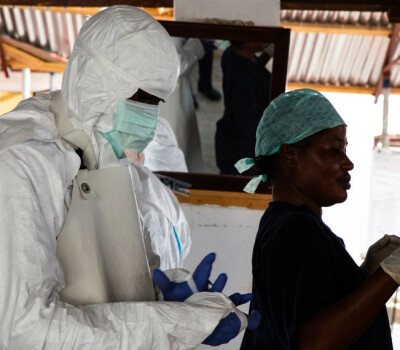
The joint recognition of Muyembe and Piot comes at a time when the world continues to face recurring and emerging epidemic threats. Recent outbreaks, such as the ongoing and rapidly growing Ebola outbreak caused by the Bundibugyo Ebola virus in the east of DRC, have demonstrated the importance of investing not only in diagnostics, vaccines and treatments, but also in preparedness, surveillance and resilient health systems.
The Virchow Prize Ceremony 2026 will take place on 10 October 2026 at the Rotes Rathaus in Berlin. A Virchow Prize Lecture will also be organised in honour of the laureates, focusing on approaches to safeguarding Health for All and on the links between health systems, sustainable development and global cooperation.
The Institute of Tropical Medicine congratulates both laureates on this well-deserved recognition.
Laureates

Prof Peter Piot
Prof Peter Piot is a Belgian microbiologist and global health leader who is internationally recognised for his work on Ebola, HIV/AIDS and epidemic preparedness.
He co-discovered the Ebola virus in 1976 while working at the Institute of Tropical Medicine in Antwerp, where he contributed to the laboratory identification of the virus during the first known outbreak in Yambuku.
He later became a leading figure in the global HIV/AIDS response, including as the founding Executive Director of UNAIDS and Under-Secretary-General of the United Nations.
From 2010-2021, he was Director of the London School of Hygiene & Tropical Medicine (LSHTM).
His work has helped shape modern global health governance by showing that epidemics require not only scientific solutions, but also social, political and international responses.
For ITM, Prof Piot is a key figure in the institute's scientific legacy, as his role in the discovery of Ebola remains one of ITM’s landmark contributions to global health.

Prof Jean-Jacques Muyembe-Tamfum
Prof Jean-Jacques Muyembe-Tamfum is a Congolese microbiologist and virologist who is widely recognised as one of Africa's foremost experts on Ebola and emerging infectious diseases.
He played a crucial role in the 1976 Yambuku outbreak investigation by collecting samples and helping lay the foundations for the identification and understanding of Ebola virus disease.
He has led and strengthened outbreak response capacity in the Democratic Republic of the Congo, including through his leadership at the Institut National de Recherche Biomédicale in Kinshasa.
His work has contributed to improved surveillance, diagnostics, clinical care and community-based responses to Ebola and other epidemic threats.
For ITM, Prof Muyembe is a long-standing scientific partner and collaborator in Central Africa, closely connected to ITM's history of Ebola research and its commitment to equitable partnerships with institutions in the Global South.
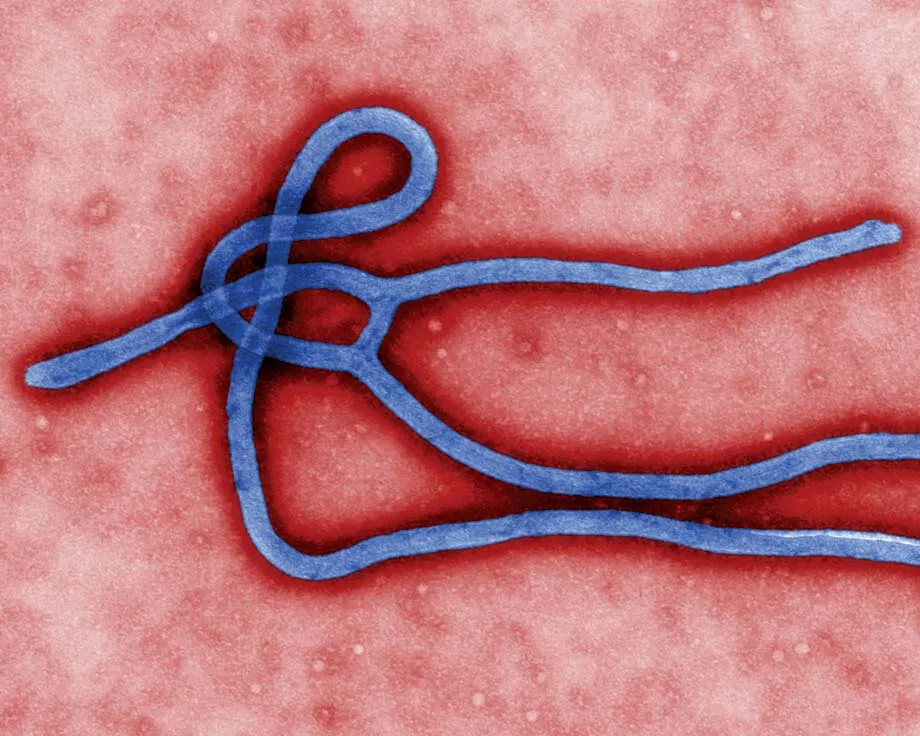
Learn more about the discovery of Ebola
In 1976, Prof Muyembe was a field epidemiologist when he was called to the village of Yambuku, in northern Zaire, to investigate an outbreak of a mysterious illness. The disease would later become known as Ebola virus disease. Listen to his story in Transmission, the podcast of ITM.
News
All news-
 World View in Nature by Professor of Virology Kevin Ariën
 -
Articles
Ebola outbreak in the DRC and Uganda
 ITM is working closely with Congolese partners
 -
Prof Muyembe was awarded for his fight against Ebola
-
ITM researchers Guido van der Groen and Peter Piot co-discovered the Ebola virus, which was first studied in Zaire in 1976.
Spread the word! Share this story on
More stories
-
- Articles
Seven new insights into diagnosis, prevention and disease control
With the Fresh Off The Journal series, we bring you our monthly research highlights.Read more -
- Articles
New Ebola outbreak highlights a painful lesson: preparedness comes too late
World View in Nature by Professor of Virology Kevin AriënRead more -
- Articles
A new partnership transforms the lifelong learning landscape in Flanders
Nova Academy evolves into a partnership of ten higher education institutions and will strengthen the lifelong learning mindset in Flanders.Read more -
- Articles
Last study participant followed up in unique Ebola vaccine booster trial in DRC
A major milestone in the EBO-BOOST clinical trial brings us closer to more effective Ebola vaccination strategies and improved local outbreak preparedness.Read more -
- Articles
Ebola outbreak in the DRC and Uganda
ITM is working closely with Congolese partnersRead more -
- Articles
Fresh Off The Journal: April 2026
With the Fresh Off The Journal series, we bring you eight research highlights every month.Read more -
- Articles
Increasing demand for specialist care regarding chemsex
A new interdisciplinary centre of expertise at the Institute of Tropical Medicine Antwerp supports chemsex users in gaining greater control over their use, health and well-being.Read more -
- Articles
Fresh Off The Journal: March 2026
With the Fresh Off The Journal series, we bring you eight research highlights every month.Read more -
- Articles
"Ethics is not a checklist"
Meet Jared Howes, ITM's new Ethics and Compliance Officer for the Institutional Review Board.Read more -
- Articles
Fresh Off The Journal: February 2026
With the Fresh Off The Journal series, we bring you nine research highlights every month.Read more