Seven new insights into diagnosis, prevention and disease control
Fresh Off The Journal: May 2026
How do doctors know when symptoms that look like tuberculosis are caused by something else? What happens when climate change starts shaping everyday health risks? Why are some children still missing routine vaccines? And how can better diagnosis help reduce unnecessary antibiotic use?
In this month's Fresh Off The Journal, ITM researchers and partners look at infectious diseases and health systems from different angles: from TB-like lung disease in West Africa and climate-health planning in Tanzania to vaccine gaps in Ethiopia, dengue antibody testing, fever diagnosis and malaria prevention during pregnancy.
Together, these studies show that disease control depends not only on treatment, but also on careful diagnosis, local evidence, strong surveillance and health systems that can act on what the data reveal.
Researching (re-)emerging infections and outbreaks

When TB symptoms point to other mycobacteria
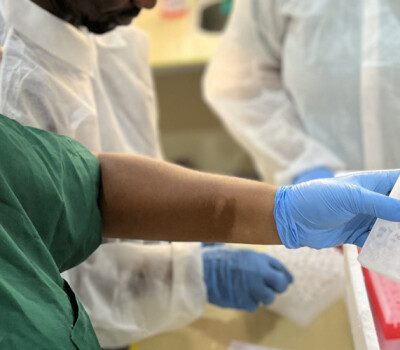
A long-lasting cough, weight loss and abnormal chest X-rays can point to tuberculosis (TB), but other mycobacteria may cause similar problems. A research team working across Ghana, Nigeria, Niger and Belgium studied people being checked for suspected TB. About one in ten culture-tested samples contained mycobacteria related to TB, but not TB itself. The study shows why careful diagnosis matters before choosing treatment.
Abbew, E. T., Bassirou, S. M., Ahmadu, I., Adu, J. B., Laryea, R., Amenyo, R. P. F., ... & Rigouts, L. (2026). Prevalence of nontuberculous mycobacteria isolates and pulmonary disease from respiratory tract samples in persons investigated for presumed tuberculosis from three West African countries, an analysis of three prospective cohort studies. BMC Infectious Diseases.
Designing sustainable health systems and strategies
Tanzania’s climate-health plans meet local realities
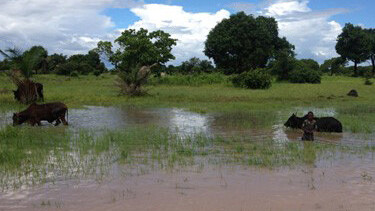
What happens when floods, drought and heat start shaping everyday life? Researchers studied Tanzania’s plans for health in the face of a changing climate. Stakeholders in the country were asked about policies and their implementation. There are relevant policies, but local action is held back by gaps in funding and coordination, and 97% of residents of the Kilombero-Valley reported exposure to floods, drought and extreme heat, and related health problems.
Urassa, A. P., Finda, M. F., Okumu, F. O., & Kreppel, K. (2026). Climate-related health threats in Tanzania: a multi-level analysis of key policies, strategies and community response. Health Policy and Planning, czag066.
Antenatal care linked to childhood vaccination gaps in Ethiopia
Not all children are reached by routine immunization services. A study of 1,890 Ethiopian children aged 12–23 months found that about one in four had not received the first dose of the diphtheria, tetanus and pertussis (DTP1) vaccine. These "zero-dose" children were more common in poor households and where mothers missed antenatal care (ANC). Poverty and lack of ANC were the main causes, showing the need for targeted outreach and better links between ANC and immunization services to improve equitable access.
Shiferie, F., Asefa, A., Gebremedhin, S., & Beňová, L. (2026). Decomposition of Wealth-Related Inequalities in Childhood Zero-Dose Vaccination: Analysis of the 2016 Ethiopian Demographic and Health Survey. The American journal of tropical medicine and hygiene, tpmd250713.

Stillbirth prevention needs more than good plans
Stillbirths are now more visible in global health, but prevention has not improved fast enough. This commentary discusses a global scorecard showing that many countries have plans and policies, while real-world implementation and data systems lag behind. The authors argue that preventing stillbirths requires more than awareness: countries need better quality pregnancy and birth care, stronger routine data, aligned digital health systems, and clearer accountability for results.
Frøen, J., & Tunçalp, Ö. (2026). From Visibility to Accountability: Ending Stagnation in Stillbirth Prevention. Paediatric and Perinatal Epidemiology, 40(4), 452–453.
Accelerating disease elimination
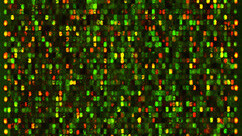
Following dengue antibodies in fine detail
Dengue antibody responses over time at the epitope level are still not well understood. Research at the Virology Unit examined how antibody responses develop in nine volunteers infected with dengue virus type 1 under controlled conditions and followed for up to 6 months. Antibodies were screened against thousands of small viral fragments to identify targeted viral regions over time, revealing both known and new immune targets that could support the development of improved diagnostic tests.
Bouckaert, J., Waickman, A. T., Thomas, S. J., Ariën, K. K., & Lagatie, O. (2026). Dengue antibody dynamics resolved at epitope level using a dengue 1 human infection model. International Journal of Infectious Diseases, 108771.
Taking on antimicrobial resistance
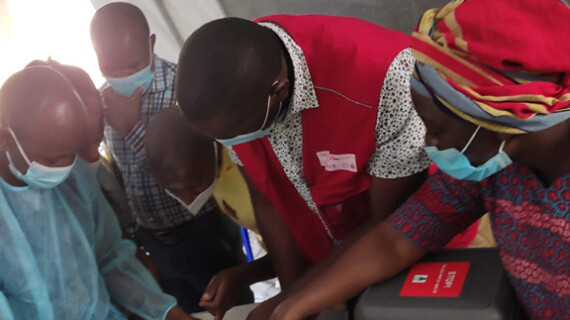
Exploring antibiotic use in febrile illness
Figuring out how to treat patients with fever can be difficult, especially when it’s not clear what’s causing it. This is even more challenging in settings where many different infections could be responsible, and where access to diagnostic tests is limited. The study looked into the steps patients with fever go through to get care in the Democratic Republic of the Congo, Kenya, and Uganda. It explored when antibiotics were used and what factors may influence their use, shedding light on the need for appropriate use of antibiotics while ensuring continued access to treatment and care.
Lepore, L., Dawa, J., Odinoh, R., Situma, S., Nyakarahuka, L., Makiala, S., ... & Vanlerberghe, V. Patterns of antibiotic use for acute febrile illness in resource-limited settings: a multicenter study in DR Congo, Kenya and Uganda. Frontiers in Public Health, 14, 1837179.
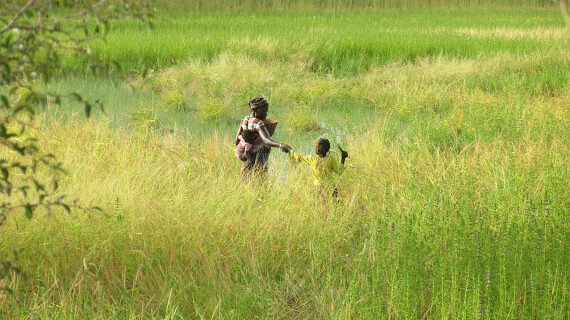
Is malaria prevention in pregnancy still working well?
Malaria during pregnancy can harm both mother and baby. To help prevent infection, many countries with high malaria transmission provide pregnant women with preventive medicine. The Unit of Malariology and partners in Mozambique found that many malaria parasites in pregnant women carried genetic changes linked to reduced response to this medicine. These resistant parasites were also more likely to form stages that can be passed on to mosquitoes. The study shows why monitoring drug resistance is highly important.
Drissi-El Boukili, Y., Rovira-Vallbona, E., Guetens, P., Chiheb, D., Kattenberg, J. H., Kestens, L., ... & Arnaldo, P. (2026). Prevalence of pfdhfr-pfdhps Sextuple and Gametocyte-Associated Quintuple Sulfadoxine-Pyrimethamine Resistance Mutations in Plasmodium falciparum Isolates from Pregnant Women in Mozambique. Pathogens, 15(5), 504.
News
All news-
 With the Fresh Off The Journal series, we bring you our monthly research highlights.
 -
With the Fresh Off The Journal series, we bring you our monthly research highlights.
-
With the Fresh Off The Journal series, we bring you our monthly research highlights.
-
With the Fresh Off The Journal series, we bring you our monthly research highlights.
-
Articles
Fresh Off The Journal: April 2026
 With the Fresh Off The Journal series, we bring you eight research highlights every month.
 -
Articles
Fresh Off The Journal: March 2026
With the Fresh Off The Journal series, we bring you eight research highlights every month. -
Articles
Fresh Off The Journal: February 2026
With the Fresh Off The Journal series, we bring you nine research highlights every month. -
With the Fresh Off The Journal series, we bring you nine research highlights every month.
-
Articles
Fresh Off The Journal: November 2025
With the Fresh Off The Journal series, we bring you nine research highlights every month. -
Articles
Fresh Off The Journal: October 2025
With the Fresh Off The Journal series, we bring you nine research highlights every month. -
With the Fresh Off The Journal series, we bring you nine research highlights every month.




Spread the word! Share this story on
More stories
-
- Articles
Final preparations underway for pivotal Phase 2/3 Bundibugyo vaccine trial
Tumaini, a pivotal Phase 2/3 clinical trial, will evaluate vaccine candidates including Ervebo as part of the DRC's outbreak response. There is currently no approved vaccine against Bundibugyo virus. Tumaini aims to close that gap.Read more -
- Articles
Who is at risk, and who is reached? Eight new insights into infection, care and prevention
With the Fresh Off The Journal series, we bring you our monthly research highlights.Read more -
- Articles
First 100 medical crisis intervention volunteers are undergoing training at ITM
One hundred volunteer doctors and nurses will form a Medical Reserve Unit (MRE) in Flanders that can be deployed rapidly in the event of acute, local health crises. They are gathering today for the first time for a training day on infectious diseases and outbreaks at the Institute of Tropical Medicine in Antwerp. They were welcomed by Caroline Gennez, the Flemish Minister for Welfare and Public Health, who will be providing 250,000 euros per year to the MRE over the next three years.Read more -
- Articles
How a nurse from Sierra Leone broadened her perspective at ITM
Introducing graduate Fatmata Bintu KargboRead more -
- Articles
Connecting research, policy and partnerships for better access to cancer medicines
Tinashe Zigomo, a PhD candidate at the University of the Western Cape School of Public Health, reflects on a four-week visiting scholar period at ITM Antwerp, focused on access to essential breast cancer medicines in low-resource settings.Read more -
- Articles
An infectious disease anywhere is an infectious disease everywhere
From the frontlines of the current Ebola outbreak in Central Africa to the resurgence of drug-resistant TB in Europe, weakening global health systems make all of us less safe.Read more -
- Articles
Infectious disease specialist Isabel Brosius wins Eos Pipet 2026 for her leadership in mpox research
The jury praises her strong scientific work and pronounced societal engagement.Read more -
- Articles
Strong collaboration strengthens the response: how jointly developed sequencing expertise helps to unravel the Bundibugyo Ebola outbreak
When the current Bundibugyo Ebola outbreak emerged in the Democratic Republic of Congo, researchers at ITM’s partner institute, Institut National de Recherche Biomédicale (INRB), responded immediately. ITM Professor Koen Vercauteren talks about the role of long-term investment in sequencing technologies and scientific partnerships.Read more -
- Articles
"This research will have a far greater impact on the people of Tanzania than the PhD degree I have earned."
An interview with Dr Amani Kikula, a researcher in obstetrics and gynaecology from Tanzania.Read more -
- Articles
"Infectious diseases cannot be studied from one discipline alone"
Ahead of the 66th ITM Colloquium, scientific leads Prof Dr Johan van Griensven from the Institute of Tropical Medicine (ITM) in Antwerp and Dr Endalamaw Gadisa from the Armauer Hansen Research Institute (AHRI) in Addis Ababa discuss why mobility is central to understanding infectious diseases and why researchers need to look beyond their own discipline.Read more